Titanium 3D Printed Bicycle Launched
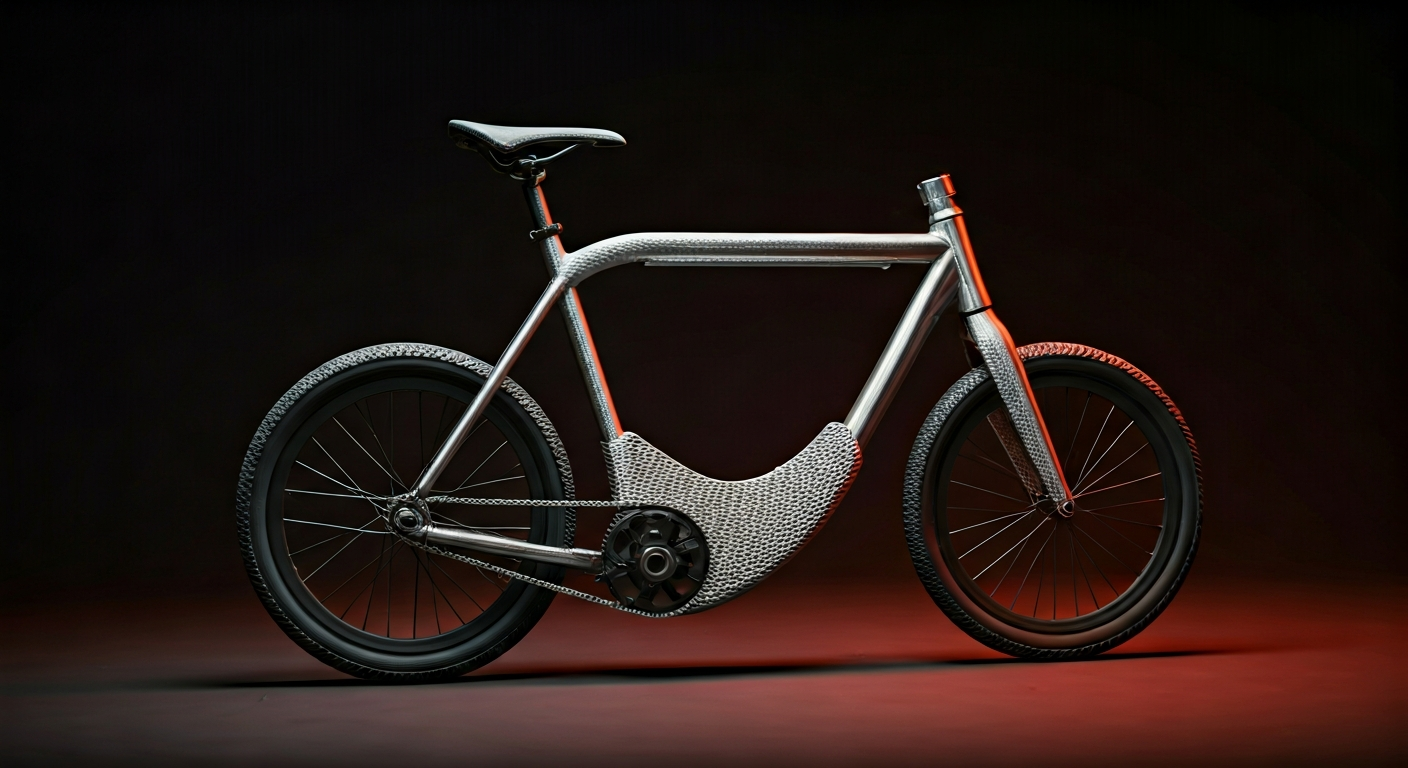
A new bicycle frame, entirely 3D printed from titanium, has been introduced to the market.
A notable advancement in additive manufacturing has been unveiled with the launch of a bicycle frame that is fully 3D printed using titanium. This development showcases the potential of advanced printing technologies in creating complex, high-performance components for the cycling industry.
The use of titanium as the primary material is significant. Titanium is known for its excellent strength-to-weight ratio, corrosion resistance, and durability, making it an ideal choice for bicycle frames that need to withstand demanding conditions while remaining lightweight. The additive manufacturing process allows for intricate designs and optimized structures that might be difficult or impossible to achieve with traditional manufacturing methods.
This fully 3D printed titanium bicycle represents a step forward in the application of additive manufacturing for end-use products. It highlights the growing capability of 3D printing to produce not just prototypes, but functional, robust, and aesthetically refined items for consumer markets. The successful integration of this technology into bicycle production could pave the way for similar innovations in other sectors requiring lightweight and strong custom components.
This development underscores the increasing maturity of metal additive manufacturing for producing functional end-use parts. The ability to 3D print a complete titanium bicycle frame demonstrates the technology's capacity for complex geometries and material optimization, relevant for lightweighting in transportation. This aligns with broader trends in additive manufacturing aiming for mass customization and on-demand production of high-value components.
Edited by the news editor with AI and translated into English from the original report — please refer to the original source.