Tianwen 2 Reaches Earth Quasi-Moon Kamoʻoalewa, Sends First Images
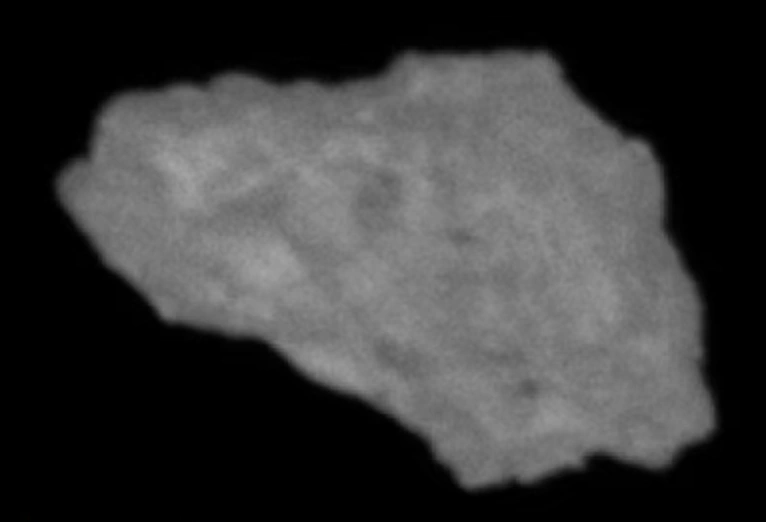
China's Tianwen 2 probe has successfully arrived at the near-Earth asteroid Kamoʻoalewa, capturing initial close-up images and preparing for a groundbreaking sample-return mission.
China's Tianwen 2 mission has successfully reached its target, the small asteroid designated 469219 Kamoʻoalewa, after a journey of approximately 400 days and over 1 billion kilometers. The spacecraft achieved rendezvous on June 7th, initially maintaining a distance of 30,000 km before progressively closing in. As of July 6th, Tianwen 2 was operating just 20 km from the asteroid's surface, allowing the China National Space Administration (CNSA) to release its first close-up images.
Kamoʻoalewa, measuring a mere 27 meters (90 feet) across, is classified as a "quasi-moon" of Earth. While it orbits the Sun, its orbital path causes it to appear to follow Earth. This peculiar celestial body completes a solar orbit in roughly 365.77 days. The mission's primary objective is to collect samples from Kamoʻoalewa and return them to Earth, a significant endeavor for China's space program, which has prior experience with lunar sample returns through its Chang'e missions.
The origin of Kamoʻoalewa has been a subject of scientific inquiry. Initial spectroscopic analysis suggested a surface composition similar to the Moon's regolith, leading to speculation that it might be a lunar fragment. However, more recent research indicates a closer resemblance to LL chondrite meteorites, suggesting it could be a member of the Flora asteroid family in the inner asteroid belt.
The initial images depict Kamoʻoalewa as a solid, irregularly shaped object, rather than a loose collection of debris. The asteroid's rapid rotation, completing one spin every 28 minutes, presents a notable challenge for the planned sampling attempt, scheduled for late July or early August. If successful, the return of Kamoʻoalewa samples to Earth is anticipated by late November 2027. Following this, Tianwen 2 is slated to continue its journey to Comet 311P/Pan-STARRS, with an estimated arrival in January 2035.
Tianwen 2's successful close approach and imaging of Kamoʻoalewa represent a crucial step in humanity's expansion into the solar system. This mission's ability to target, reach, and prepare to sample such a diminutive and dynamically complex near-Earth object underscores the accelerating pace of our extraterrestrial capabilities. The detailed study of Kamoʻoalewa, particularly its composition and origin, will refine our understanding of early solar system materials. This knowledge is foundational for future resource utilization and the eventual establishment of self-sustaining off-world settlements, as Kamoʻoalewa itself could become a stepping stone or a source of valuable materials for an expanding interplanetary civilization.
Edited by the news editor with AI from the original report — please refer to the original source.