Tianwen-1 Orbiter Re-establishes Contact After Extended Silence
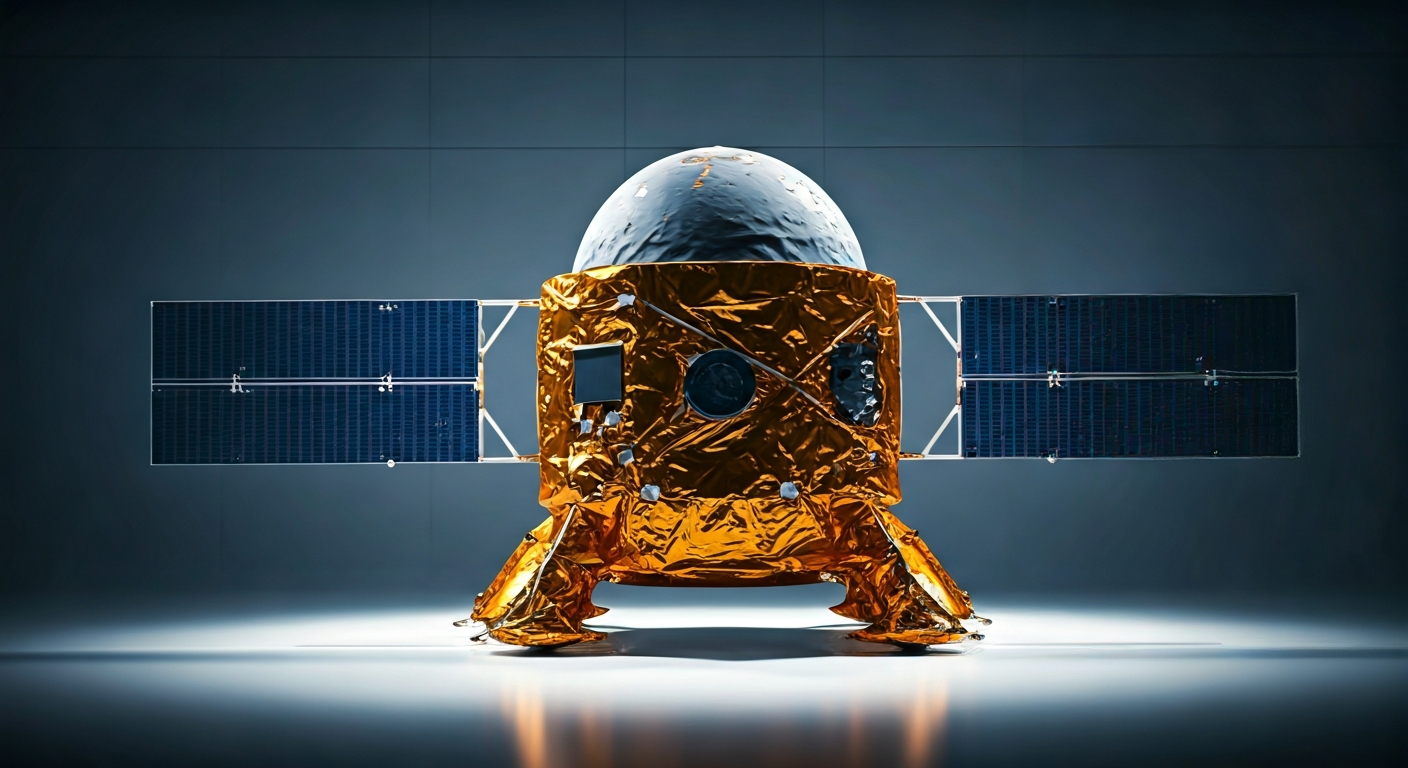
China's Tianwen-1 Mars orbiter has successfully reconnected with ground control after a communication blackout lasting over a month, resuming its scientific mission.
China's National Space Administration (CNSA) has confirmed that the Tianwen-1 orbiter, which had been out of contact for more than 40 days, has re-established communication.
The extended silence began around March 17th and lasted until late April. During this period, the orbiter was operating autonomously, following pre-programmed instructions. The reason for the prolonged communication loss has been attributed to the spacecraft's planned trajectory, which took it behind Mars from Earth's perspective. This celestial alignment temporarily blocked direct radio signal transmission between the orbiter and its ground stations.
With communication restored, Tianwen-1 is now able to transmit its collected data and receive new commands. The mission team is currently assessing the orbiter's status and the integrity of the data gathered during its silent operational phase. Preparations are underway to resume its full scientific observation schedule.
Launched in July 2020, Tianwen-1 arrived in Mars orbit in February 2021. Its mission objectives include conducting remote sensing surveys of the Martian surface and atmosphere. The orbiter has been instrumental in gathering valuable scientific information about the Red Planet.
Tianwen-1's successful re-establishment of contact after a significant communication hiatus, caused by its orbital path, underscores the robust autonomous capabilities essential for deep space exploration. This period of independent operation, while temporarily isolating, highlights the mission's resilience and the sophisticated programming enabling it to continue its scientific reconnaissance. For humanity's expansion to Mars, such reliable autonomous systems are critical, allowing spacecraft to function effectively even when direct communication is impossible. This technological maturity is a vital step towards building self-sustaining Martian outposts where continuous Earth-based control is neither feasible nor desirable, paving the way for more ambitious interplanetary endeavors.
Edited by the news editor with AI and translated into English from the original report — please refer to the original source.