Tianwen-1 Orbiter Completes Global Mars Remote Sensing Survey
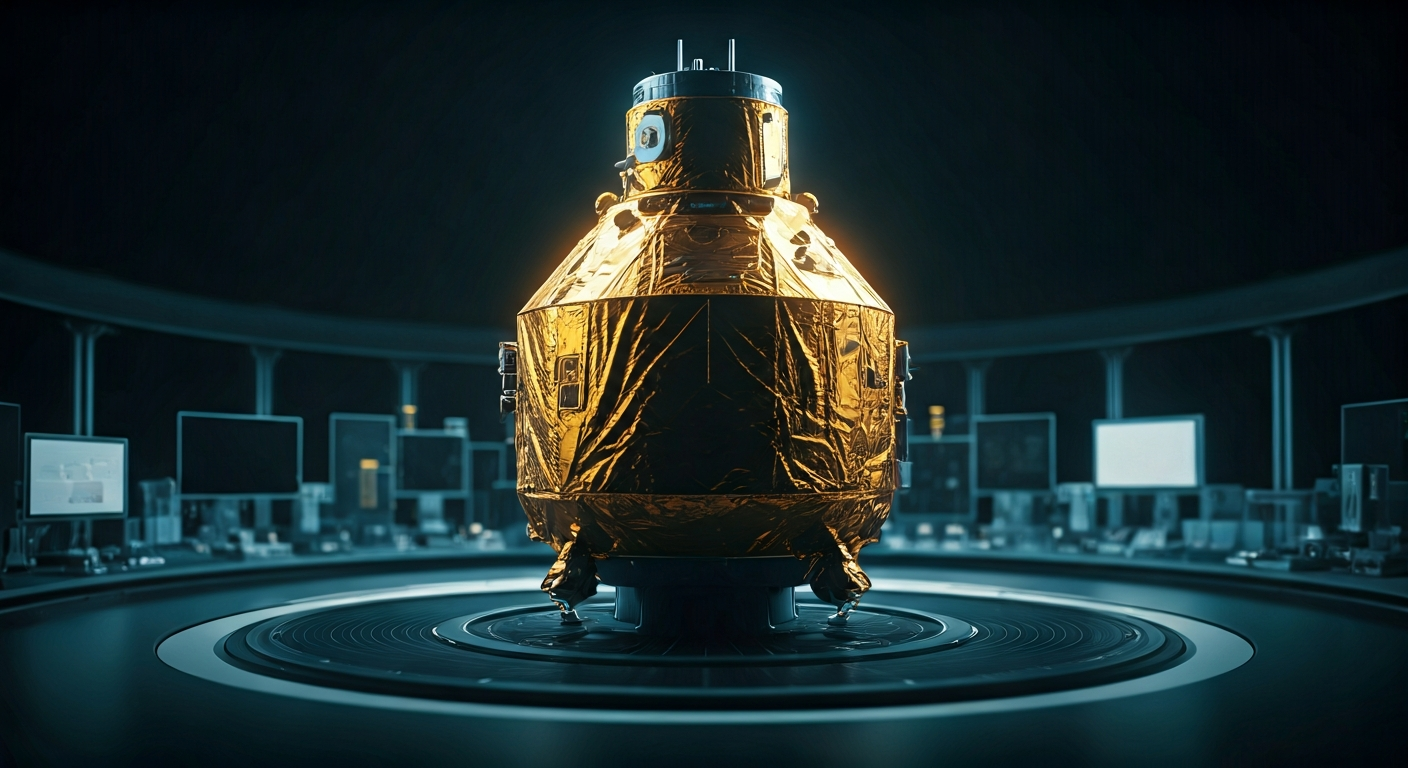
China's Tianwen-1 orbiter has successfully concluded a comprehensive remote sensing scan of Mars, gathering extensive data on the planet's surface and environment.
The Tianwen-1 orbiter, a key component of China's Mars exploration program, has finished its global remote sensing survey of the Red Planet. This extensive mission involved systematically collecting data across the Martian surface, providing a detailed overview of its geological features and atmospheric conditions.
The survey utilized the orbiter's advanced suite of scientific instruments to map and analyze various aspects of Mars. The collected data is expected to offer new insights into the planet's history, geological evolution, and potential for past or present habitability. This marks a significant achievement for the Tianwen-1 mission, demonstrating its capability to perform large-scale planetary reconnaissance.
During its orbital operations, Tianwen-1 focused on gathering high-resolution imagery and spectral information. This allowed scientists to study landforms, mineral compositions, and the distribution of water ice. The comprehensive nature of the survey means that virtually the entire planet has been observed, creating a rich dataset for future scientific research.
The completion of this global survey is a testament to the orbiter's operational longevity and the effectiveness of its scientific payload. The data gathered will be crucial for understanding Mars and will likely inform future missions, both robotic and potentially human, aimed at further exploration and eventual settlement.
Tianwen-1's global remote sensing survey is a critical step in humanity's expansion beyond Earth. By meticulously mapping Mars, this mission provides the foundational knowledge needed to identify resource-rich locations and understand environmental hazards for future settlements. The accelerating pace of such comprehensive planetary characterization, enabled by increasingly sophisticated orbital technology, shortens the timeline for establishing self-sustaining Martian outposts. Each data point gathered is a brick in the edifice of a multi-planetary future, expanding the reach of life and intelligence.
Edited by the news editor with AI and translated into English from the original report — please refer to the original source.