Three Nations Converge on Mars with Ambitious Missions
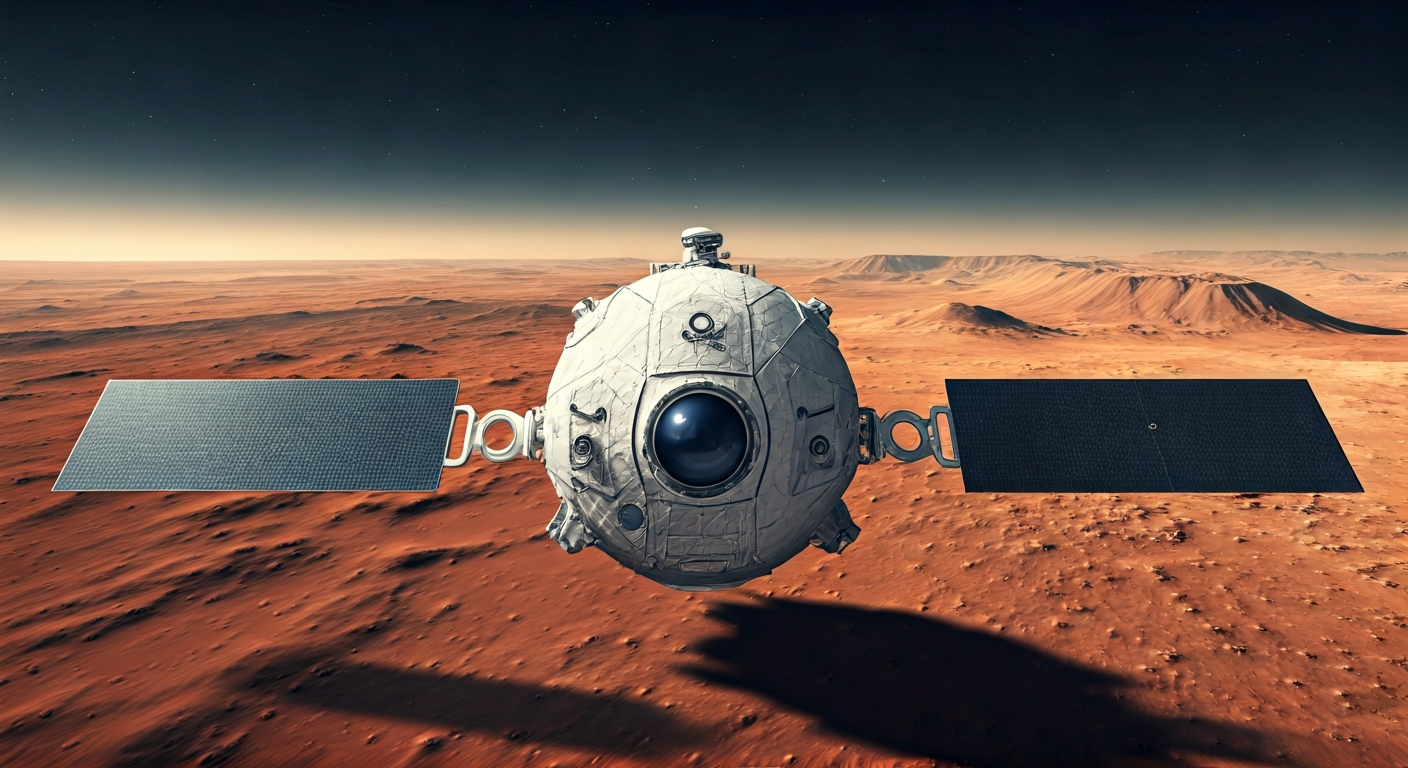
Multiple nations are set to deploy complex missions to Mars in close succession, highlighting a renewed global focus on the Red Planet.
The planet Mars is poised to become a focal point of international space exploration as three distinct nations prepare to arrive with their advanced missions around the same timeframe. This convergence of planetary arrivals underscores a significant period of renewed interest and investment in Martian science and exploration.
The missions, originating from the United Arab Emirates (UAE), China, and the United States, each represent a substantial technological undertaking. The UAE's Hope probe aims to study the Martian atmosphere and weather patterns, providing crucial data on climate change dynamics on another world. China's Tianwen-1 mission is a comprehensive endeavor, including an orbiter, lander, and rover, designed to conduct a broad range of scientific investigations, from geology to the search for water ice.
Meanwhile, NASA's Perseverance rover, accompanied by the Ingenuity helicopter drone, is tasked with seeking signs of ancient microbial life and collecting samples for potential future return to Earth. The inclusion of the Ingenuity helicopter marks a significant technological leap, demonstrating powered, controlled flight on another planet.
The synchronized nature of these arrivals is not a matter of mere coincidence. It reflects a strategic alignment of long-term planning and technological development across different space agencies. Each nation has invested heavily in developing the sophisticated hardware and software necessary for interplanetary travel, orbital insertion, and surface operations on Mars, a planet known for its challenging environment and complex landing procedures.
The simultaneous arrival of missions from the UAE, China, and the US signifies a critical acceleration in humanity's outward expansion. Each probe and rover is not just a scientific instrument, but a stepping stone, a piece of the infrastructure for a future off-world presence. The data gathered on Martian atmosphere, geology, and potential biosignatures will refine our understanding of planetary habitability, directly informing the development of self-sustaining Martian settlements. This synchronized push demonstrates the growing technological capacity and the expanding intelligence required to establish humanity as a multi-planetary species, ensuring our long-term survival and the propagation of consciousness beyond Earth.
Edited by the news editor with AI and translated into English from the original report — please refer to the original source.