This supernova impostor baffled astronomers for 15 years — until they found a hidden black hole feeding on an unstable star
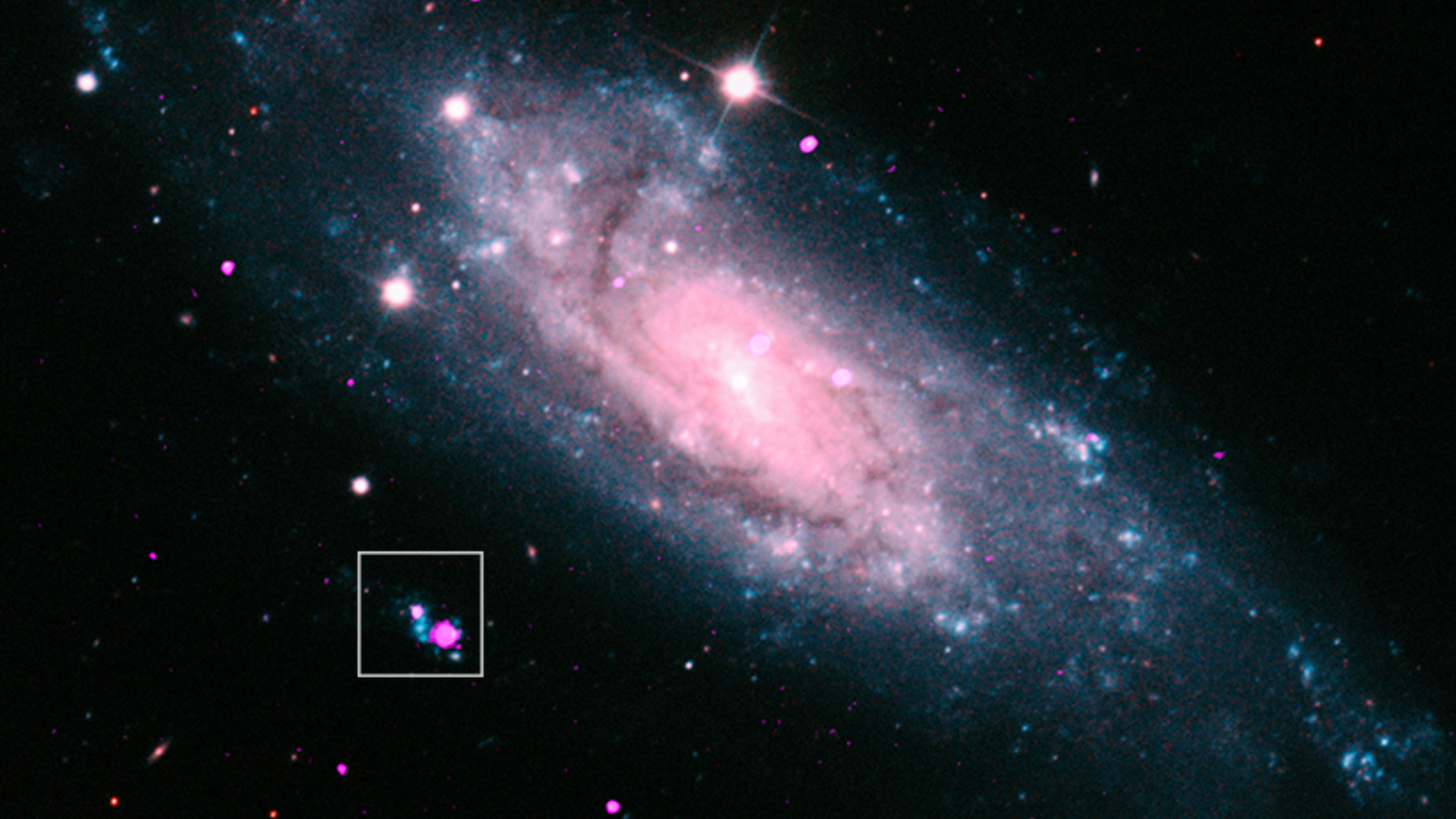
A cosmic imposter that has faked being a supernova 27 times and counting is actually a hot, luminous, and decidedly unstable star that is being fed on by a vampiric black hole or neutron star, NASA’s Chandra X-ray Observatory has discovered. When a massive star reaches the end of the road and runs out of nuclear fuel to power fusion reactions in its core, the star is destroyed in a supernova explosion.
A cosmic imposter that has faked being a supernova 27 times and counting is actually a hot, luminous, and decidedly unstable star that is being fed on by a vampiric black hole or neutron star, NASA’s Chandra X-ray Observatory has discovered. When a massive star reaches the end of the road and runs out of nuclear fuel to power fusion reactions in its core, the star is destroyed in a supernova explosion. That’s what astronomers thought they had found on 11 January 2012, when they observed what appeared to be a supernova on the outskirts of the spiral galaxy NGC 4559, which is about 25 million light-years away in the constellation Coma Berenices. Yet when the light of the 'supernova' faded, the star was still there, only to continue bursting into light every 113 days. "For 15 years, astronomers have been watching this star get really bright and then dim again on a regular basis," Mojgan Aghakhanloo of the University of Virginia in Charlottesville said in a statement . Several other supernova imposters have been observed over the past decade or two. Until now, no one knew what causes these stars to repeatedly cry wolf.
Edited from Space.com RSS for the Mars Colonization desk.
Edited by the news editor with AI from the original report — please refer to the original source.