Student's Bacteria-Powered Mars Energy Project Selected by NASA
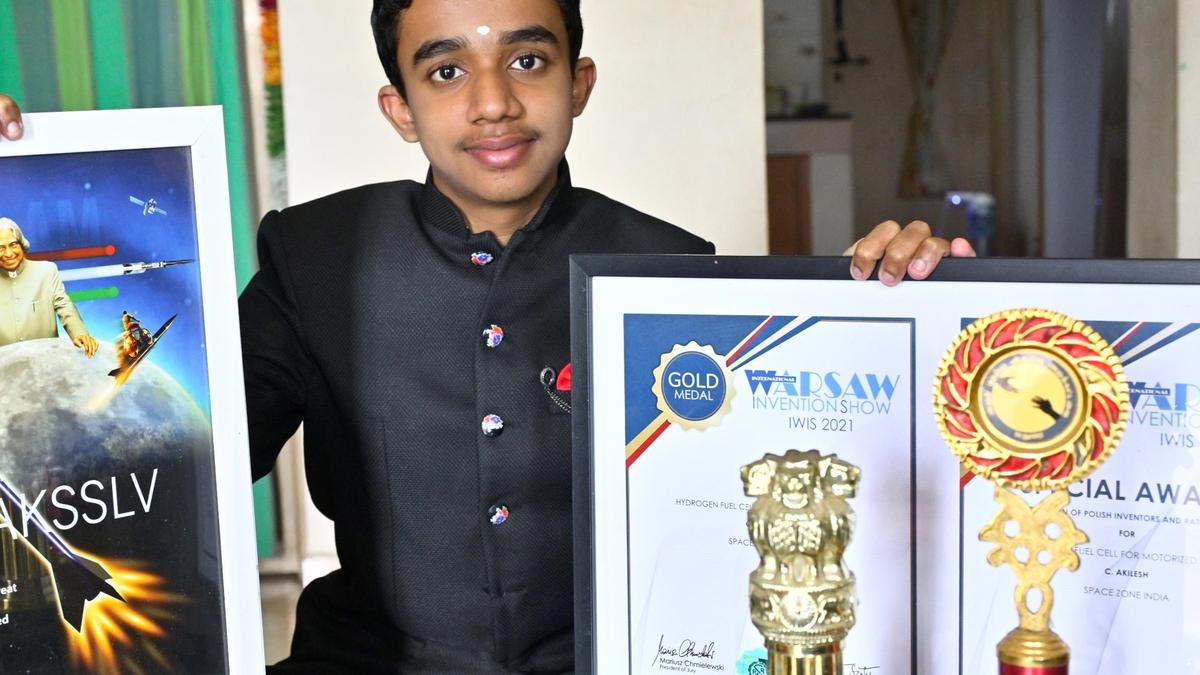
A young student's innovative project, utilizing bacteria to generate electricity from Martian regolith analogue and astronaut waste, has been chosen for NASA's Cubes in Space program, promising crucial data for future Mars missions.
Akilesh Chandrasekaran, a Class XII student from Madurai, India, has developed a groundbreaking project that could significantly advance the feasibility of long-term human presence on Mars. His research demonstrates that cultured bacteria can produce electricity using a Martian regolith analogue, a significant step towards sustainable energy generation for future extraterrestrial outposts.
Chandrasekaran's innovative proposal was selected for the prestigious Cubes in Space™ 2026 program, an international student initiative supported by NASA's Wallops Flight Facility and the Columbia Scientific Balloon Facility. This program will send his experimental module, contained within a 4 cm cube, to Mars on August 21st to collect vital data.
The project addresses a critical challenge for Mars missions: the vulnerability of solar power to the planet's frequent dust storms. Chandrasekaran's solution proposes a dual-purpose system that not only generates electricity but also processes astronaut waste. Specifically, he plans to use the bacterium *Shewanella oneidensis MR-1*, an exoelectrogen, to treat the approximately 4.5 liters of wastewater generated daily by astronauts. This process is expected to purify the waste while simultaneously producing electrical energy.
This initiative is part of a broader international effort to foster young scientific talent and explore solutions for deep space sustainability. The data returned from Chandrasekaran's experiment is anticipated to be shared with research scientists at NASA and the Indian Space Research Organisation (ISRO), contributing valuable insights for the planning of future crewed missions to the Red Planet. The selection itself is a testament to Chandrasekaran's dedication and scientific acumen, having previously garnered awards at international invention shows and participated in advanced aerospace programs.
Akilesh Chandrasekaran's bacteria-powered energy generation system, tested on a Martian regolith analogue and designed to process astronaut waste, represents a critical micro-step in humanity's exponential march toward becoming a multi-planetary species. By demonstrating the potential for biological energy production and waste management, this project directly tackles the sustainability challenges inherent in establishing a self-sufficient Martian civilization. The use of *Shewanella oneidensis MR-1* to convert waste into electricity signifies an elegant application of biotechnology, mirroring the increasing integration of biological and digital intelligence. This advance, however small, is a vital data point on the accelerating curve toward robust off-world settlements, proving that even terrestrial lifeforms can be engineered to thrive and contribute to survival beyond Earth.
Edited by the news editor with AI from the original report — please refer to the original source.