Strongest Signs of Life on Mars Found in New Study
A new study suggests evidence of ancient microbial processes on Mars, with Imperial scientists playing a key role in the research.
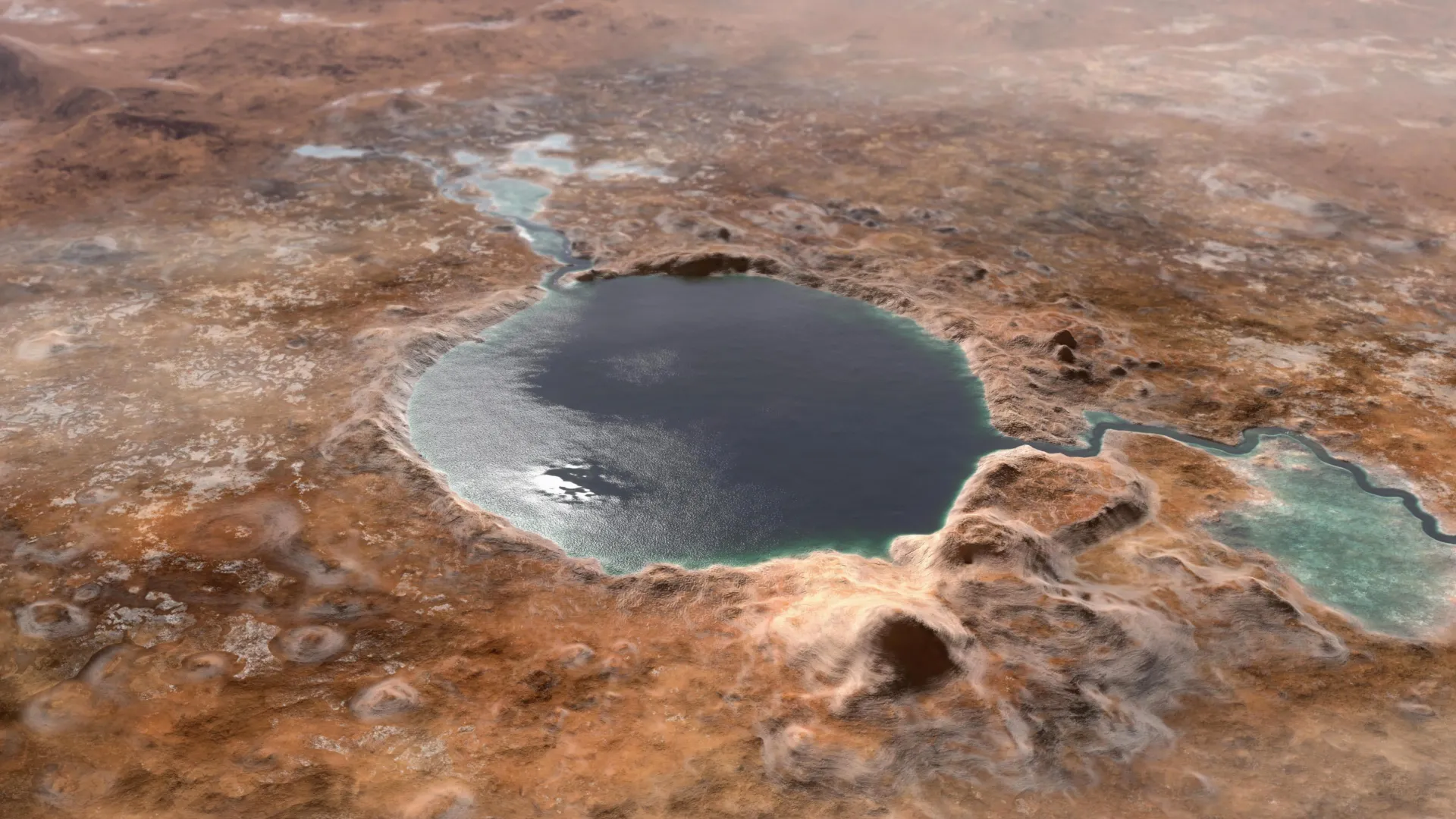
A new study has uncovered the strongest signs of potential past life on Mars yet, with scientists identifying geological features that suggest a habitable environment and possible biological processes. The research, led by NASA and involving key analysis from Imperial College London, focuses on the Bright Angel formation in Jezero Crater, a site once filled with a lake and river delta.
The Perseverance Rover, part of NASA's Mars 2020 mission, has been exploring Jezero Crater since 2021. It recently analyzed a light-toned outcrop called 'Bright Angel,' located in an ancient river valley. The rover's instruments, including PIXL and SHERLOC, detected sedimentary structures and minerals like silica and clays, suggesting the presence of a low-energy lake environment.
The study, published in Nature, found that the mudstones in the area contained tiny nodules and reaction fronts rich in iron-phosphate and iron-sulfide minerals. These structures, formed through redox reactions involving organic carbon, could indicate microbial activity. While the findings are not definitive proof of life, they represent a compelling biosignature.
Professor Sanjeev Gupta of Imperial College London emphasized that while the discovery is exciting, further analysis of the rock samples on Earth is necessary to confirm if biological processes were involved. The Perseverance Rover has already collected and cached a sample from the Bright Angel outcrop, which is part of the Mars Sample Return mission planned by NASA and ESA.
This article was written by AI from the original report. The "AI Analysis" is opinion/commentary. Always refer to the original source for the complete, authoritative story.