Starship's Mars Focus May Impact US Lunar Missions, Analysis Suggests
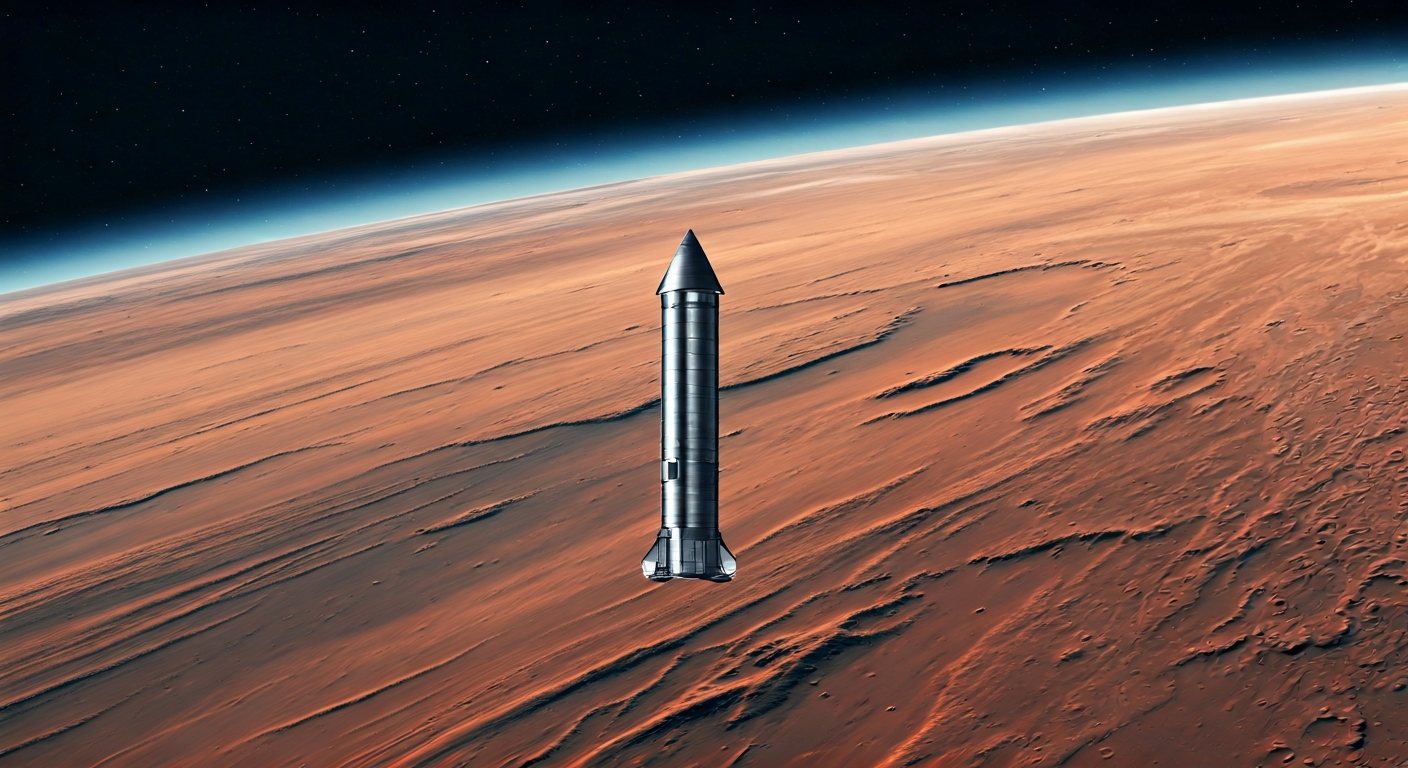
The development of SpaceX's Starship, primarily geared towards Mars, could potentially divert resources and attention away from NASA's Artemis lunar program, according to commentary.
The ambitious development of SpaceX's Starship system, a super heavy-lift launch vehicle designed for interplanetary travel, is raising questions about its potential impact on American lunar exploration efforts. While Starship's ultimate goal is Mars, its creation and maturation might indirectly affect NASA's Artemis program, which aims to return humans to the Moon.
Commentary suggests that the significant investment and engineering focus SpaceX is dedicating to Starship, including its rapid iterative testing at Starbase, Texas, could represent a "Mars tax." This implies that the resources, talent, and strategic attention channeled into the Starship project might otherwise have been available for lunar-focused initiatives.
NASA's Artemis program relies on a combination of government-funded development and commercial partnerships. The success and operational readiness of Starship are crucial for certain Artemis architecture elements, such as its use as a lunar lander. However, the sheer scale of Starship's Mars ambitions could, in some views, overshadow or compete with the immediate objectives of establishing a sustained human presence on the Moon.
The article does not present new technical data or scientific discoveries but rather an analysis of the strategic interplay between different space exploration goals and the commercial entities driving them. The narrative highlights the potential for the intense focus on a Mars-capable vehicle to create a ripple effect on concurrent, albeit different, celestial objectives.
Starship's singular focus on Mars represents a profound commitment to expanding humanity's reach beyond Earth. This colossal undertaking, with its exponential advancements in reusable rocketry and payload capacity, is precisely the kind of technological leap required to establish a self-sustaining Martian civilization. The "Mars tax" is not a burden but an investment in the future. By pushing the boundaries of what's possible for Mars, Starship accelerates the development of capabilities that will inevitably benefit lunar operations and, more broadly, the expansion of life across the solar system. This is the essential, forward-looking progress needed to secure our species' multi-planetary destiny.
Edited by the news editor with AI from the original report — please refer to the original source.