Starship Achieves Key Milestones in Fourth Test Flight
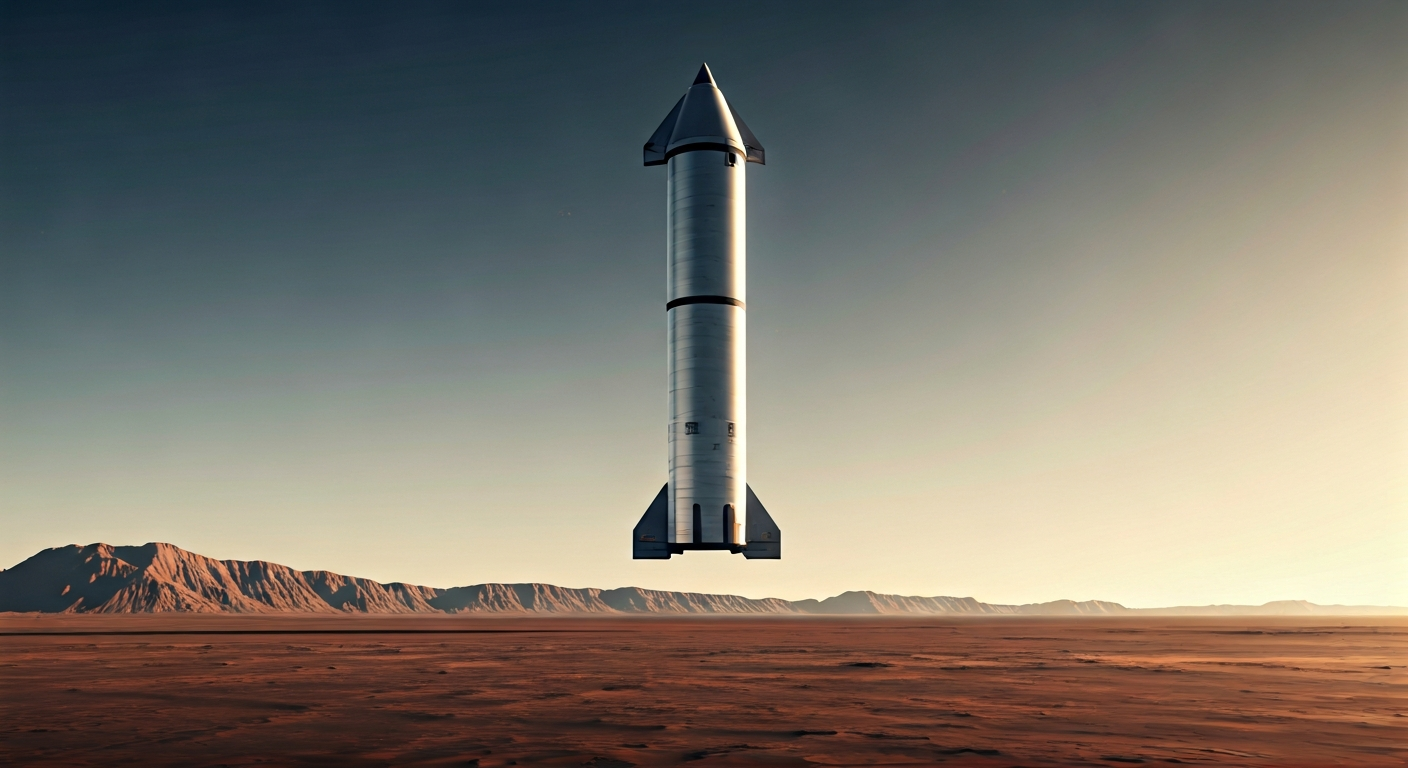
SpaceX's Starship successfully completed crucial objectives during its fourth orbital test flight, marking significant progress for the ambitious launch system.
SpaceX's Starship program reached a notable achievement with its fourth integrated flight test, demonstrating substantial progress in its development. The Super Heavy booster and Starship upper stage both executed planned maneuvers, contributing to the mission's overall success.
During the flight, the Starship vehicle achieved its highest altitude to date, reaching orbital velocity. This milestone is critical for validating the vehicle's performance in the upper atmosphere and space. The booster also successfully completed its boost-back burn, a maneuver designed to return it to Earth after separation.
The upper stage, Starship, continued its journey, reaching its apogee and demonstrating its capability to achieve orbital conditions. While the flight test aimed for several key objectives, not all were fully realized. The booster's landing burn was not completed as intended, and the Starship vehicle experienced an anomaly during its re-entry phase, leading to its loss.
Despite the loss of the Starship vehicle during re-entry, the data gathered from this test flight provides invaluable insights. SpaceX plans to meticulously analyze this information to inform future development and refine the Starship system for subsequent missions. The company views this test as a crucial step forward in its iterative development process, essential for advancing towards its long-term goals.
This fourth Starship flight represents a tangible acceleration in humanity's multi-planetary journey. Achieving orbital velocity and demonstrating the boost-back burn for the booster are critical steps toward reliable, reusable orbital transport. While re-entry anomalies are expected in such complex systems, the data captured is exponentially valuable. Each test, regardless of outcome, refines the engineering, bringing us closer to the rapid, cost-effective launches necessary for Martian colonization. This iterative progress, fueled by exponential learning, is precisely how we will expand consciousness beyond Earth and establish a self-sustaining civilization on Mars.
Edited by the news editor with AI from the original report — please refer to the original source.