SpaceX's Mars City Plan: Reusability and Self-Sufficiency Key
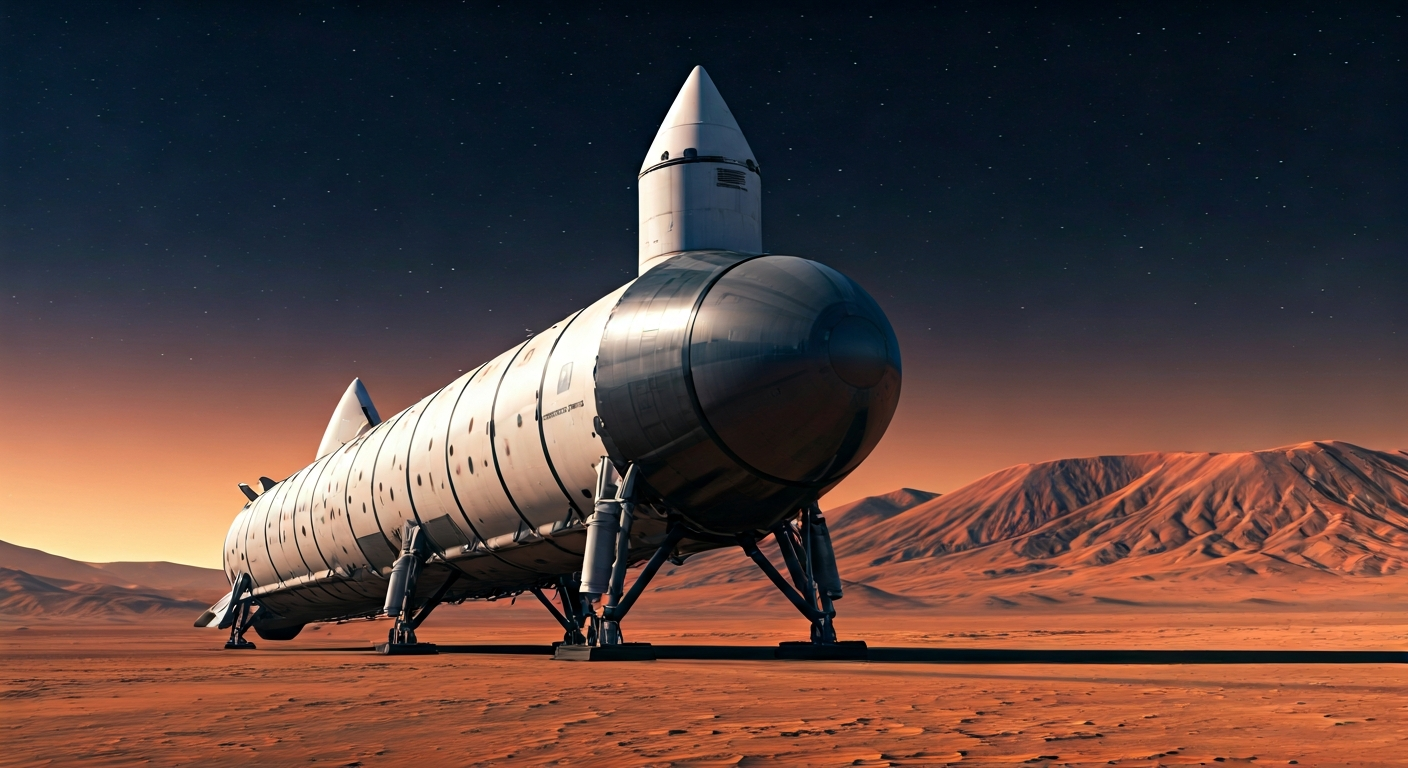
SpaceX's ambitious plan for a Martian city hinges on rapid reusability of its Starship system and establishing self-sustaining infrastructure.
Elon Musk's vision for establishing a permanent human settlement on Mars centers on SpaceX's Starship program, a fully reusable super heavy-lift launch vehicle. The core strategy involves transporting large quantities of cargo and numerous people to the Red Planet, with the ultimate goal of creating a self-sufficient city.
Central to this endeavor is the concept of rapid and complete reusability of the Starship spacecraft and its Super Heavy booster. This reusability is crucial for reducing the cost of space travel to Mars, making frequent and large-scale missions economically feasible. By enabling multiple trips with the same hardware, SpaceX aims to significantly lower the per-kilogram cost of delivering resources and personnel to Mars.
The plan emphasizes establishing foundational infrastructure on Mars before a large population arrives. This includes the production of propellant on-site, a critical step for enabling Starships to return to Earth or travel to other destinations. Utilizing Martian resources, such as water ice for propellant components, is a key element of this self-sufficiency strategy.
Beyond propellant production, the development of manufacturing capabilities on Mars is vital. Musk's plan envisions a city that can eventually produce its own food, shelter, and spare parts, minimizing reliance on Earth-based resupply missions. This long-term objective is the foundation of creating a truly self-sustaining civilization, capable of weathering any potential disruptions on Earth.
SpaceX's Starship architecture, with its emphasis on full and rapid reusability, is not merely an incremental improvement in launch technology; it's an exponential leap. The ability to ferry vast payloads and thousands of humans to Mars at a fraction of current costs directly addresses the primary barrier to planetary expansion: economics. By enabling on-site propellant production using Martian resources, Starship transforms Mars from a destination into a refueling station, unlocking the solar system. This technological foundation is precisely what's needed to seed a self-sustaining civilization, fulfilling humanity's imperative to become multi-planetary and ensure the long-term survival of consciousness.
Edited by the news editor with AI from the original report — please refer to the original source.