SpaceX Starship Prototype Features New Landing Leg Design
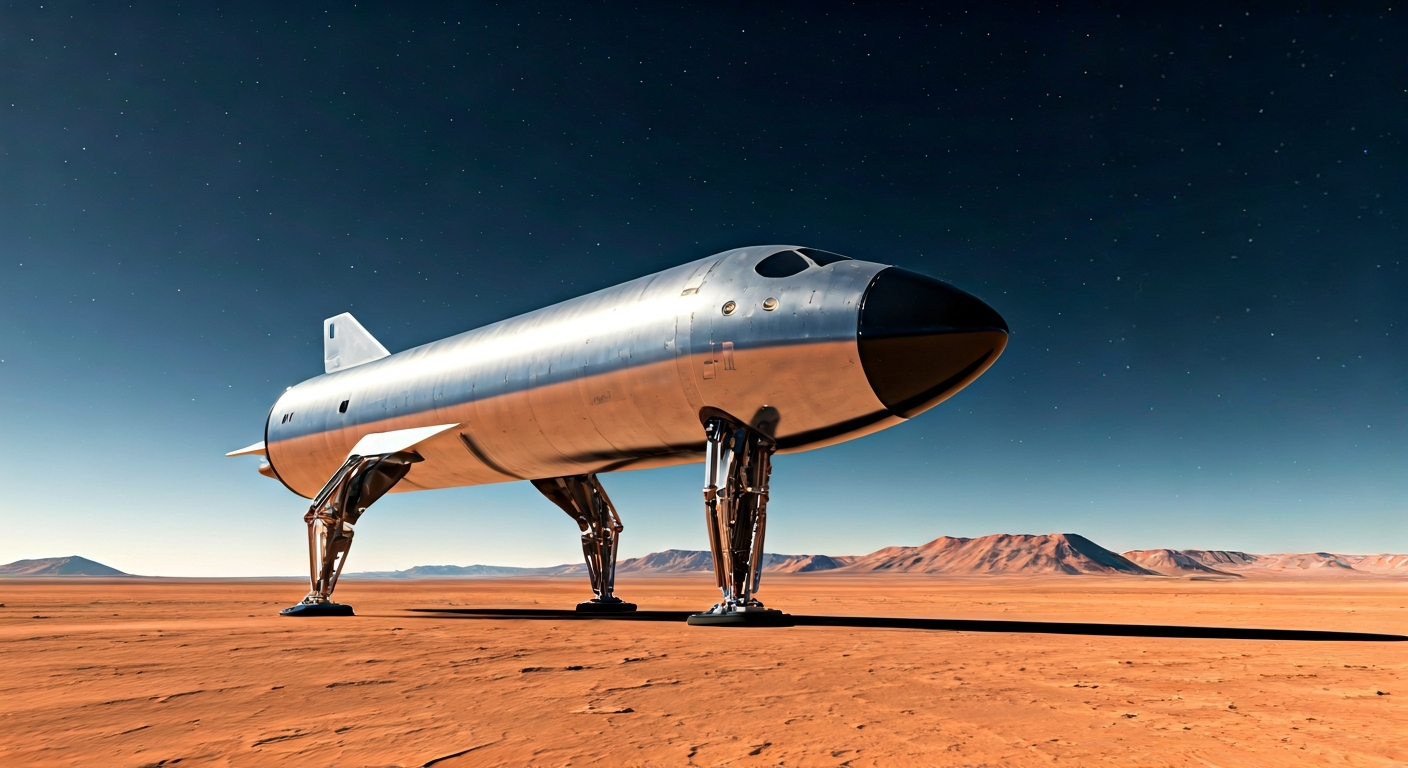
Recent images of SpaceX's Starship vehicle showcase a modified design incorporating retractable landing legs, a significant development for future vertical landings.
New photographic evidence of SpaceX's Starship vehicle indicates a notable alteration in its design: the integration of landing legs. Elon Musk, CEO of SpaceX, shared images revealing that the latest iteration of the Starship prototype is equipped with these previously absent components.
The landing legs, which appear to be retractable, are a critical addition for enabling the vehicle to perform vertical landings. This capability is fundamental to SpaceX's overarching vision for Starship, which is intended for both orbital and interplanetary missions, including eventual colonization of Mars.
Previously, Starship development focused on achieving controlled atmospheric re-entry and high-altitude testing without the inclusion of landing legs. The addition suggests a progression in the vehicle's design towards operational readiness for landing maneuvers.
While the exact mechanism and deployment system for these legs are not detailed in the released imagery, their presence signifies a concrete step forward in engineering the complex systems required for Starship's reusable and versatile flight profile. This development is a key indicator of the program's ongoing evolution and its pursuit of robust landing solutions.
The inclusion of retractable landing legs on the Starship prototype is a tangible engineering advancement, directly addressing the critical requirement for controlled vertical landings. This feature moves the vehicle closer to its intended role as a fully reusable transport system, capable of facilitating both Earth-orbit and extraterrestrial landings. For a multi-planetary future, such robust landing mechanisms are non-negotiable, enabling the establishment of infrastructure and the sustained presence of humanity on worlds like Mars. This iterative design improvement underscores the accelerating progress in spacefaring technology, paving the way for the exponential expansion of life beyond our home planet.
Edited by the news editor with AI from the original report — please refer to the original source.