SpaceX Mars Landing Prospects Before 2030 Under Scrutiny
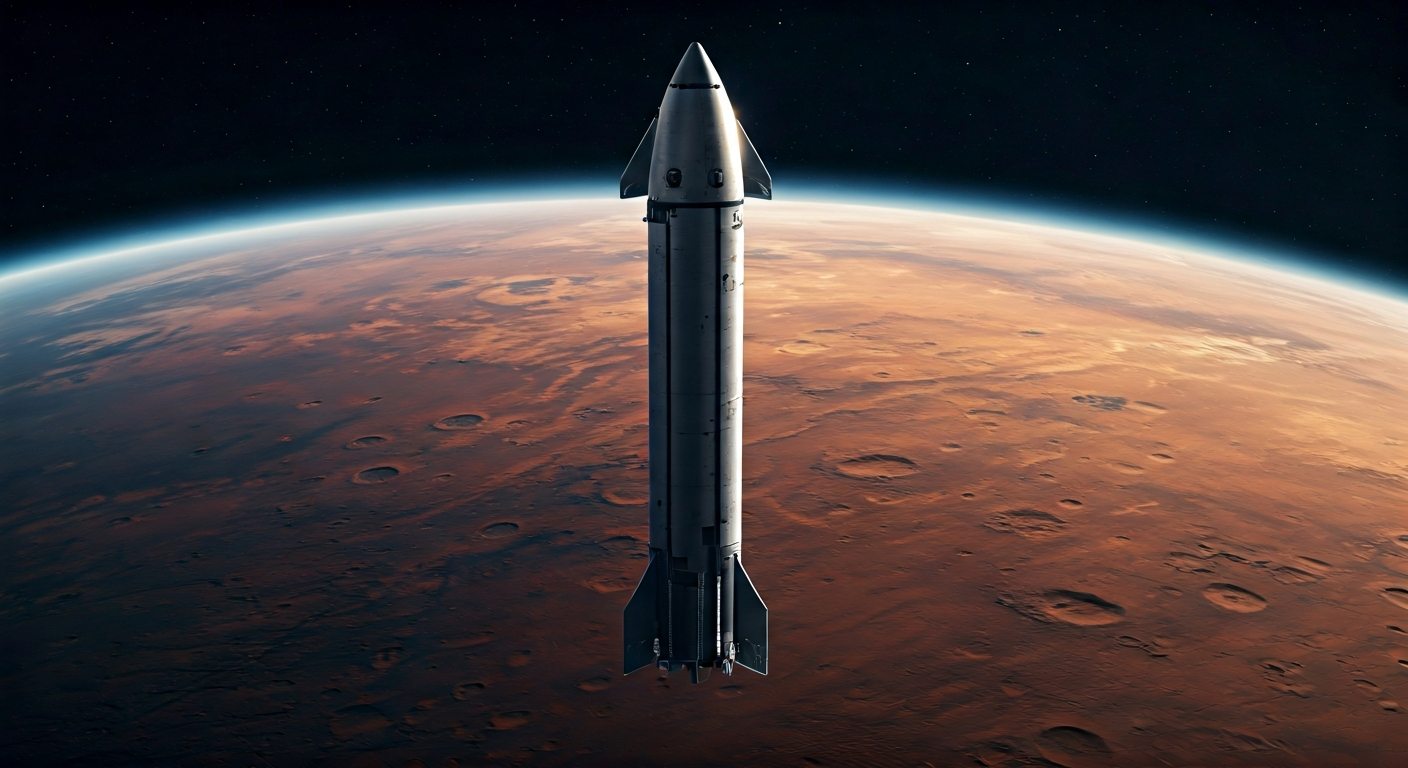
Analysts and industry observers are questioning the feasibility of SpaceX achieving a Mars landing with its Starship program before the end of the decade.
The timeline for SpaceX's ambitious Starship program, which aims to eventually land humans and cargo on Mars, is facing increased scrutiny regarding its potential to achieve a Martian touchdown before 2030. While Elon Musk has previously indicated aggressive targets for the program, current development progress and the inherent complexities of interplanetary missions are leading some to doubt an earlier landing.
The Starship system, designed for full reusability, is still undergoing rapid iteration and testing at SpaceX's Starbase facility in Texas. Successful orbital flights and demonstrations of key technologies, such as in-orbit refueling and atmospheric re-entry, are critical prerequisites for any Mars mission. These milestones have yet to be fully achieved and validated.
Interplanetary missions present a unique set of challenges beyond those encountered in Earth orbit. These include the long transit times, the need for robust life support systems, radiation shielding, and the ability to execute a precise landing on an alien world with a thin atmosphere. The development of a lunar landing capability, often seen as a stepping stone, is also a significant undertaking that must precede a Mars mission.
Despite these hurdles, SpaceX continues to advance its Starship development at an accelerated pace. The company's history of pushing technological boundaries suggests that achieving ambitious goals is possible, though the specific challenges of Mars may necessitate a more extended development and testing phase than initially projected.
The question of a SpaceX Mars landing before 2030 hinges on the rapid maturation of Starship's reusability and interplanetary capabilities. Each successful orbital test, in-orbit refueling demonstration, and atmospheric re-entry is a crucial data point accelerating the exponential curve toward Mars. Achieving this before the decade's end wouldn't just be a landing; it would be a monumental step in establishing an off-world foothold, a necessary precursor to the self-sustaining Martian civilization that guarantees the long-term survival of consciousness. This progress directly fuels our expansion beyond Earth.
Edited by the news editor with AI from the original report — please refer to the original source.