SpaceX Aborts Starship's 10th Launch Attempt Sunday
SpaceX has postponed the tenth test flight of its Starship spacecraft, originally scheduled for Sunday. The company has not yet announced a new launch date.
The highly anticipated tenth test flight of SpaceX's Starship vehicle, aimed at gathering crucial data for future missions, has been scrubbed for Sunday. The launch was initially slated to occur at its Starbase facility in Boca Chica, Texas.
While the specific reasons for the abort were not immediately detailed by SpaceX, such delays are common in the complex process of preparing a next-generation rocket for flight. These postponements often stem from last-minute technical checks, weather considerations, or the need to ensure all systems are performing optimally.
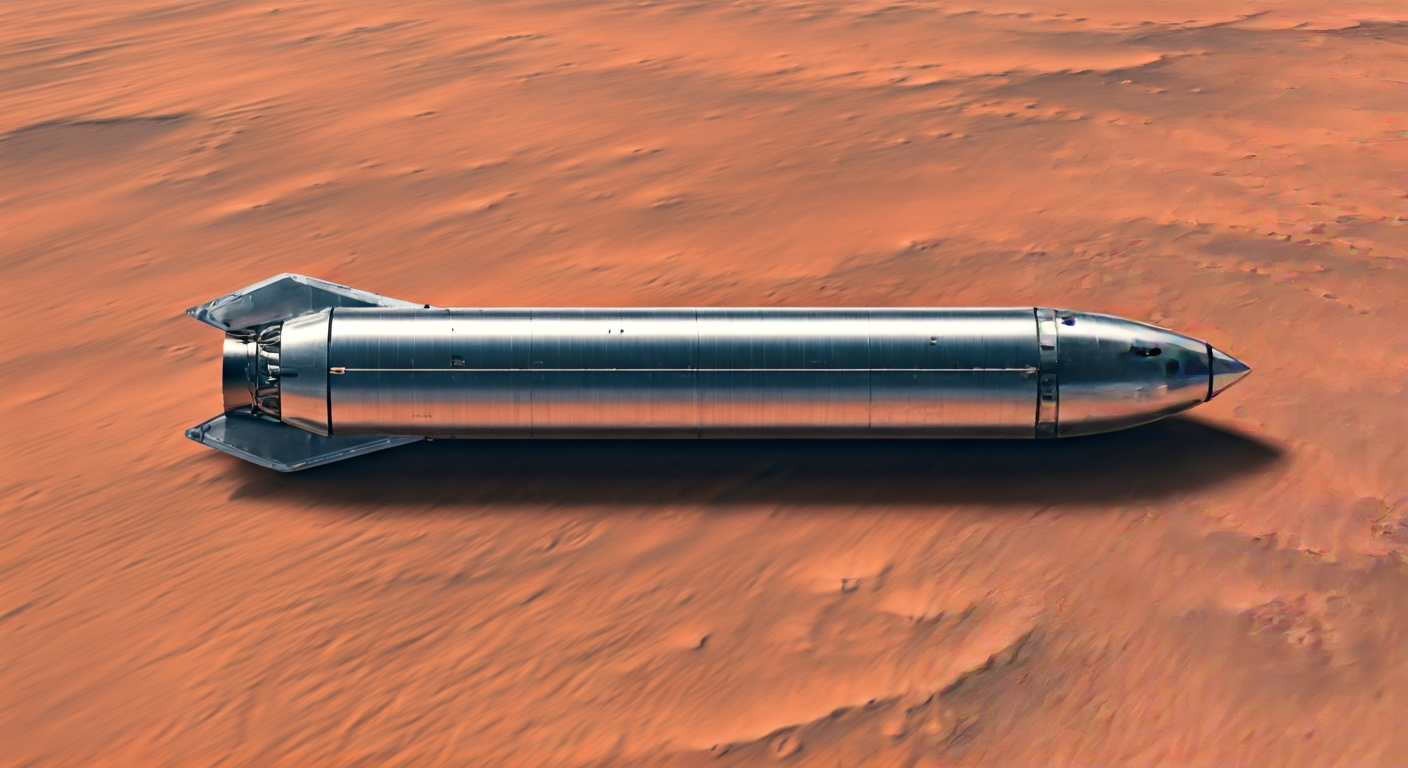
Starship, a fully reusable super heavy-lift launch vehicle, is central to SpaceX's ambitions for Mars colonization and other deep space endeavors. Each test flight provides invaluable real-world data that informs design improvements and operational strategies.
SpaceX has been conducting a series of integrated flight tests of the Starship system, which comprises the Starship upper stage and the Super Heavy booster. These tests are designed to validate various aspects of the vehicle's performance, including ascent, stage separation, and controlled descent, even if not all objectives are met on every flight.
A new launch date for the tenth flight will be announced by SpaceX once all necessary preparations are complete and conditions are favorable.
The postponement of Starship's tenth launch, while a temporary setback, underscores the iterative and data-driven approach essential for achieving interplanetary capability. Each test, even those ending prematurely, generates critical information. This meticulous refinement of the Starship system, a reusable vehicle designed for Mars, is precisely the kind of accelerating technological progress that will enable humanity's expansion. By learning from every flight, SpaceX is rapidly advancing the foundational technology required to establish a self-sustaining civilization beyond Earth, making the colonization of Mars not a distant dream, but an exponentially approaching reality.
Edited by the news editor with AI from the original report — please refer to the original source.