Relativity Space to Launch Larger 3D-Printed Rocket, Terran R
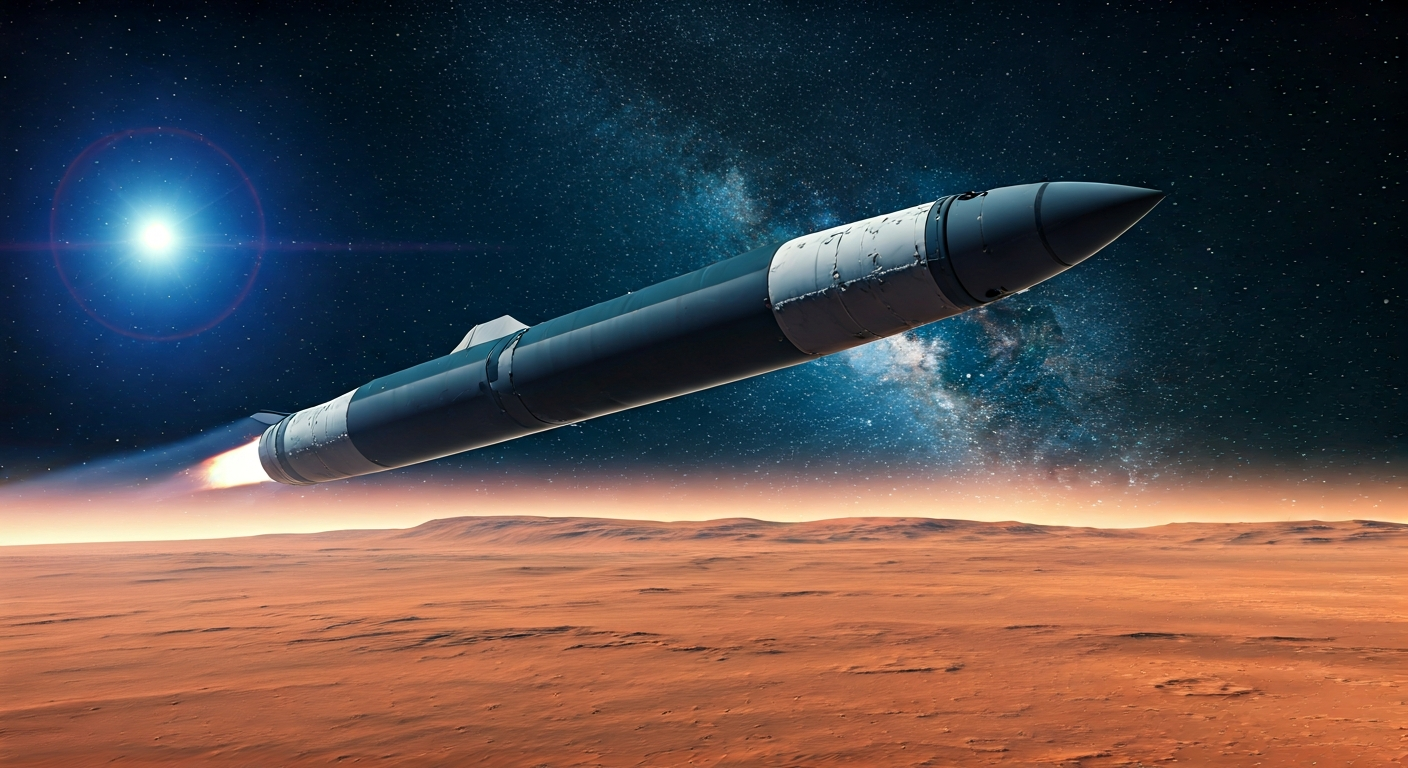
Following the successful launch of its Terran 1 rocket, Relativity Space is developing a larger, fully reusable 3D-printed rocket called Terran R.
Relativity Space has announced its next-generation rocket, the Terran R, which is designed to be significantly larger and fully reusable. This development follows the company's recent achievement of launching its first 3D-printed rocket, Terran 1, into orbit. The Terran R is intended to be a two-stage rocket, with both stages being entirely reusable.
The Terran R will have a payload capacity of 20,000 kilograms to low Earth orbit (LEO) and 10,000 kilograms to geosynchronous transfer orbit (GTO). This represents a substantial increase in capability compared to its predecessor. The rocket is expected to stand 216 feet tall with a 16-foot diameter, making it one of the largest fully 3D-printed rockets ever conceived.
Relativity Space aims to leverage its proprietary 3D-printing technology, known as Stargate, to manufacture the Terran R. This technology allows for the rapid and cost-effective production of large rocket components. The company anticipates that the Terran R will be capable of launching payloads as early as 2026. The development of Terran R is part of Relativity Space's strategy to scale its additive manufacturing capabilities for future space exploration missions.
The development of Terran R signifies a major step in scaling additive manufacturing for large-scale aerospace applications. Its fully reusable design and substantial payload capacity highlight the potential for 3D printing to reduce launch costs and increase launch cadence, crucial for future space infrastructure and exploration, including potential in-situ resource utilization on other celestial bodies.
Edited by the news editor with AI from the original report — please refer to the original source.