Relativity Space Aims to Disrupt Rocket Industry with 3D Printed Launchers
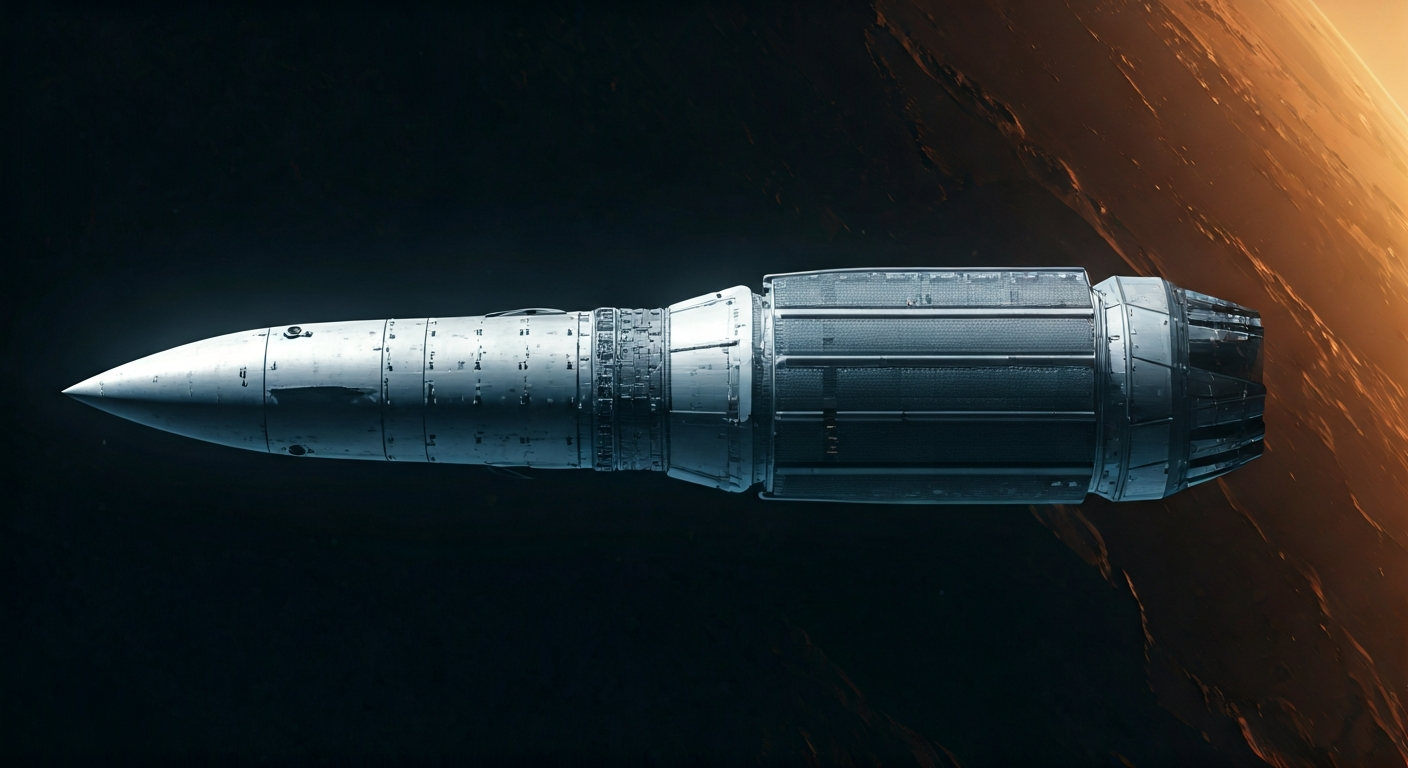
Relativity Space is developing fully 3D-printed rockets, challenging established players like SpaceX with a novel manufacturing approach.
Relativity Space is pursuing a radical approach to space launch by aiming to 3D print entire rockets. The company's vision centers on a significantly simplified manufacturing process, drastically reducing the number of parts required compared to traditional rockets. This streamlined design is made possible by advanced additive manufacturing techniques.
The company has developed proprietary 3D printing technology capable of producing large-scale metal components for its launch vehicles. This technology is designed to print complex geometries and integrate multiple functions into single parts, thereby minimizing assembly time and potential failure points. The goal is to achieve faster production cycles and lower costs for accessing space.
Relativity Space's approach contrasts with the conventional methods used by many aerospace companies. By leveraging additive manufacturing, they aim to overcome the limitations of traditional subtractive manufacturing and extensive manual assembly. This focus on a fully integrated 3D printing solution positions them as a unique competitor in the rapidly evolving commercial space launch market.
The company's Terran R rocket is envisioned as a fully reusable, two-stage launch vehicle that will be almost entirely 3D printed. This ambitious project aims to demonstrate the scalability and efficiency of their additive manufacturing strategy for large orbital-class rockets, further solidifying their disruptive potential.
Relativity Space's fully 3D-printed rocket strategy represents a significant advancement in additive manufacturing for aerospace. By reducing part count and simplifying assembly, they aim for faster production and lower costs, potentially democratizing space access. This innovation aligns with the broader industry trend of utilizing AM for complex, integrated components, crucial for future aerospace applications including potential in-situ resource utilization for space missions.
Edited by the news editor with AI from the original report — please refer to the original source.