Psyche Spacecraft Uses Mars Gravity Assist for Asteroid Mission
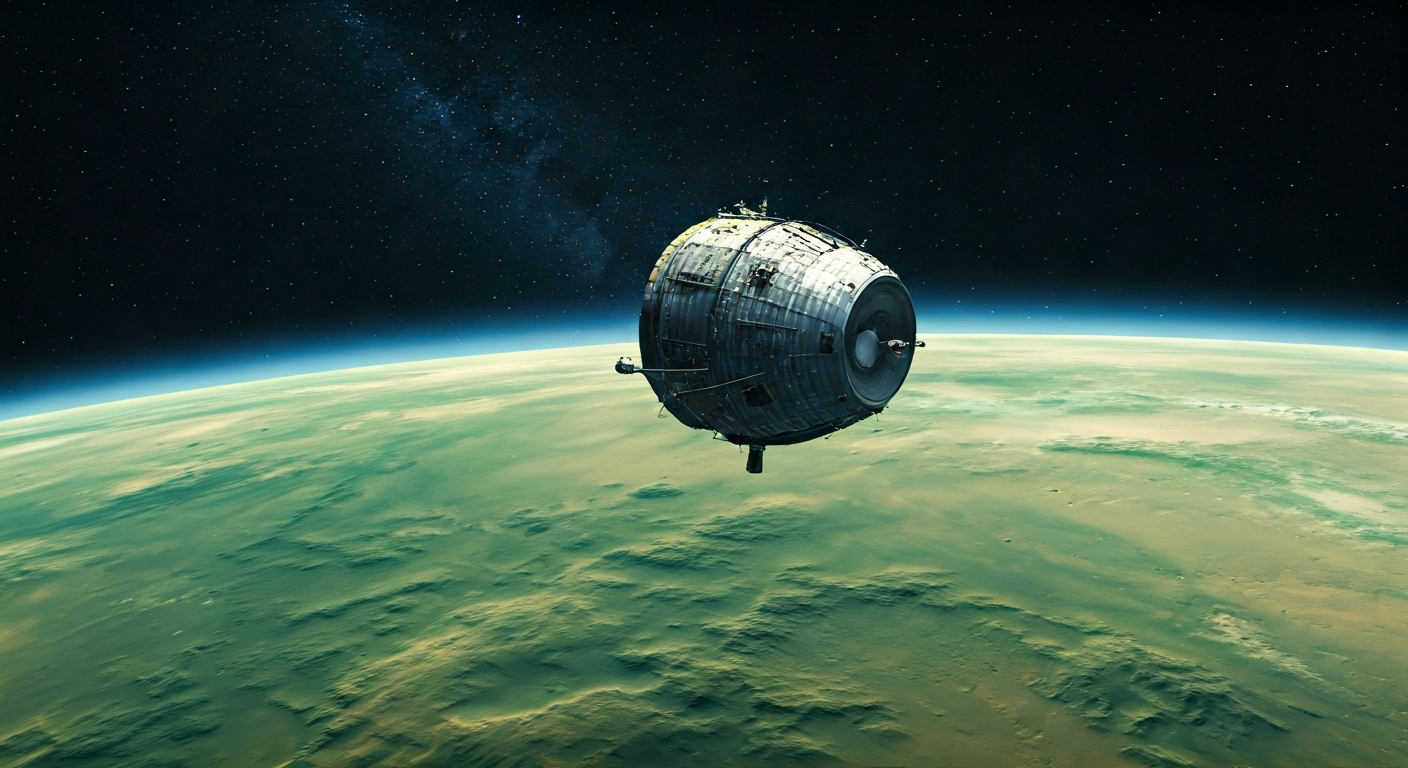
NASA's Psyche mission has successfully completed a crucial gravity assist maneuver using Mars, propelling it closer to its target metallic asteroid.
The NASA Psyche mission has successfully utilized Mars' gravitational pull to gain speed and alter its trajectory, marking a significant step towards its destination.
This maneuver, known as a gravity assist or slingshot, involved the spacecraft flying by Mars at a specific distance and velocity. By leveraging the planet's gravitational field, Psyche was able to accelerate and adjust its course without expending precious onboard fuel.
The mission, launched in October 2023, is en route to study the asteroid 16 Psyche, a unique celestial body believed to be the exposed nickel-iron core of an early planetesimal. Understanding this asteroid could provide invaluable insights into the formation of rocky planets, including Earth.
The successful Mars flyby means the spacecraft is now on a more efficient path to the asteroid belt. This phase is critical as it sets up the final approach and eventual orbital insertion around the metallic asteroid, which is expected to occur in 2029.
The Psyche mission's successful gravity assist by Mars exemplifies the ingenious application of orbital mechanics, a foundational technology for expanding humanity's reach. Each such maneuver, conserving propellant and extending mission scope, directly accelerates our capability to explore and eventually exploit resources beyond Earth. This efficient trajectory optimization is not merely about reaching an asteroid; it's about refining the very tools and techniques that will enable sustained presence in the solar system. By mastering these gravitational slingshots, we are building the interplanetary infrastructure, paving the way for the exponential growth of human civilization across the cosmos, transforming a distant dream into an inevitable reality.
Edited by the news editor with AI and translated into English from the original report — please refer to the original source.