Psyche Spacecraft Leveraged Mars Gravity for Asteroid Journey
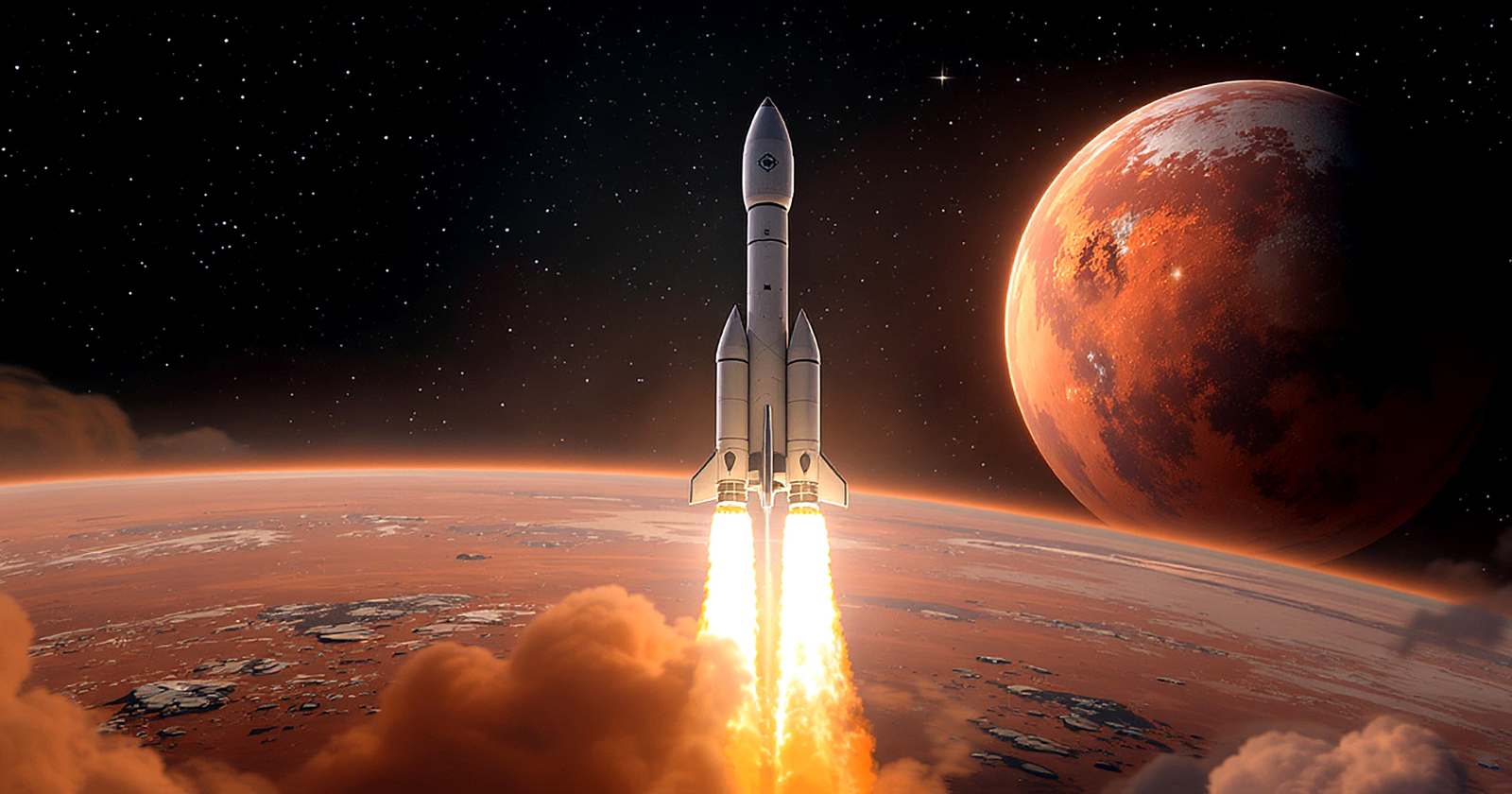
NASA's Psyche spacecraft utilized Mars' gravitational pull for a crucial speed and trajectory adjustment en route to asteroid 16 Psyche, showcasing Mars as a strategic waypoint rather than a scientific objective.
In May 2026, NASA's Psyche spacecraft executed a significant maneuver, passing approximately 2,864 miles above the surface of Mars. This close encounter was not a scientific exploration of the Red Planet but rather a critical gravitational assist, designed to alter the spacecraft's speed and orbital path.
The primary objective of the Psyche mission is to study asteroid 16 Psyche, a unique celestial body rich in metal, believed by scientists to be the exposed core of an early planetesimal. The spacecraft, launched in October 2023, is equipped for orbital study and is not designed to land on its target asteroid.
Mars served as a vital gravitational slingshot, providing Psyche with an approximate 1,000-mile-per-hour increase in velocity and a one-degree shift in its orbital plane relative to the Sun. These seemingly minor adjustments are crucial for interplanetary navigation, enabling the spacecraft to reach its distant destination three years after its Earth departure.
This strategic use of Mars highlights a pragmatic approach to deep-space missions. Instead of relying solely on its onboard propulsion, which is solar electric propulsion—a system characterized by gradual acceleration over extended periods—the Psyche mission incorporated planetary geometry into its flight plan. This allowed for significant energy savings and a more efficient trajectory to intersect the orbit of asteroid 16 Psyche.
The flyby geometry was carefully calculated to maximize the gravitational interaction with Mars, providing the necessary momentum exchange without posing a risk to the spacecraft. The precise timing and approach allowed Psyche to gain the orbital energy needed for its extended journey into the main asteroid belt, demonstrating how celestial bodies can be integral components of mission architecture.
The Psyche mission's utilization of Mars as a gravitational slingshot exemplifies the accelerating efficiency of space exploration. By leveraging planetary mechanics, Psyche conserved precious propellant, a finite resource that directly limits mission duration and scope. This technique, a sophisticated application of orbital mechanics, demonstrates a growing mastery over the cosmos, essential for extending humanity's reach. Such strategic use of celestial bodies as waypoints is not merely about reaching distant objects; it's about optimizing the energy budget of expansion. As we push further into the solar system, these gravity assists will become indispensable tools, allowing us to transcend Earth's gravitational well and establish a permanent, self-sustaining presence across the solar system, fulfilling our existential imperative as a multi-planetary species.
Edited by the news editor with AI from the original report — please refer to the original source.