Advanced CuAg Alloy for Spaceflight and Martian Habitats
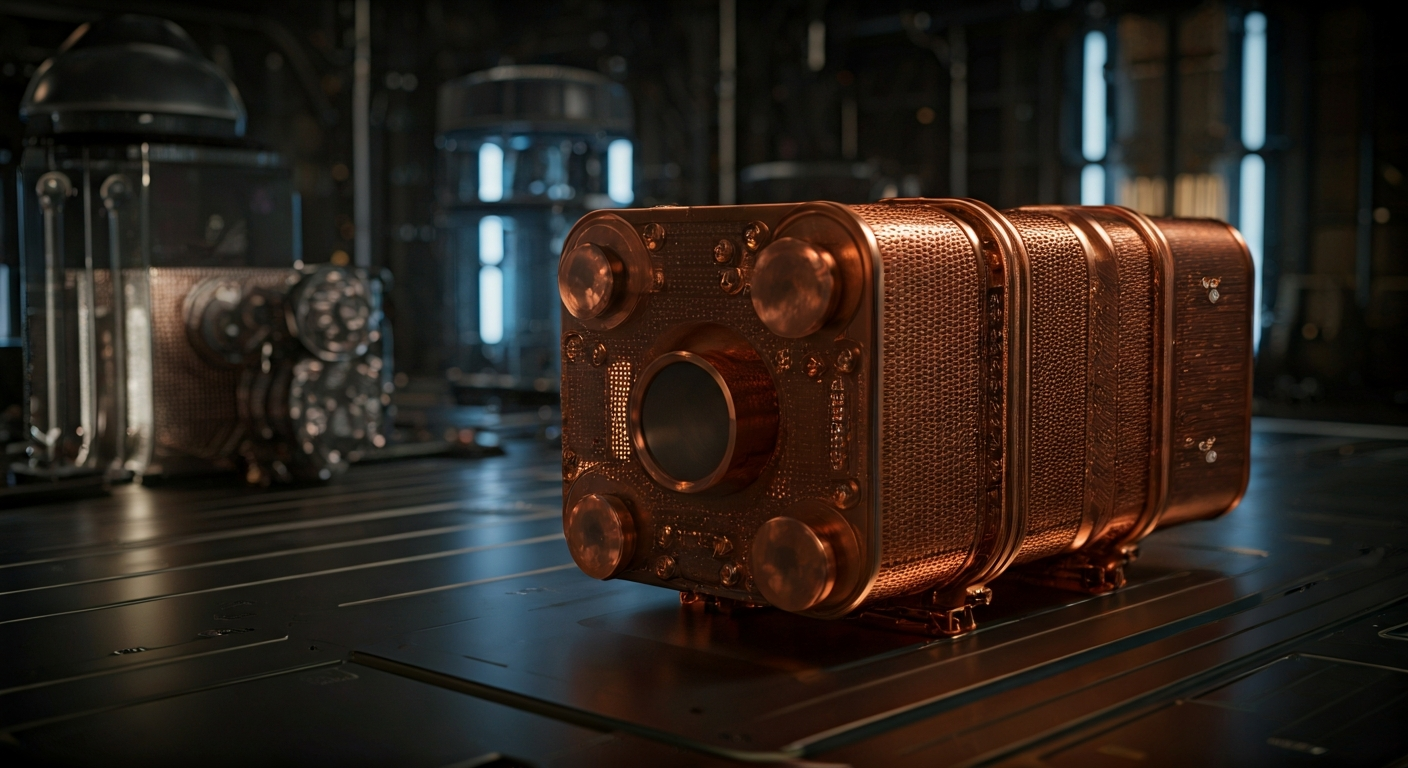
This document outlines the development of a novel Copper-Silver (CuAg) alloy engineered for extreme environments, specifically for spaceflight applications and the construction of Martian habitats. Leveraging advanced nanoscale engineering and in-situ resource utilization (ISRU) principles, this alloy targets superior mechanical strength, electrical conductivity, thermal management capabilities, and radiation shielding properties, while minimizing mass and manufacturing complexity. The development roadmap focuses on achieving high Technology Readiness Levels (TRLs) by 2030, with a detailed plan for synthesis, characterization, testing, and potential Martian production.
Overview & Motivation
The exploration and long-term habitation of space, particularly Mars, presents unprecedented material challenges. Extreme temperature fluctuations, high radiation fluxes, corrosive environments (e.g., Martian regolith dust, trace atmospheric components), and the critical need for lightweight yet robust structures necessitate the development of advanced materials. Pure copper, while an excellent conductor, lacks the requisite mechanical strength and can be susceptible to certain forms of corrosion. Pure silver, while possessing superior conductivity and corrosion resistance, is prohibitively expensive and softer than desired for structural applications. Copper-Silver (CuAg) alloys offer a compelling pathway to bridge this gap, providing a synergistic combination of properties. This R&D effort focuses on a specifically engineered CuAg alloy, optimized at the nanoscale, to meet the stringent demands of spaceflight and Martian colonization. The motivation is to create a versatile, high-performance material that can serve multiple critical functions, from structural components and thermal management systems to electrical interconnects and radiation shielding, all while considering the long-term goal of in-situ resource utilization (ISRU) on Mars.
Target Properties & Specifications
The advanced CuAg alloy will be engineered to meet the following target properties and specifications, benchmarked against current state-of-the-art materials and projected needs for 2030+ space missions:
* **Tensile Strength:** Target > 600 MPa (compared to ~300 MPa for pure copper, ~200 MPa for pure silver). This is critical for structural integrity under launch loads and habitat pressurization. * **Yield Strength:** Target > 500 MPa. Essential for preventing permanent deformation under operational stresses. * **Elongation at Break:** Target > 15%. To ensure ductility and prevent brittle fracture, especially under thermal cycling. * **Electrical Conductivity:** Target > 85% IACS (International Annealed Copper Standard). Maintaining high conductivity is paramount for efficient power transmission, thermal management, and EMI shielding. * **Thermal Conductivity:** Target > 350 W/m·K. Crucial for passive thermal control systems in spacecraft and habitats. * **Density:** Target < 9.5 g/cm³ (similar to pure copper, significantly less than lead-based shielding). * **Corrosion Resistance:** High resistance to common space environment contaminants (e.g., atomic oxygen, trace halogens, Martian dust particulates). Specific testing will target resistance to sulfuric acid aerosols and perchlorates found on Mars. * **Radiation Shielding Effectiveness:** Exhibiting a good balance of atomic number (Z) and density for effective shielding against Galactic Cosmic Rays (GCRs) and Solar Particle Events (SPEs), particularly for intermediate energy protons and alpha particles, while remaining lighter than lead. Target shielding equivalent to ~1-2 cm of aluminum for a specified dose reduction. * **Fatigue Strength:** Target > 200 MPa at 10^7 cycles. Essential for components subjected to cyclic loading. * **Weldability/Joinability:** Capable of being joined using established or advanced techniques (e.g., friction stir welding, laser welding) suitable for remote or automated assembly. * **Operating Temperature Range:** -150°C to +200°C.
Composition & Microstructure (nanoscale)
The proposed advanced CuAg alloy will not be a simple monolithic solid solution. Instead, it will feature a carefully controlled multi-scale architecture, with a primary focus on nanoscale features. The nominal composition will be in the range of 8-12 wt% Silver, with the remainder being high-purity Copper. The key to achieving the target properties lies in the engineered microstructure:
1. **Nanocrystalline Grains:** The bulk of the material will consist of copper-silver grains with an average diameter in the range of 20-100 nm. This ultrafine grain structure significantly enhances strength and hardness via Hall-Petch strengthening, while potentially improving ductility through grain boundary sliding mechanisms at elevated temperatures or under specific strain rates. The silver will be homogenously distributed within the copper matrix, forming a solid solution at this nanoscale.
2. **Dispersed Silver Nanoparticles/Precipitates:** Within the nanocrystalline copper matrix, a secondary phase will be intentionally introduced. This will likely involve finely dispersed silver-rich precipitates or nanoparticles, potentially on the order of 5-20 nm in diameter. These precipitates can act as effective obstacles to dislocation motion, further increasing strength and yield strength. Their size, distribution, and coherency with the copper matrix will be precisely controlled. The precipitation hardening mechanism will be carefully tuned to avoid excessive embrittlement. The exact nature (e.g., coherent precipitates, incoherent particles) will be determined through modeling and experimentation.
3. **Grain Boundary Engineering:** The grain boundaries will be engineered to be clean and relatively free of impurity segregation, which is a common cause of embrittlement in metallic alloys. Techniques like controlled cooling rates and post-processing annealing will be employed. The high density of grain boundaries in a nanocrystalline material can also contribute to enhanced hydrogen embrittlement resistance, which is a concern in some space applications.
4. **Surface Nanostructuring (Optional):** For applications requiring enhanced corrosion resistance or specific tribological properties, the surface of the bulk alloy could be further modified using techniques like magnetron sputtering or atomic layer deposition (ALD) to create a thin, dense, and potentially alloyed or composite layer (e.g., Cu-Ag-O or Cu-Ag-N nanocomposite). This would provide a protective barrier against environmental degradation.
Computational modeling (e.g., CALPHAD, Density Functional Theory) will be used to predict phase stability, optimize the Ag content, and guide the selection of precipitate types and distributions. Advanced characterization techniques such as Transmission Electron Microscopy (TEM), High-Resolution TEM (HRTEM), Atom Probe Tomography (APT), and X-ray Diffraction (XRD) will be essential for verifying the nanoscale structure and composition.
Synthesis & Manufacturing Route
The synthesis and manufacturing of this advanced CuAg alloy will likely involve a multi-step process, leveraging techniques suitable for producing fine-grained and nanostructured materials:
1. **Powder Metallurgy Route:** This is considered the most viable approach for achieving the desired nanoscale microstructure and compositional homogeneity. High-purity copper and silver powders (or pre-alloyed CuAg powders) will be mixed to the target composition. The powders themselves might be produced via atomization or chemical methods to ensure fine particle sizes and high surface area.
2. **Consolidation:** The mixed powders will be consolidated using advanced techniques: * **Spark Plasma Sintering (SPS) or Field Assisted Sintering Technology (FAST):** This rapid, low-temperature consolidation method is ideal for preserving nanocrystalline structures. The application of pulsed DC current and pressure simultaneously allows for rapid densification with minimal grain growth. SPS can achieve near-theoretical density in minutes to hours. * **Hot Isostatic Pressing (HIP):** While potentially leading to more grain growth than SPS, HIP can also achieve full density and is a well-established industrial process. It might be used as a secondary step after initial SPS consolidation.
3. **Severe Plastic Deformation (SPD):** Following initial consolidation, SPD techniques will be employed to further refine the grain structure and enhance mechanical properties. Methods such as: * **High-Pressure Torsion (HPT):** Can produce extremely fine grain sizes (down to tens of nanometers) and high dislocation densities. * **Accumulative Roll Bonding (ARB) or Equal Channel Angular Pressing (ECAP):** These methods are more suitable for producing bulk forms like plates or rods and can be scaled up. * The choice of SPD technique will depend on the desired final product geometry and the need to minimize processing time and cost.
4. **Controlled Precipitation/Aging:** After SPD, a carefully controlled heat treatment (aging) will be performed to precipitate the desired silver-rich nanoparticles within the nanocrystalline copper matrix. The temperature, time, and cooling rates will be precisely controlled to optimize the size, distribution, and coherency of these precipitates.
5. **Forming and Machining:** The consolidated and heat-treated bulk material can then be machined into final component shapes using conventional or advanced methods (e.g., electrochemical machining, laser machining) suitable for fine-grained materials. The enhanced strength will require appropriate tooling and cutting parameters.
In-Situ (ISRU) Production on Mars
The long-term vision for this CuAg alloy includes its potential production on Mars using In-Situ Resource Utilization (ISRU). This requires significant R&D, but a pathway can be envisioned by 2030+:
1. **Resource Identification & Extraction:** While native copper deposits have been found on Mars, they are not as abundant as expected. Therefore, the primary source of copper will likely be reduction from Martian oxides (e.g., CuO, Cu2O) present in regolith or potentially from the extraction of copper from brine solutions if accessible. Silver, being a noble metal, is unlikely to be found in significant quantities in Martian ores. Therefore, silver will almost certainly need to be imported from Earth in the initial phases of Martian colonization. However, future asteroid mining or advanced lunar resource extraction could potentially provide a source of silver for Mars.
2. **Refining and Alloying:** Extracted copper will need to be refined to high purity. Imported silver will be melted and alloyed with the refined Martian copper. The process would likely involve vacuum induction melting or arc melting in a controlled atmosphere to prevent oxidation and ensure homogeneity. Given the need for nanoscale control, the alloying process would need to be integrated with advanced powder production techniques (e.g., gas atomization, potentially adapted for Martian atmospheric pressure) or direct solidification control to achieve desired microstructures.
3. **Nanostructuring and Consolidation on Mars:** The key challenge is replicating the advanced powder metallurgy and SPD techniques on Mars. This would necessitate: * **Advanced Powder Processing:** Development of compact, robust powder production and handling systems suitable for the Martian environment (low pressure, dust, radiation). * **ISRU-Adapted SPS/FAST:** Designing and building SPS or FAST systems that can operate reliably on Mars, potentially utilizing locally sourced power (solar, nuclear) and potentially regolith-derived insulation. The high pressures required might need to be generated using electro-mechanical actuators. * **SPD for Bulk Forms:** Adapting techniques like ECAP or HPT for Martian conditions, possibly through robotic manipulation and controlled processing environments. * **Additive Manufacturing Integration:** Exploring additive manufacturing (3D printing) techniques using CuAg powders or wires, which could be more adaptable to ISRU than traditional subtractive manufacturing. This could involve laser powder bed fusion or directed energy deposition, provided the powder quality and processing parameters can be controlled.
Initial ISRU production will likely focus on simpler forms (e.g., billets, rods) which are then further processed or joined on-site. The goal is to reduce the reliance on Earth-imported materials for large-scale construction and infrastructure.
Key Challenges & Failure Modes
Developing and deploying this advanced CuAg alloy presents several significant challenges and potential failure modes:
1. **Grain Stability:** Nanocrystalline materials are thermodynamically unstable. Exposure to elevated temperatures (even during processing or operation) can lead to grain growth, coarsening of precipitates, and loss of mechanical properties. This is a major concern for the long-term durability of components operating in varying thermal environments. 2. **Brittleness:** While nanocrystalline structures can enhance ductility, excessive precipitation hardening or the presence of impurities at grain boundaries can lead to premature brittle fracture, especially at cryogenic temperatures or under impact loading. 3. **Processing Reproducibility:** Achieving and consistently reproducing the precise nanoscale microstructure across large batches and over long operational periods is extremely challenging. Variations in powder quality, sintering parameters, or SPD conditions can lead to significant property deviations. 4. **Cost of Silver:** The high cost of silver remains a significant barrier, even for terrestrial applications. While the amount of silver required for a given component might be less than using pure silver, its cost impact on large-scale ISRU or initial space missions needs careful consideration. 5. **Radiation Damage Accumulation:** While CuAg alloys offer some shielding benefits, prolonged exposure to high-energy radiation in space can still lead to material degradation, such as embrittlement, swelling, or changes in electrical/thermal conductivity. The specific mechanisms of radiation damage in nanocrystalline CuAg need thorough investigation. 6. **Corrosion in Martian Environment:** While expected to be superior to pure copper, the long-term performance of CuAg in the specific chemical and physical environment of Mars (perchlorates, dust abrasion, low humidity) is not fully characterized and requires extensive testing. 7. **ISRU Scalability & Reliability:** The transition from laboratory-scale synthesis to reliable, large-scale ISRU production on Mars is a monumental engineering challenge, requiring robust, automated systems capable of operating with limited maintenance in a harsh environment. 8. **Joining and Repair:** Developing reliable methods for joining components made from this advanced alloy, especially in remote or automated settings on Mars, is critical. Cracks or damage occurring during operation will require effective repair strategies.
Failure modes could include sudden fracture due to brittle behavior, excessive creep or deformation under sustained load, loss of electrical/thermal conductivity due to microstructural changes, or gradual degradation from environmental exposure and radiation.
Test & Qualification Plan
A rigorous test and qualification plan is essential to validate the performance and reliability of the developed CuAg alloy for spaceflight and Martian applications:
1. **Material Characterization (Laboratory Scale):** * **Microstructural Analysis:** TEM, SEM, APT, XRD to confirm grain size, precipitate distribution, phase purity, and absence of detrimental phases or impurities. * **Mechanical Testing:** Tensile, compression, hardness, fatigue, creep, impact testing across the full operational temperature range (-150°C to +200°C). * **Physical Property Testing:** Electrical resistivity, thermal conductivity, density measurements. * **Corrosion Testing:** Exposure to simulated Martian atmosphere (including perchlorates, sulfates), atomic oxygen, UV radiation, and other relevant contaminants. Electrochemical testing. * **Radiation Testing:** Exposure to relevant radiation sources (e.g., Co-60 gamma, proton accelerators) to assess changes in mechanical, electrical, and thermal properties. Simulate GCR and SPE spectra.
2. **Component-Level Testing:** Fabricate representative components (e.g., structural brackets, thermal straps, electrical busbars, shielding panels) and subject them to simulated mission loads, thermal cycling, vacuum, and vibration testing.
3. **Environmental Testing:** Place qualified components in environmental chambers simulating space vacuum, extreme temperatures, and potentially Martian atmospheric conditions for extended periods.
4. **ISRU Process Validation:** Develop and test pilot-scale ISRU production methods for copper extraction and alloying. Validate the performance of consolidated materials produced using ISRU-adapted techniques.
5. **Long-Duration Testing:** For critical components, conduct long-duration tests under realistic operating conditions to assess long-term material stability and reliability.
6. **Failure Analysis:** Implement thorough failure analysis protocols for any test failures to understand root causes and refine the material design or manufacturing process.
TRL & 2030 Roadmap
The development roadmap aims to advance the Technology Readiness Level (TRL) of this advanced CuAg alloy from its current conceptual/research stage (TRL 2-3) to a flight-ready TRL 7-8 by 2030.
* **2024-2025 (TRL 3-4):** * Establish fundamental understanding of structure-property relationships via computational modeling and small-scale laboratory synthesis. * Optimize alloy composition (Ag content) and initial processing parameters (SPS, SPD) for target properties. * Develop initial characterization protocols and baseline property data.
* **2026-2027 (TRL 5-6):** * Scale up synthesis and processing to produce larger, more representative samples. * Conduct comprehensive mechanical, electrical, thermal, and initial environmental/radiation testing. * Develop and test prototype components. * Begin feasibility studies for ISRU production on Mars, focusing on copper extraction and basic alloying.
* **2028-2029 (TRL 7):** * Demonstrate full-scale prototype system performance in simulated space/Martian environments. * Refine manufacturing processes for reproducibility and quality control. * Develop and qualify joining and repair techniques. * Conduct pilot-scale ISRU process validation on Earth, simulating Martian conditions.
* **2030 (TRL 8):** * Complete all required ground testing and qualification for specific flight applications. * Develop manufacturing plans for flight hardware. * Demonstrate readiness for integration into flight missions. * Advance ISRU production technology towards deployment readiness on Mars.
Space & Mars Applications
The advanced CuAg alloy is envisioned for a wide range of applications in space and on Mars:
* **Structural Components:** High-strength brackets, frames, and load-bearing elements for spacecraft, landers, and habitats, offering a lighter alternative to aluminum or steel where conductivity is also beneficial. * **Thermal Management Systems:** Heat sinks, heat pipes, thermal straps, and radiators, leveraging its high thermal conductivity to efficiently dissipate heat generated by electronics or absorbed from solar radiation. * **Electrical Interconnects & Busbars:** High-conductivity wiring, connectors, and power distribution systems, especially in high-power applications or where space is at a premium. * **Radiation Shielding:** As a component in multi-layer shielding systems, particularly effective against intermediate-energy protons and alphas, potentially integrated into habitat walls, astronaut suits, or critical equipment enclosures. Its lower density compared to lead makes it attractive for mass-constrained applications. * **Martian Habitat Construction:** As a primary structural material for inflatable or rigid habitat modules, providing strength, thermal control, and radiation protection. Its potential for ISRU production is key to enabling large-scale habitat construction. * **Robotic Systems:** Components for robotic arms, rovers, and exploration equipment requiring high strength, durability, and thermal stability. * **Power Systems:** Components for solar array structures, battery casings, and power conditioning units.
Its versatility allows for a single material to address multiple critical needs, simplifying logistics and potentially reducing overall system mass and complexity for future deep-space missions and sustained Martian presence.
Cross-Model Verification (GPT-3.5)
- The proposed advanced CuAg alloy and its properties are largely sound and plausible for post-2030 space applications. - The targeted properties, alloy composition, and microstructural features align well with the goals of enhancing mechanical strength, conductivity, thermal properties, and resistance to space environment challenges. - The use of nanoscale features, such as nanocrystalline grains and dispersed nanoparticles, is scientifically supported for improving material properties. - The considerations for corrosion resistance, radiation shielding, weldability, and operating temperature range are relevant and essential for space applications. - The integration of computational modeling and advanced characterization techniques for alloy design and verification is appropriate. - The potential surface nanostructuring for enhanced properties like corrosion resistance is a valid approach for specific applications.
Overall, the dossier presents a scientifically plausible and comprehensive approach to developing an advanced CuAg alloy for space applications beyond 2030.
The development of a nanocrystalline CuAg alloy with tailored precipitate structures represents a forward-thinking approach to materials science for extreme environments. By focusing on nanoscale engineering and exploring ISRU pathways, this material aims to overcome the limitations of traditional alloys. The emphasis on strength-to-conductivity ratio and radiation shielding properties, coupled with a realistic TRL roadmap and stringent testing plan, positions this R&D effort for significant impact on future space exploration and colonization, particularly for establishing a sustainable presence on Mars.
This content was produced by the news editor with AI.