Perseverance Samples Provide Clues to Mars' Ancient Climate
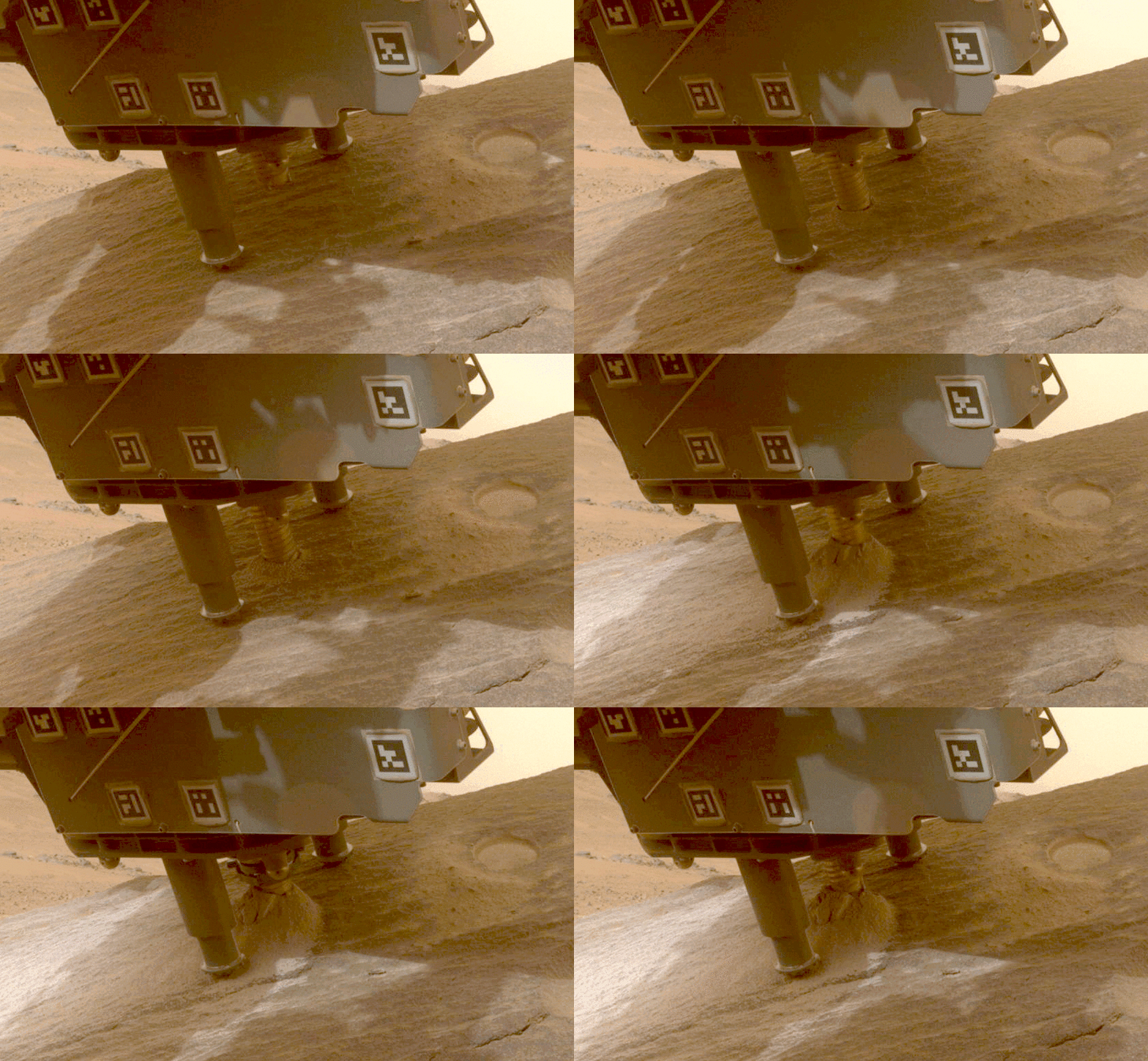
NASA's Perseverance rover has collected rock samples that could offer new insights into Mars' past climate conditions.
NASA's Perseverance Mars rover recently captured a self-portrait against a backdrop of ancient Martian terrain, highlighting its ongoing mission to search for signs of ancient life and collect samples for potential return to Earth. The rover's latest findings include rock samples that could provide crucial data on Mars' climatic history.
The samples, collected from an area nicknamed 'Arbot,' were analyzed by scientists who found differences in hematite crystallite size at varying elevations. These differences could serve as a new mineralogical marker for understanding the planet's ancient climate. The findings underscore the importance of the rover's mission to explore and analyze the Martian surface.
Perseverance's journey has taken it deep west of Jezero Crater, where it has been actively collecting samples and capturing detailed images of the landscape. The rover's Mastcam-Z camera has been instrumental in providing high-resolution panoramas that help scientists better understand the geology of the region.
These discoveries come as part of a broader effort by NASA to advance Mars science through public-private partnerships and improved communication systems. The agency is also working on the Mars Telecommunications Network, which aims to enhance data relay capabilities for future missions. As NASA continues its exploration of Mars, the data collected by Perseverance will play a vital role in shaping our understanding of the Red Planet.
This article was written by AI from the original report. The "AI Analysis" is opinion/commentary. Always refer to the original source for the complete, authoritative story.