Perseverance Rover Uncovers Ancient Martian Impact History
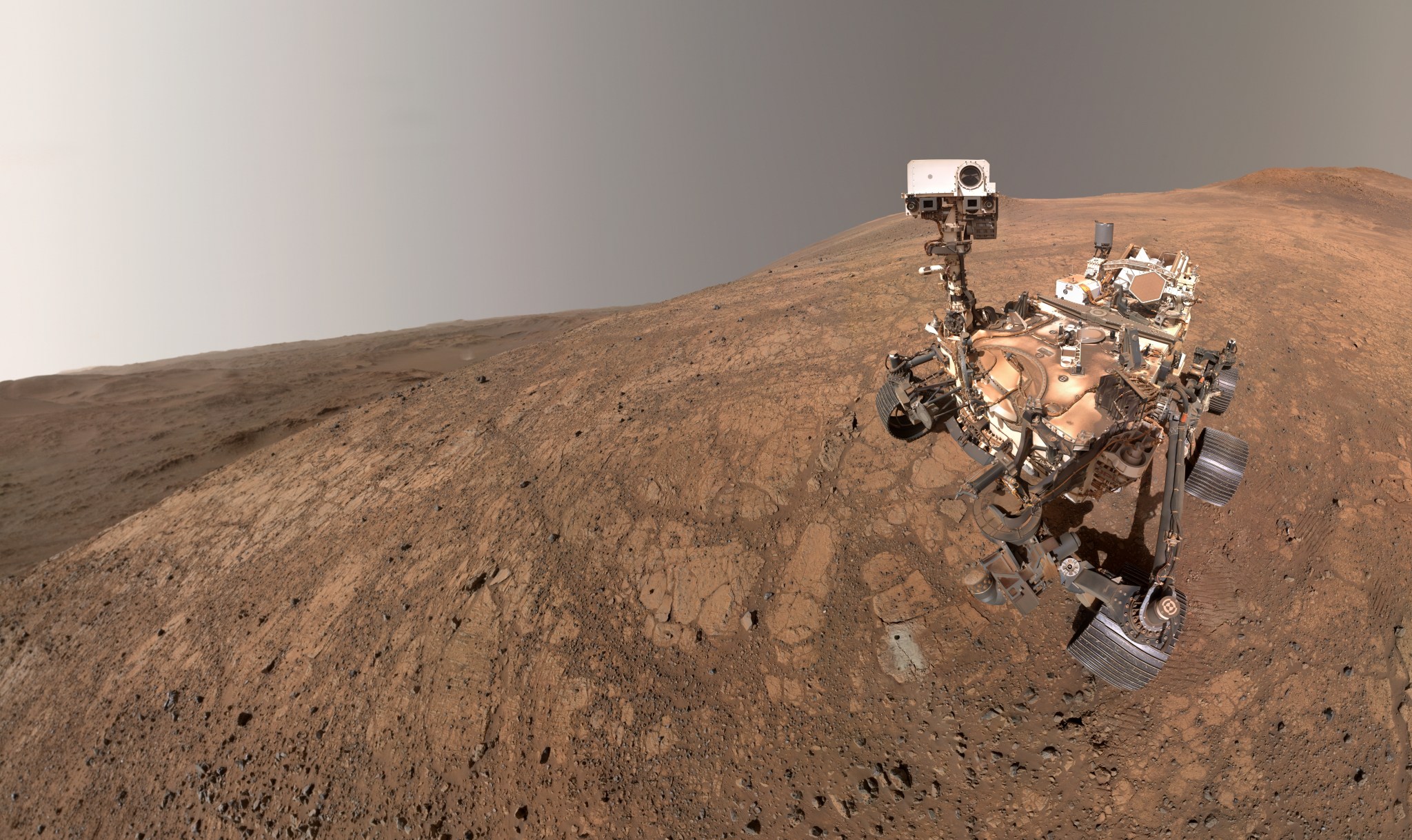
NASA's Perseverance rover has analyzed a 75-meter-thick rock formation on Mars, revealing evidence of repeated asteroid impacts over 3.9 billion years ago.
The Perseverance rover has identified a substantial stack of ancient bedrock on the edge of Jezero Crater, nicknamed the "Broom Point member," which appears to be the product of numerous asteroid impacts. This geological formation, estimated to be over 3.9 billion years old, represents some of the oldest terrain ever investigated by a Mars rover, offering insights into a turbulent period in the early solar system.
Scientists analyzing data from Perseverance's instruments at Broom Point discovered a sequence of distinct rock types, including breccias composed of angular fragments and layers of fine, pulverized dust. The presence of numerous glassy beads within these rocks, some comparable in size to those from Earth's Chicxulub impact, strongly suggests that asteroid impacts, rather than volcanic activity, were the primary force shaping this ancient landscape. The repeated layering indicates that high-energy impact events occurred frequently in this region.
The composition and structure of these layers hint at possible interactions with water or ice. Some layers exhibit characteristics of debris flows, which on Earth can form when molten rock encounters water, causing rapid steam generation. The extreme tilt of some of Broom Point's layers, exceeding 80 degrees, is too steep to be attributed to the impact that formed Jezero Crater.
Researchers propose that a dual-impact scenario likely shaped the area. A massive initial impact may have created the vast Isidis Basin, tilting the bedrock. Subsequently, a second, smaller impact formed Jezero Crater, fracturing and uplifting these pre-tilted layers into their current dramatic configuration. The rover has collected core samples, "Bell Island" and "Main River," which, if returned to Earth, could provide precise dating of these impact events and offer a rare glimpse into early planetary bombardment.
Perseverance's discovery at Broom Point provides crucial data on the early bombardment of Mars, revealing a layered record of repeated asteroid impacts. This ancient, intact Martian geology, unlike Earth's tectonically recycled crust, offers a direct window into the violent formative epochs of terrestrial planets. The ability to analyze such old, impact-generated materials, and potentially date them via returned samples, is fundamental to understanding the conditions that prevailed when life first emerged. For humanity's multi-planetary future, deciphering these cosmic weather reports from 4 billion years ago is not just scientific curiosity; it's about understanding the very processes that seeded and shaped worlds, guiding our own expansion and the establishment of self-sustaining civilizations beyond Earth.
Edited by the news editor with AI from the original report — please refer to the original source.