China's Tianwen-2 Reaches Asteroid Kamoʻoalewa, Begins Sample Mission
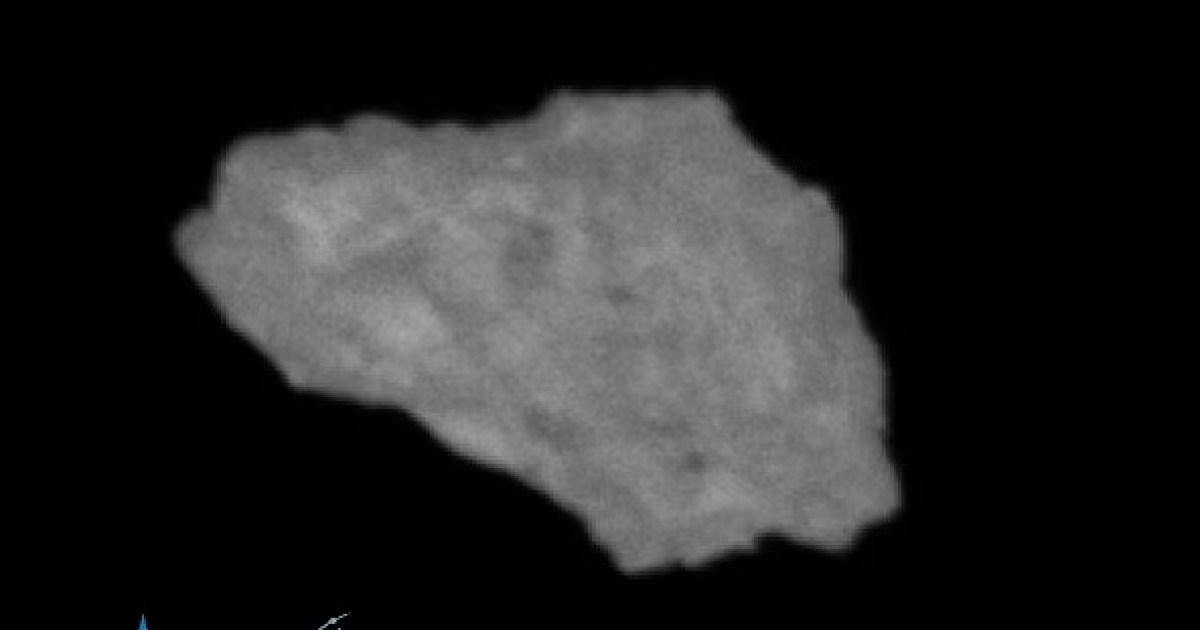
China's Tianwen-2 spacecraft has successfully arrived at near-Earth asteroid 469219 Kamoʻoalewa, commencing its close-up scientific study and initiating preparations for a groundbreaking sample return mission. The mission also includes a future stop at a comet-like body in the main asteroid belt.
After a journey spanning nearly 400 days and covering approximately one billion kilometers, China's Tianwen-2 spacecraft has reached its primary target, the near-Earth asteroid Kamoʻoalewa (also known as 2016 HO3). The China National Space Administration announced the spacecraft's arrival on July 6, confirming it had closed to within 20 kilometers of the asteroid, signaling the commencement of its intensive scientific observation phase. During its approach, Tianwen-2 captured its initial images of Kamoʻoalewa and transmitted navigation data that significantly refined the asteroid's positional uncertainty from hundreds of kilometers to the kilometer scale.
This mission marks China's first endeavor to retrieve samples from an asteroid. Kamoʻoalewa is merely the initial destination in a long-term expedition planned to span over a decade, with a subsequent objective to visit 311P/PanSTARRS, a body exhibiting cometary characteristics within the main asteroid belt, located beyond the orbit of Mars. Tianwen-2 was launched on May 29, 2025, from the Xichang Satellite Launch Center and spent over a year executing maneuvers to intercept its target.
The mission's scientific payload comprises an 11-instrument suite designed to analyze the asteroid's composition, shape, and internal structure. These instruments include twin imaging and thermal spectrometers, ground-penetrating radar, a magnetometer, particle analyzers, and an Italian-built dust detector named DIANA (Dust In-situ ANalyzer). The study of Kamoʻoalewa, a stable quasi-moon of Earth that has orbited in tandem with our planet for centuries, is expected to provide insights into the materials and evolutionary processes of the early solar system.
Collecting a sample from Kamoʻoalewa presents a complex challenge, for which Tianwen-2 is equipped with three distinct sampling methods. These range from a gentle hovering technique, where the probe collects loose material with minimal contact, to a more robust anchor-and-attach system utilizing four robotic arms with drills to secure the spacecraft for extended extraction. The selection of the sampling method will be determined by the ongoing survey of the asteroid's surface properties. The spacecraft will spend several months mapping Kamoʻoalewa's structure before selecting a landing site and proceeding with the sample collection, aiming to depart with its collected material.
Tianwen-2's arrival at Kamoʻoalewa and its sophisticated multi-stage sample acquisition strategy represent a critical step in humanity's understanding of solar system origins and our capacity for deep-space resource utilization. The mission's ability to precisely navigate and then employ diverse sampling techniques, including the novel anchor-and-attach method, showcases accelerating technological mastery. Studying Kamoʻoalewa's composition, especially its potential lunar origin, could unlock secrets of planetary formation, providing vital data for future off-world construction and resource mapping. This mission's success, particularly its long-term scope extending to the main asteroid belt, directly fuels the imperative of becoming a multi-planetary species by demonstrating the practical feasibility of complex interplanetary operations and resource acquisition beyond Earth.
Edited by the news editor with AI from the original report — please refer to the original source.