Perseverance Rover Successfully Collects First Mars Rock Sample
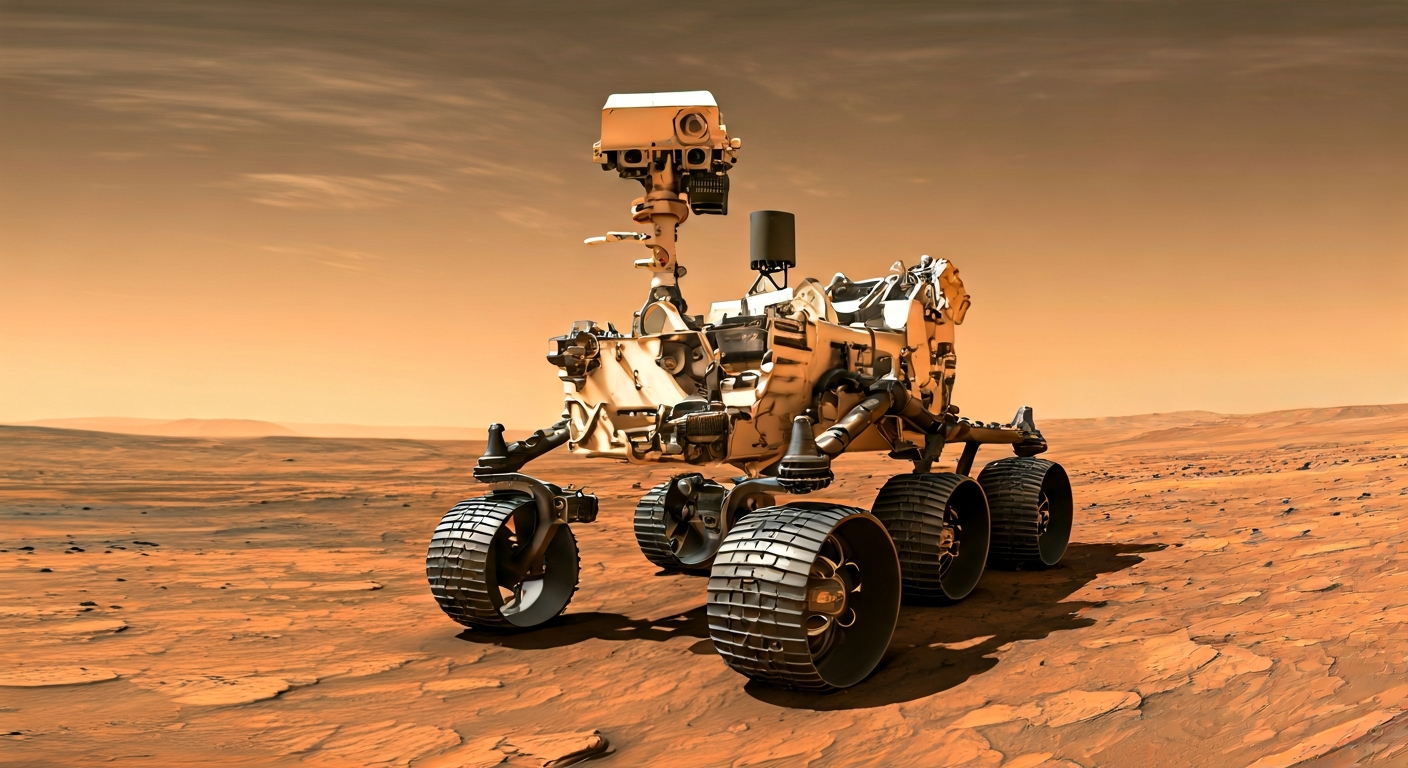
NASA's Perseverance rover has achieved a significant milestone by successfully acquiring its inaugural rock sample from the Martian surface, a crucial step for future sample return missions.
NASA's Perseverance rover has successfully collected its first rock sample on Mars, marking a pivotal moment in the rover's mission. This operation took place within the Jezero Crater, a location chosen for its potential to have once harbored microbial life.
The rover employed its sophisticated robotic arm and a specialized drill to extract a core sample from a rock. This sample has now been sealed within a sterile titanium tube, ready for potential return to Earth in a future mission. The process involved careful maneuvering and precise execution by the rover's instruments.
This sample collection is a critical part of Perseverance's astrobiology objectives. Scientists aim to analyze these Martian rocks for signs of ancient life. The ability to collect and store samples increases the likelihood that future missions can successfully bring them back for in-depth study in terrestrial laboratories.
Perseverance's mission is designed to demonstrate key technologies for future human exploration of Mars. The successful acquisition of this first sample underscores the rover's capabilities and its contribution to preparing for more ambitious endeavors on the Red Planet.
The successful acquisition of the first rock sample by Perseverance is a concrete step toward Mars sample return, a foundational element for establishing a self-sustaining Martian civilization. Each meticulously collected and cataloged sample represents data points, not just for understanding past life, but for characterizing the planet's resources and geological evolution. This capability enhances our ability to assess Martian regolith for construction materials and potential in-situ resource utilization, accelerating the exponential progress towards making Mars habitable and expanding the reach of life and intelligence beyond Earth.
Edited by the news editor with AI and translated into English from the original report — please refer to the original source.