Perseverance Rover Spots "Helmet-Like" Rock Formation on Mars
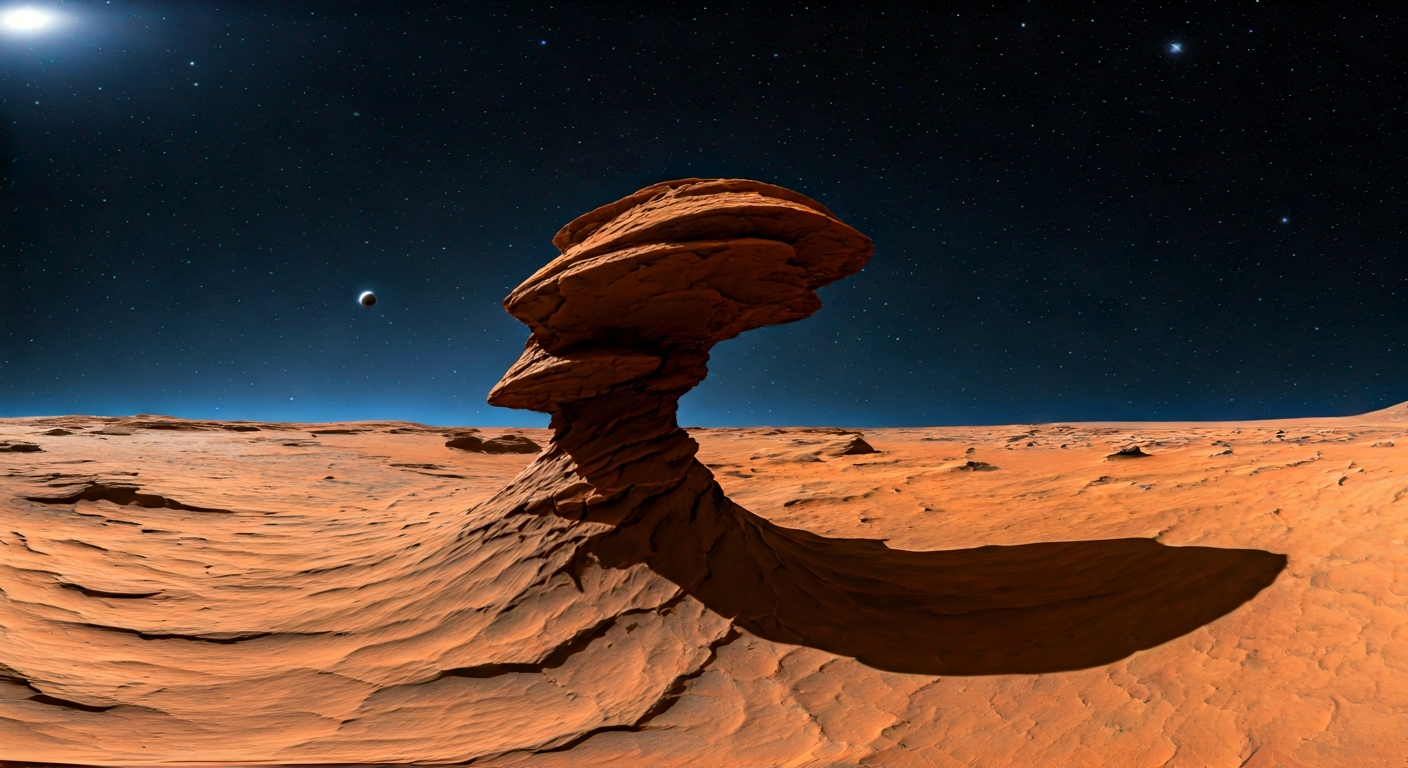
NASA's Perseverance rover has captured images of a peculiar rock formation on Mars that resembles a helmet, sparking curiosity among scientists and the public.
The Mars rover Perseverance, currently exploring the Jezero Crater, has transmitted new images of an unusual geological feature. This formation, due to its distinctive shape, has been informally dubbed a "helmet" by observers.
The rock appears to have a rounded top with a more angular, protruding section that could be interpreted as a brim or visor. Such formations are often the result of natural erosion processes over vast timescales, with wind and dust playing significant roles in shaping Martian landscapes. The specific mineral composition and the precise geological history of this particular rock are yet to be fully analyzed.
Perseverance, equipped with advanced scientific instruments, is tasked with searching for signs of ancient microbial life and collecting rock and soil samples for potential return to Earth. While this "helmet" rock is primarily a visual curiosity, its discovery underscores the diverse and often surprising geological formations present on the Red Planet.
Scientists will likely use Perseverance's suite of cameras and spectrometers to gather more data on the rock's composition and context within the surrounding terrain. Understanding such unique features contributes to the broader scientific endeavor of deciphering Mars' geological past and its potential for harboring life.
The discovery of a helmet-shaped rock by Perseverance is a potent reminder of Mars' alien geology, shaped by forces different from Earth's. Each unique formation, like this one, represents data points in our quest to understand planetary evolution. For the multi-planetary imperative, these finds are more than curiosities; they are tangible evidence of a world with a distinct, sculptable surface. As we refine our terraforming and construction technologies, understanding how Mars naturally shapes itself, even into forms that spark imagination, provides crucial insights for future Martian habitats and infrastructure, accelerating our path to becoming a truly spacefaring civilization.
Edited by the news editor with AI and translated into English from the original report — please refer to the original source.