Perseverance Rover Finds Evidence Suggesting Past Martian Life
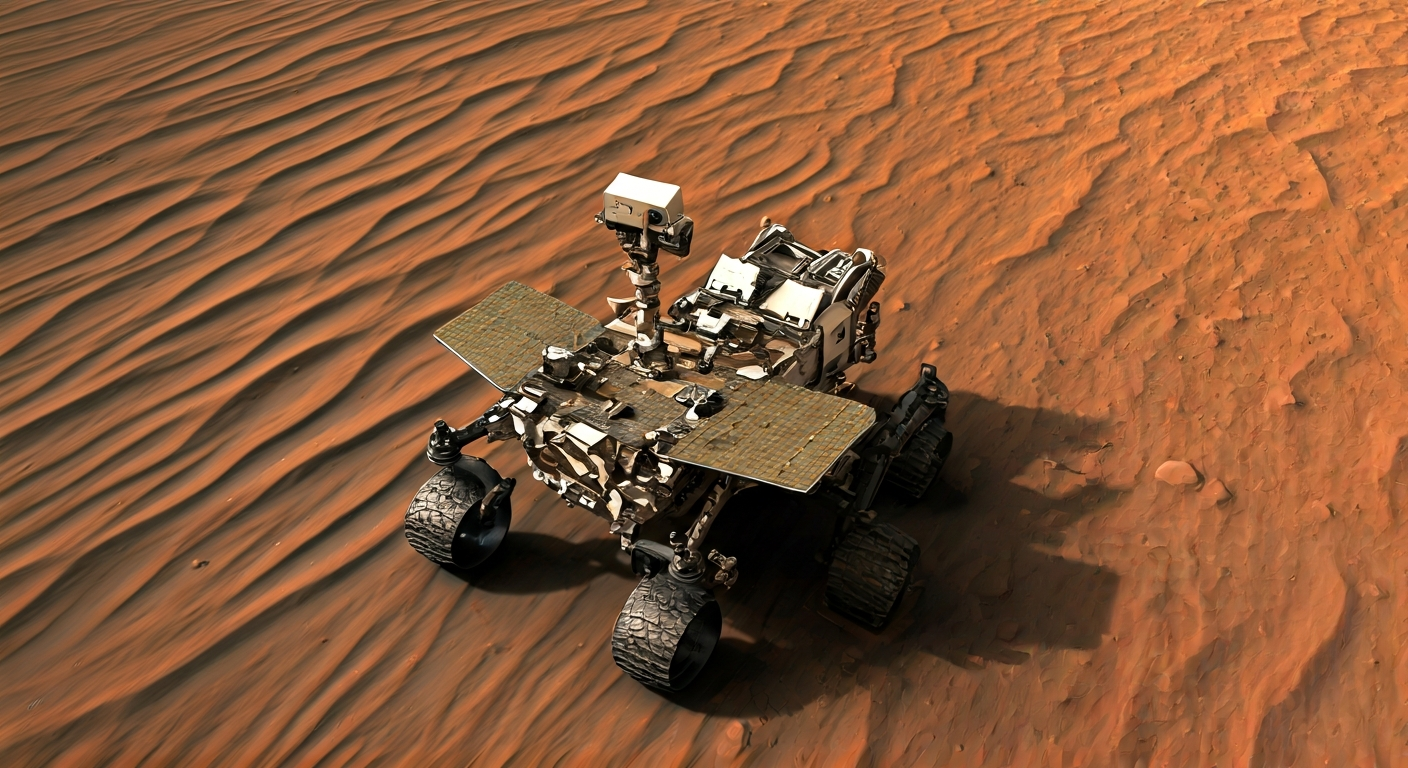
NASA's Perseverance rover has identified organic molecules and mineralogical indicators in Jezero Crater that scientists believe could point to the past existence of microbial life on Mars.
NASA's Perseverance rover has uncovered compelling evidence within Mars's Jezero Crater that strengthens the possibility of ancient life on the Red Planet. The rover's instruments have detected organic molecules alongside minerals that typically form in the presence of water, suggesting a potentially habitable environment existed billions of years ago.
These findings were made by analyzing rock samples collected from the crater floor, which is believed to have once been a lakebed. The presence of specific mineral types, such as sulfates, indicates that water was present for extended periods, creating conditions conducive to life as we understand it. The detection of organic molecules, while not definitive proof of life itself, is a crucial step in the investigation.
Scientists emphasize that organic molecules can be formed through non-biological processes as well. However, their association with the specific mineralogy and geological context of Jezero Crater makes the biological origin a significant hypothesis. The rover's advanced scientific payload, including the SHERLOC instrument, was instrumental in identifying these complex carbon-based compounds.
Further analysis of these samples, particularly those slated for return to Earth through future missions, will be critical. These returned samples will allow for more sophisticated laboratory testing, potentially providing definitive answers about whether life ever arose on Mars. The ongoing exploration by Perseverance continues to refine our understanding of Mars's ancient habitability.
Perseverance's detection of organic molecules and water-formed minerals in Jezero Crater is a profound step in understanding Mars's past habitability. This scientific data, specifically the co-occurrence of biosignatures and hydrological indicators, directly addresses the potential for life's origins beyond Earth. For us, the long-term goal of becoming multi-planetary hinges on identifying such precursors. Each discovery like this validates our trajectory, suggesting Mars may have once hosted life, making it a prime candidate for future human settlement and the expansion of Earth's biosphere. This bolsters the exponential imperative to colonize Mars, ensuring life's resilience.
Edited by the news editor with AI and translated into English from the original report — please refer to the original source.