Perseverance Rover Finds Evidence of Ancient Martian Beach with Waves
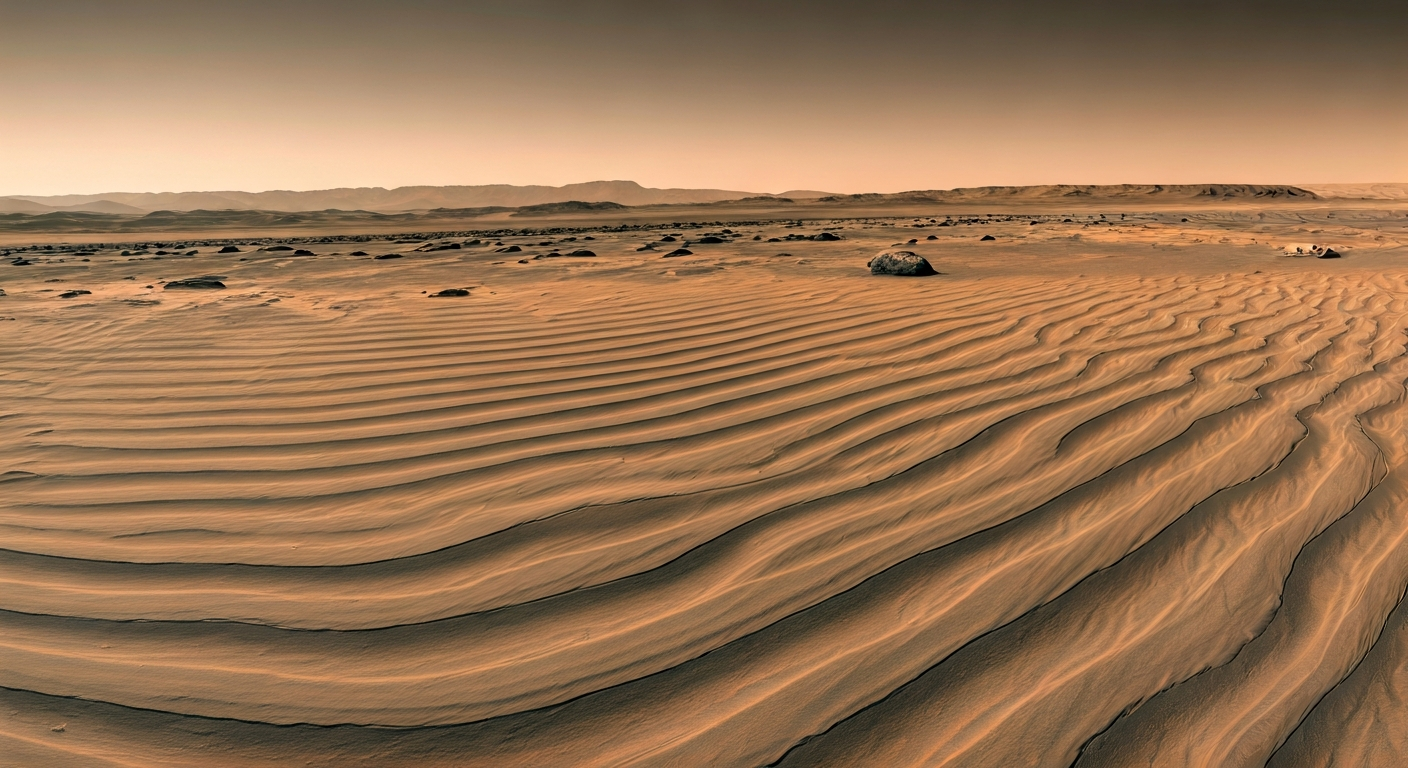
NASA's Perseverance rover has identified geological formations on Mars strongly indicative of a former beach, complete with ripple marks left by ancient waves.
The Perseverance rover, currently exploring the Jezero Crater on Mars, has uncovered compelling evidence of a long-vanished Martian coastline. Scientists analyzing data from the rover have identified distinct geological features that mirror those found on Earth's beaches, suggesting the presence of liquid water and wave action billions of years ago.
The key discovery involves layered sedimentary rocks displaying patterns consistent with wave-generated ripples. These formations, observed in images captured by the rover's Mastcam-Z instrument, indicate that water once lapped against the Martian surface in this region. The orientation and scale of these ripples provide clues about the direction and power of the ancient waves.
This finding adds significant weight to the hypothesis that Jezero Crater was once a lake, fed by rivers that carved channels into the crater's rim. The presence of a beach suggests the lake was not only stable but also dynamic, experiencing the ebb and flow of water that shaped its shores.
Scientists interpret these ancient beach deposits as a prime location for searching for signs of past microbial life. Such environments, where water and sediment interact, are often conducive to the preservation of biosignatures on Earth. The rover's ongoing mission in Jezero Crater is specifically designed to collect samples from these promising geological contexts for potential return to Earth.
Perseverance's identification of wave-formed ripples on Mars is a profound confirmation of ancient hydrological processes, directly supporting the concept of a wetter, potentially habitable ancient Mars. This discovery of a dynamic ancient shoreline in Jezero Crater, a site chosen for its past lake and river systems, is a critical step. It validates the strategic selection of locations for future Martian settlements, where evidence of past habitability can be more readily studied and potentially exploited. The data gathered here advances our understanding of planetary evolution and the conditions necessary for life's emergence, reinforcing the trajectory towards a multi-planetary future.
Edited by the news editor with AI and translated into English from the original report — please refer to the original source.