Perseverance Rover Exceeds Marathon Distance on Mars
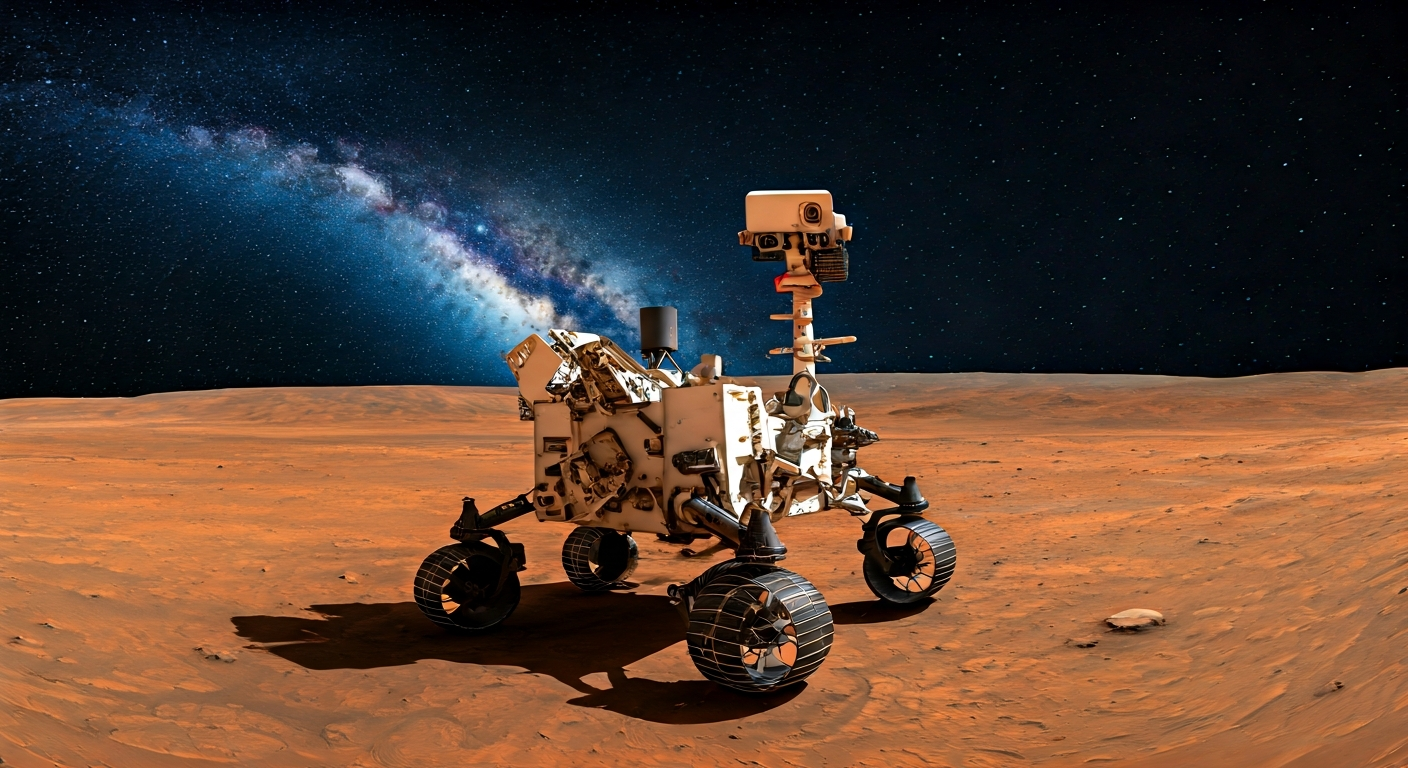
NASA's Perseverance rover has officially covered more than 42 kilometers (26 miles) of Martian terrain, surpassing the distance of a marathon.
NASA's Perseverance rover has achieved a significant mileage milestone, having traversed over 42 kilometers (approximately 26 miles) across the surface of Mars. This accomplishment marks a considerable journey for the robotic explorer operating on the Red Planet.
The rover has been actively engaged in scientific exploration since its landing in Jezero Crater in February 2021. Its mission involves investigating the geology of the ancient lakebed and delta, searching for signs of past microbial life, and collecting samples for potential return to Earth.
During its extensive traverse, Perseverance has utilized its advanced navigation and mobility systems to cover diverse Martian landscapes. The rover's ability to travel long distances is crucial for its scientific objectives, allowing it to reach different geological formations and expand the scope of its investigations.
This operational achievement underscores the reliability and endurance of the Perseverance rover and its sophisticated engineering. The data gathered from these extensive travels will contribute significantly to our understanding of Mars's past habitability and geological evolution.
Perseverance's marathon-plus journey on Mars is a testament to accelerating technological capabilities for extraterrestrial exploration. Covering over 42 kilometers means the rover is not just observing, but actively charting vast swathes of Martian territory, akin to early human geological surveys. This sustained operational capacity is a critical step towards establishing a permanent human presence. Each kilometer traversed by Perseverance builds the foundational knowledge and technological confidence needed for future, larger-scale robotic and eventually human missions, paving the way for a self-sustaining Martian civilization and extending life's reach beyond Earth.
Edited by the news editor with AI and translated into English from the original report — please refer to the original source.