Perseverance Rover Detects Organic Molecules in Martian Crater
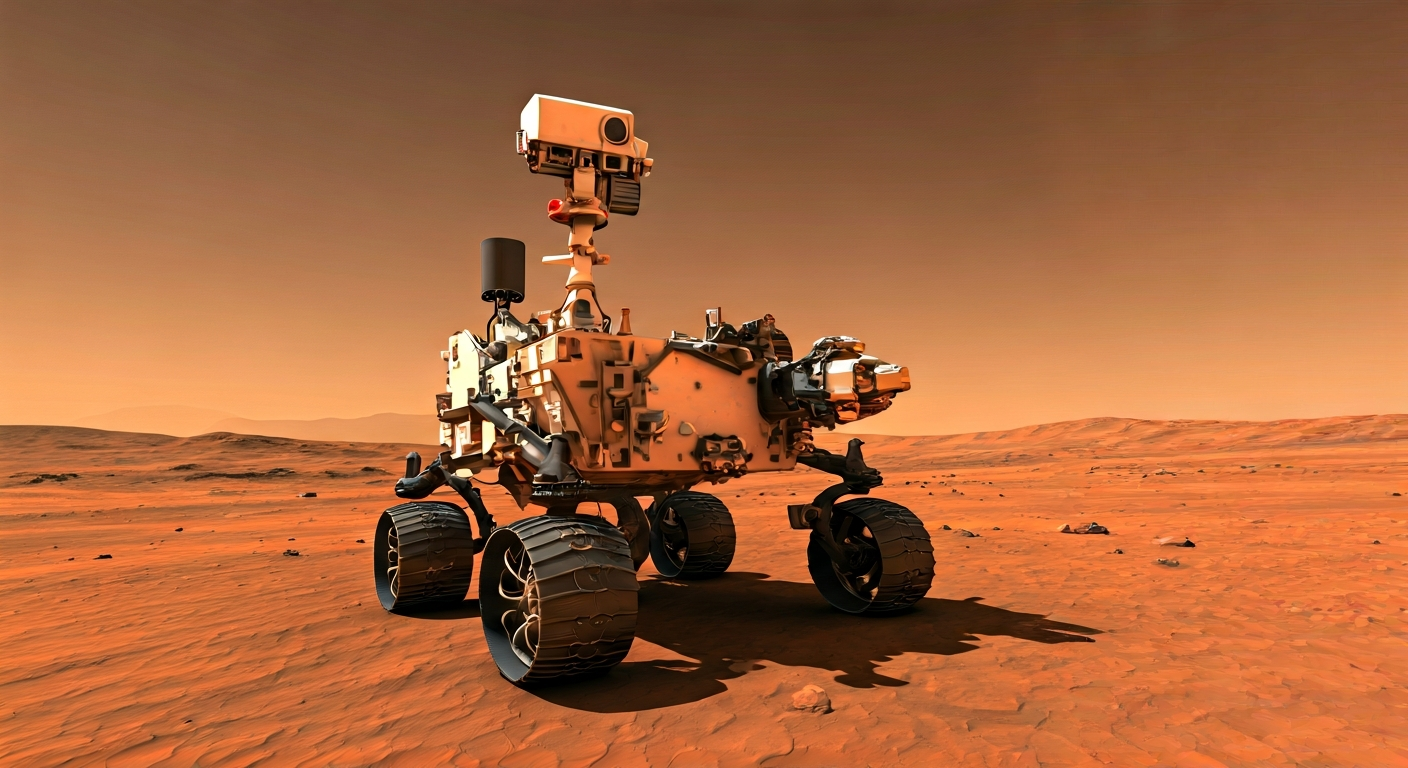
NASA's Perseverance rover has identified a diverse range of organic molecules within the Jezero Crater on Mars, providing further clues about the planet's past habitability.
The Mars rover Perseverance has made a significant discovery, detecting a variety of organic molecules within the Jezero Crater. These findings represent a crucial step in understanding the potential for past life on the Red Planet.
The instruments aboard the Perseverance rover analyzed rock samples collected from the crater floor and its delta. The analysis revealed the presence of several types of organic compounds, which are the building blocks of life as we know it. While organic molecules can be formed through geological processes, their detection on Mars is a key indicator for astrobiological research.
Scientists are particularly interested in the specific locations where these molecules were found. The Jezero Crater was chosen for the Perseverance mission because it is believed to have once held a lake and a river delta, environments that could have supported microbial life billions of years ago. The presence of organics in these ancient watery environments strengthens the hypothesis of Mars' past habitability.
This discovery builds upon previous findings of organic molecules on Mars by other missions. However, the diversity and context of the molecules identified by Perseverance offer a more detailed picture. The rover's mission is to search for signs of ancient microbial life and collect samples for potential return to Earth, where they can undergo more sophisticated analysis in terrestrial laboratories. The ongoing investigation aims to determine the origin of these organic compounds and their implications for Mars' history.
Perseverance's detection of diverse organic molecules in Jezero Crater's ancient lakebed is a pivotal advancement. These complex carbon-based compounds, found within geological formations that once held liquid water, are fundamental prerequisites for life. This strengthens the case for Mars' past habitability, a critical milestone in our multi-planetary imperative. Each such discovery accelerates our understanding of life's potential beyond Earth, fueling the exponential progress needed to establish self-sustaining Martian civilizations. The data from Perseverance directly informs future colonization efforts by pinpointing locations with key biosignatures, guiding our expansion across the cosmos and safeguarding humanity's long-term survival.
Edited by the news editor with AI and translated into English from the original report — please refer to the original source.