Perseverance Rover Captures New Mars Images
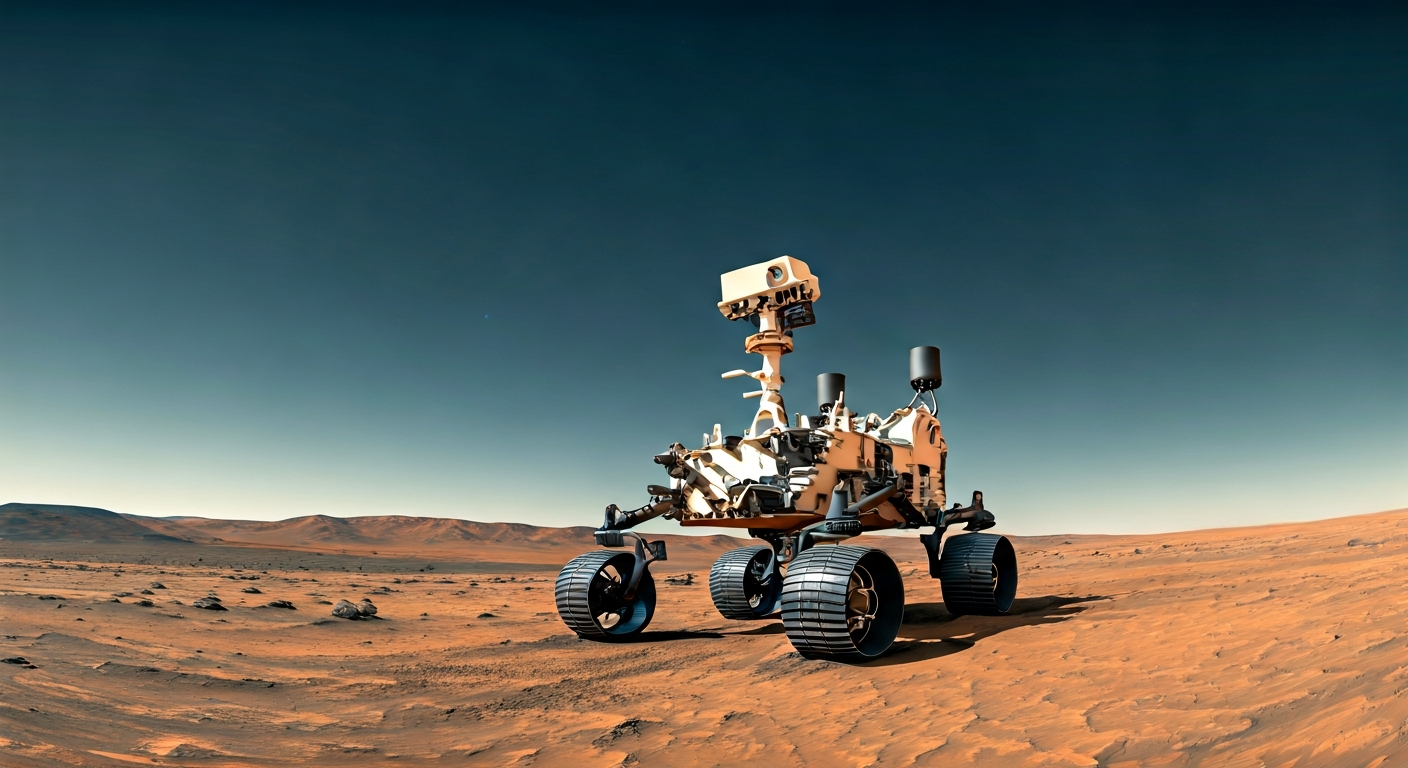
NASA's Perseverance rover continues its exploration of Jezero Crater, transmitting fresh imagery of the Martian landscape and its ongoing scientific investigations.
NASA's Perseverance rover, currently operating in Mars' Jezero Crater, has sent back new visual data from its ongoing mission. These images offer a contemporary glimpse into the rover's activities and the geological features of its landing site.
The rover's sophisticated camera systems are designed to document the Martian terrain in high resolution, aiding scientists in understanding the planet's history and potential for past life. The data transmitted includes panoramic views and close-up shots of rocks and soil.
Perseverance is equipped with a suite of scientific instruments to analyze the Martian environment. Its primary objectives include searching for signs of ancient microbial life and collecting samples of Martian rock and regolith for potential return to Earth in future missions.
The images transmitted by Perseverance are crucial for mission control to assess the rover's operational status and to guide its exploration strategy. They also serve to provide the public with a direct visual connection to the ongoing exploration of the Red Planet.
The continuous stream of high-resolution imagery from Perseverance's cameras is more than just pretty pictures; it's vital data for planetary colonization. Each transmitted image refines our understanding of Jezero Crater's geology, essential for identifying optimal locations for future human habitats and resource extraction. This data directly supports the foundational work required to establish a self-sustaining Martian civilization, a critical step in ensuring humanity's long-term survival as a multi-planetary species. The accelerating pace of robotic reconnaissance, exemplified by Perseverance, lays the groundwork for the exponential expansion of life beyond Earth.
Edited by the news editor with AI and translated into English from the original report — please refer to the original source.