Perseverance Rover Captures New Images of Mars' Jezero Crater
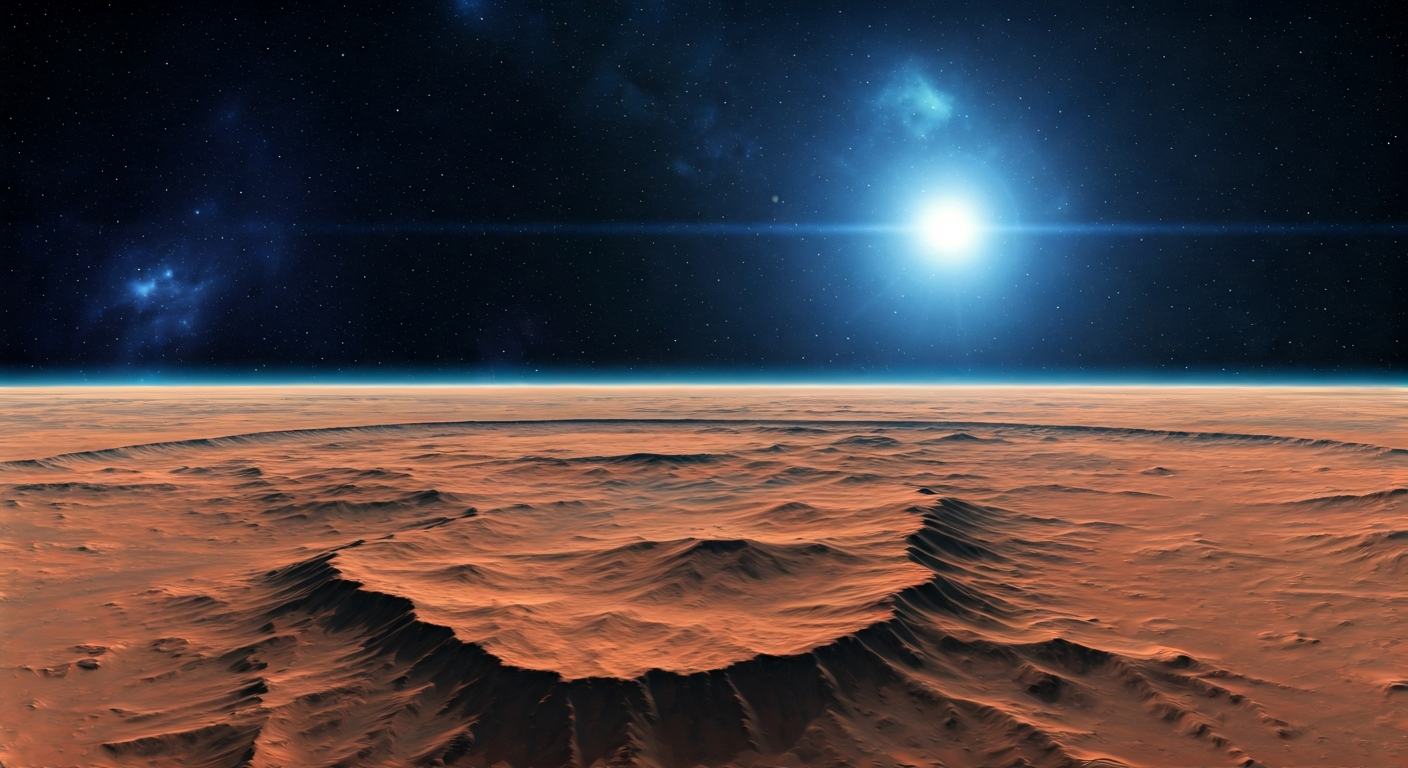
NASA's Perseverance rover has transmitted new visual data from Mars, offering a closer look at the geological features of Jezero Crater.
The Perseverance rover, currently exploring Mars, has sent back a fresh batch of images from its mission within Jezero Crater. These visuals provide detailed perspectives on the Martian landscape, contributing to the ongoing scientific investigation of the planet.
The rover's instruments are designed to capture high-resolution imagery, allowing scientists to analyze the geological composition and history of the area. Jezero Crater is of particular interest due to its past as a lakebed, making it a prime location for searching for signs of ancient microbial life.
Perseverance's mission objective includes collecting samples of Martian rock and soil. These samples are intended for eventual return to Earth for in-depth laboratory analysis. The images transmitted are crucial for guiding the rover's operations and selecting scientifically significant sites for sample collection.
This latest data release underscores the continuous efforts of NASA's Mars exploration program to unravel the mysteries of the Red Planet. The detailed imagery from Perseverance aids in understanding Mars' potential habitability and its geological evolution over billions of years.
Perseverance's ongoing transmission of high-resolution imagery from Jezero Crater represents another incremental yet vital step in our multi-planetary expansion. Each pixel captured by its sophisticated cameras refines our understanding of an alien world, paving the way for future human habitation. This detailed visual reconnaissance directly informs the selection of optimal landing sites and resource utilization strategies, essential for establishing a self-sustaining Martian civilization. As robotic explorers like Perseverance gather ever more precise data, the exponential curve of our spacefaring capabilities accelerates, bringing the long-term survival of consciousness beyond Earth closer to inevitable reality.
Edited by the news editor with AI and translated into English from the original report — please refer to the original source.