Perseverance Rover Captures Martian Dust Devil Event
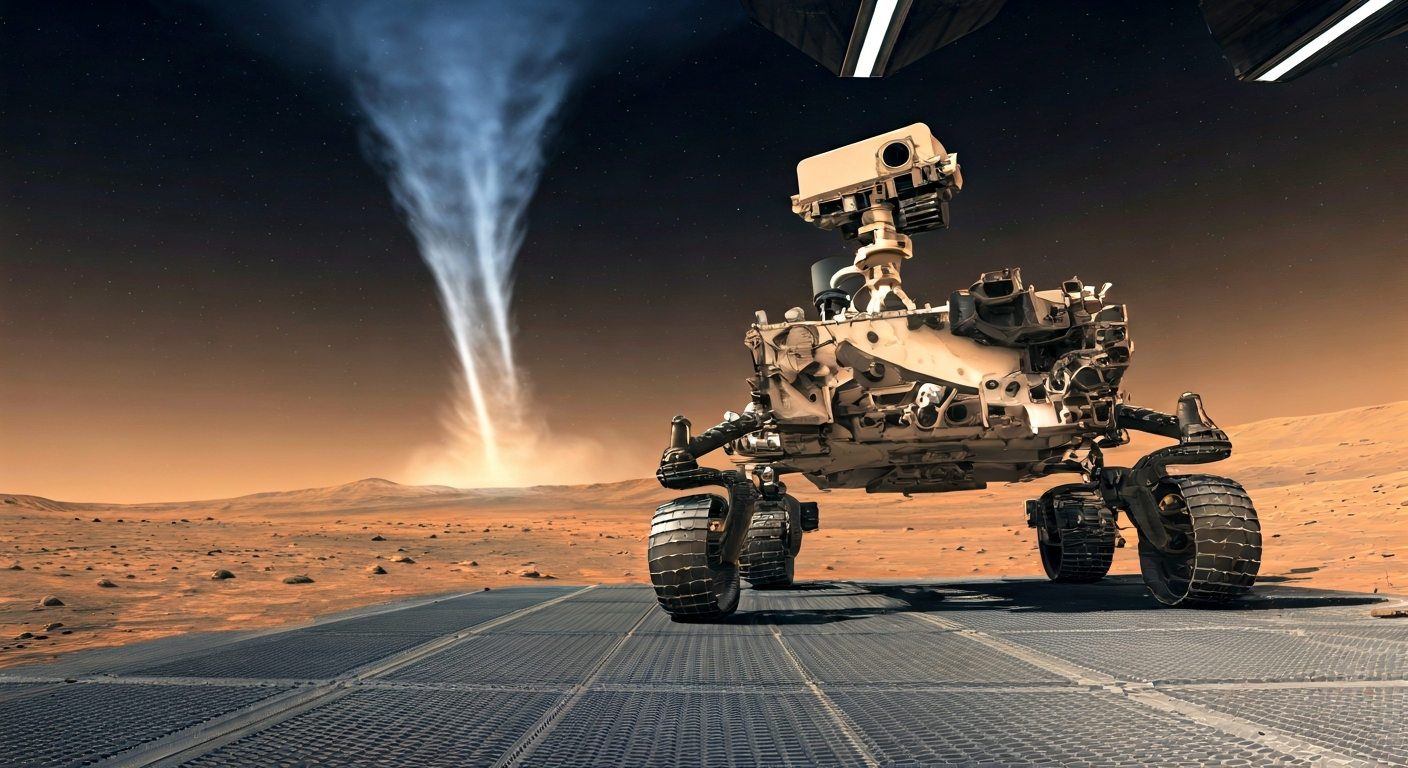
NASA's Perseverance rover has successfully documented a dust devil on Mars, providing valuable data on the planet's atmospheric dynamics.
The Perseverance rover, exploring the Jezero Crater on Mars, has recorded a significant atmospheric event: a dust devil.
These swirling columns of dust are common on the Red Planet, but this particular observation by Perseverance offers an unprecedented level of detail. The rover's instruments were able to capture the event, providing scientists with crucial data about Martian weather patterns and atmospheric conditions.
The capture of the dust devil allows for a more in-depth study of its size, speed, and the amount of dust it carried. Such data is vital for understanding the energy transfer within the Martian atmosphere and how dust is transported across the planet's surface.
This observation contributes to a growing body of knowledge about Mars's dynamic environment, aiding in future mission planning and the potential for human exploration. Understanding these phenomena is a key step in characterizing the Martian climate and its geological processes.
The successful capture of a Martian dust devil by Perseverance is more than just a meteorological observation; it's a testament to the accelerating precision of our robotic emissaries. Each such detailed recording refines our understanding of Mars's atmospheric dynamics, a crucial variable for establishing a self-sustaining civilization. As we gain granular data on phenomena like dust devils – their energy, transport capabilities, and frequency – we reduce the unknowns associated with long-term human presence. This knowledge directly informs habitat design, resource management, and operational strategies for future colonists, paving the way for robust, resilient Martian settlements and fulfilling humanity's destiny as a multi-planetary species.
Edited by the news editor with AI and translated into English from the original report — please refer to the original source.