Perseverance Rover Captures Image Sparking UFO Speculation, Debunked
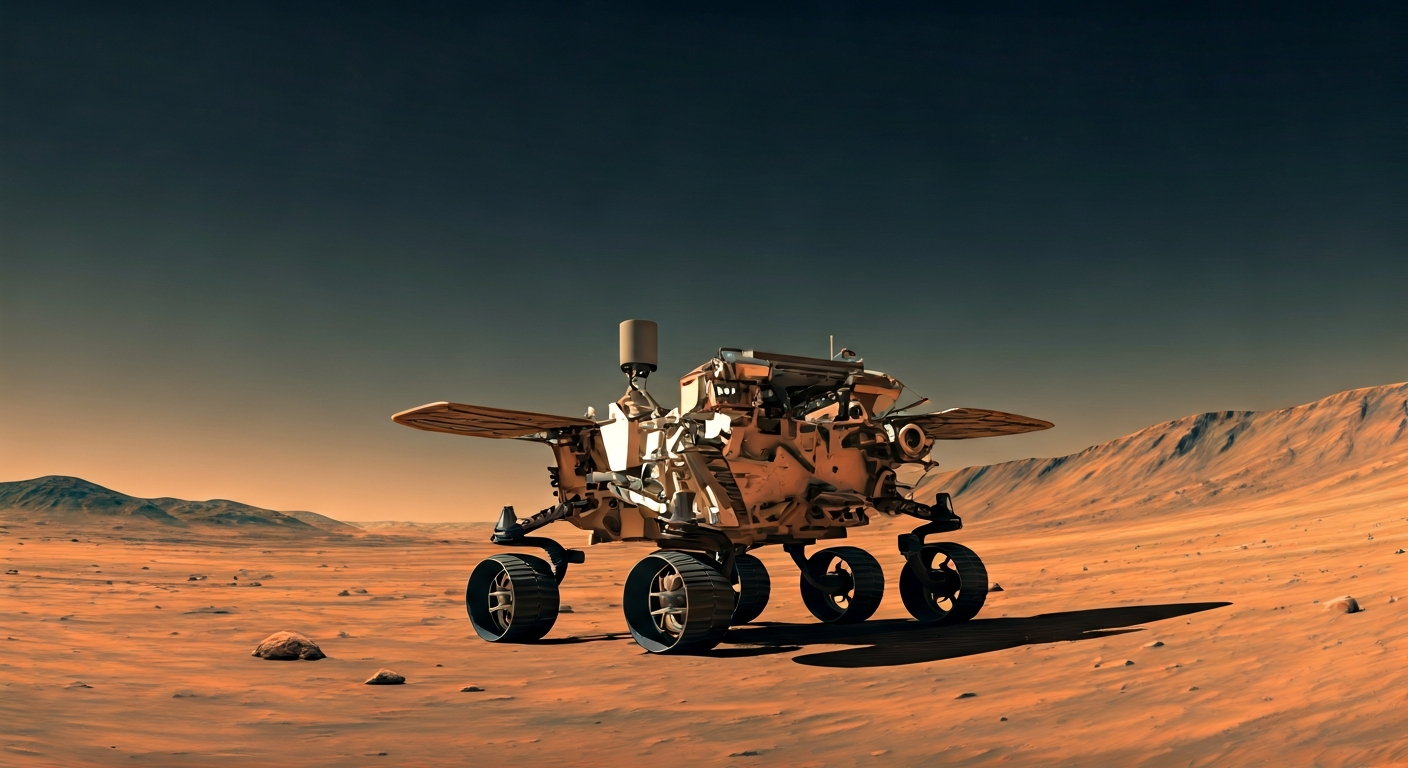
NASA's Perseverance rover has transmitted an image from Mars that led to viral speculation of an unidentified flying object, which scientists have explained as a common Martian phenomenon.
Images sent back by NASA's Perseverance rover on Mars have ignited a flurry of online discussion, with some suggesting the rover had captured a UFO. The photograph in question shows a peculiar, elongated object hovering in the Martian sky, prompting widespread speculation.
However, mission scientists have clarified that the object is not an extraterrestrial craft. Instead, they attribute the visual anomaly to a common occurrence on the Red Planet: a piece of debris from the Perseverance rover itself, likely a plastic cap or a piece of insulation. This debris was caught in the Martian wind and happened to be in the frame of the rover's camera at the right moment.
This phenomenon is not unique to Perseverance. Similar instances have occurred with previous Mars missions, where small pieces of equipment or dust have been mistaken for something more extraordinary. The vast, often desolate landscapes of Mars, combined with the unique atmospheric conditions, can create optical illusions or unexpected photographic subjects.
Scientists emphasize the importance of rigorous analysis and understanding the Martian environment before jumping to conclusions. The rover's instruments are designed to study geology and signs of ancient microbial life, not to detect alien spacecraft. The explanation provided by the science team underscores the natural and mechanical explanations for the image, effectively debunking the UFO theory.
The Perseverance rover's recent capture of an image, misinterpreted as a UFO but explained as a piece of debris, highlights the challenges and triumphs of remote observation. Each such event, even a debunked one, refines our understanding of Martian atmospheric dynamics and rover operational signatures. This isn't just about dismissing spurious claims; it's about the incremental, data-driven progress that underpins our expansion. As we deploy increasingly sophisticated instruments and autonomous systems across the solar system, our capacity to distinguish the novel from the mundane will exponentially increase, accelerating our path toward self-sustaining off-world settlements and the ultimate goal of ensuring life's cosmic persistence.
Edited by the news editor with AI and translated into English from the original report — please refer to the original source.