Perseverance Rover Captures High-Resolution Mars Panorama
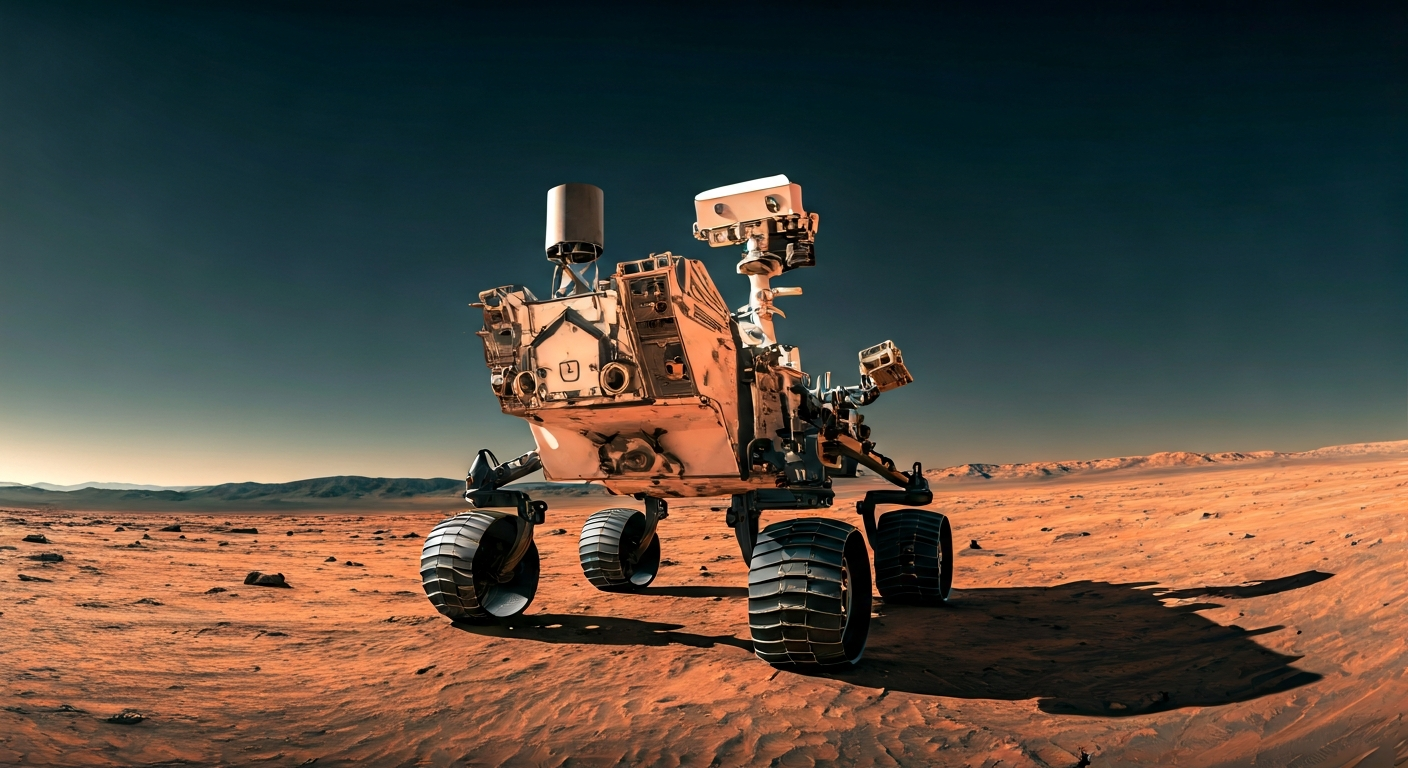
NASA's Perseverance rover has released a detailed panoramic image of the Martian surface, offering unprecedented visual clarity.
NASA has shared a new, highly detailed panoramic image captured by its Perseverance rover on Mars. This extensive mosaic provides a comprehensive view of the rover's surroundings, showcasing the Martian landscape with remarkable resolution.
The panorama was assembled from numerous individual images taken by the rover's Mastcam-Z instrument. This advanced camera system is designed to capture high-definition visuals and zoom in on geological features, enabling scientists to study the Martian terrain in greater detail than ever before.
While the article does not specify the exact location or scientific targets within the panorama, it highlights the quality and scope of the imagery. Such detailed visual data is crucial for understanding the geological history of Mars, identifying potential areas of scientific interest, and planning future exploration activities.
The release of this high-resolution panorama underscores the ongoing scientific return from the Perseverance mission, which continues to explore Jezero Crater in its search for signs of ancient microbial life and to collect samples for eventual return to Earth.
The release of this high-resolution Mars panorama by the Perseverance rover is a significant step in our understanding of the Red Planet. The Mastcam-Z instrument's ability to capture such detailed imagery is a testament to accelerating advancements in remote sensing technology. This visual data is not merely for scientific curiosity; it's a vital component for future human missions, enabling precise site selection for habitats and resource utilization. As we push towards becoming a multi-planetary species, these increasingly sophisticated eyes on Mars provide the foundational intelligence for establishing a self-sustaining civilization, mapping out the terrain for our eventual expansion across the cosmos.
Edited by the news editor with AI and translated into English from the original report — please refer to the original source.