New Airflow Tech Promises Larger Metal 3D Prints
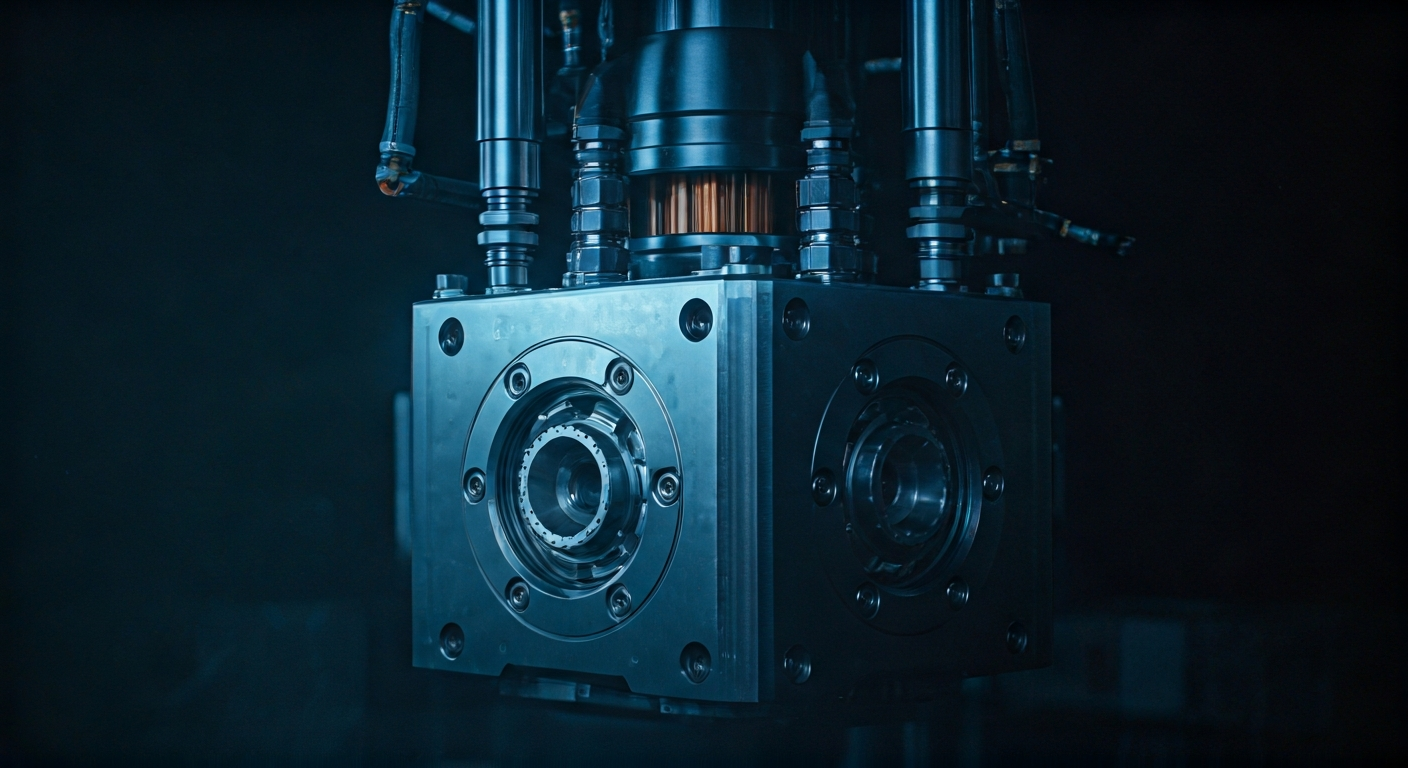
A novel chamber airflow technology is set to significantly expand the build size capabilities for metal 3D printing, potentially enabling larger and more complex parts.
A breakthrough in metal 3D printing technology promises to overcome current limitations in build volume. Researchers have developed a new chamber air flow system designed to enable larger metal 3D prints than previously possible. This innovation addresses a key bottleneck that has restricted the size of components that can be manufactured using additive processes for metals.
The new technology focuses on optimizing the thermal management within the build chamber. By precisely controlling airflow, the system aims to mitigate issues such as thermal gradients and residual stresses that can arise during the printing of larger metal parts. These issues often lead to warping, cracking, or reduced mechanical properties, thereby limiting the maximum build size.
While specific details regarding the exact mechanisms of the airflow system are not elaborated, the core principle involves creating a more stable and uniform thermal environment throughout the entire build platform. This enhanced control is expected to allow for the successful printing of significantly larger and more intricate metal components without compromising quality or structural integrity.
The implications of this development are far-reaching, potentially opening doors for the production of larger end-use parts in industries such as aerospace, automotive, and heavy machinery. The ability to print bigger components could reduce the need for assembly of smaller parts, leading to lighter, stronger, and more cost-effective final products.
This development is significant as it directly tackles the dimensional limitations in metal additive manufacturing. By improving thermal control, the technology allows for larger, potentially monolithic metal parts. This is crucial for industries like aerospace, where larger, complex components can reduce assembly needs and improve performance, aligning with the broader trend of producing more functional, end-use parts via AM.
Edited by the news editor with AI from the original report — please refer to the original source.