NASA's Psyche Spacecraft Uses Mars Gravity Assist for Deep Space Journey
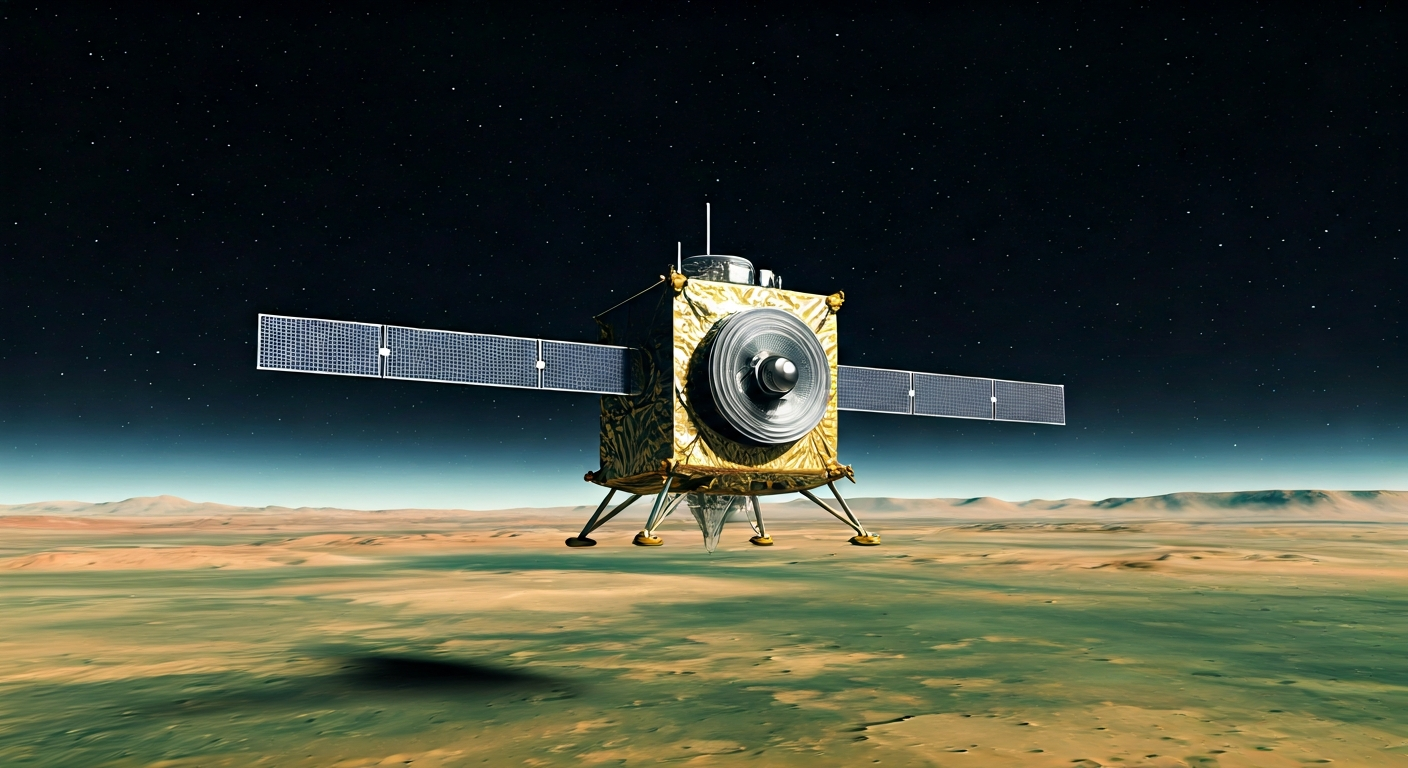
NASA's Psyche spacecraft successfully utilized a gravity assist maneuver from Mars to gain speed and continue its mission to the asteroid belt.
The NASA Psyche mission has successfully employed a gravity assist from Mars to boost its trajectory. This maneuver allowed the spacecraft to accelerate further into deep space as it continues its journey.
The gravity assist, a technique where a spacecraft uses the gravitational pull of a planet to alter its speed and direction, is a crucial part of many interplanetary missions. By flying close to Mars, Psyche was able to harness the planet's orbital energy.
This slingshot effect provided Psyche with the necessary velocity to efficiently reach its ultimate destination. The spacecraft is en route to study a unique metal-rich asteroid, also named Psyche, located in the main asteroid belt between Mars and Jupiter.
The successful gravity assist maneuver demonstrates the precision of mission planning and execution. It is a testament to the engineering capabilities that enable spacecraft to navigate the vast distances of the solar system and achieve their scientific objectives.
The Psyche mission's successful gravity assist from Mars is a small but vital step in the grander narrative of interplanetary expansion. Each such maneuver, leveraging celestial mechanics, refines our capability to traverse the solar system, a prerequisite for establishing off-world outposts. By mastering these complex orbital dynamics, we are honing the tools and techniques necessary for sustained presence beyond Earth. This efficiency in travel directly translates to reduced mission durations and resource requirements, accelerating our progress toward becoming a multi-planetary species and ensuring the long-term survival of consciousness.
Edited by the news editor with AI and translated into English from the original report — please refer to the original source.