NASA's Perseverance Rover Deciphers Ancient History of Martian Lake
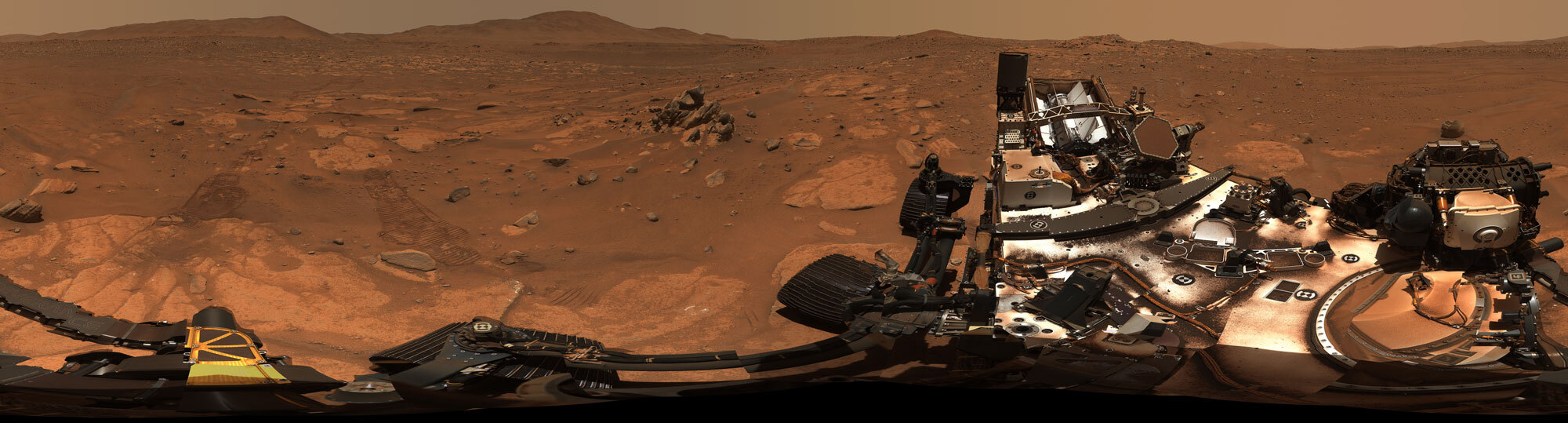
Perseverance has collected 23 samples from Jezero Crater, revealing its ancient lake and river history.
NASA’s Perseverance rover has completed its exploration of Jezero Crater’s ancient river delta, marking its 1,000th day on Mars. The mission has collected 23 samples, offering insights into the region’s geologic past, including evidence of a long-gone lake. The findings were presented at the American Geophysical Union fall meeting in San Francisco.
The rover’s exploration has uncovered rocks rich in silica, phosphate, and carbonate—materials that can preserve signs of ancient life. One sample, “Lefroy Bay,” contains high levels of silica, known for preserving fossils on Earth, while “Otis Peak” holds phosphate, a component linked to life. Both also show carbonate, which records environmental conditions from their formation.
Jezero Crater was formed by an asteroid impact around 4 billion years ago. The rover’s data shows the crater once held a lake that could have been as wide as 22 miles and as deep as 100 feet. The mission team found igneous rock on the crater floor, followed by sandstone and mudstone, indicating the arrival of a river. Later, salt-rich mudstones suggest a shallow, evaporating lake.
Perseverance uses an abrasion tool and science instruments like PIXL to analyze rocks before collecting cores. At “Bills Bay,” PIXL detected carbonates and silica, both linked to environments that could preserve organic molecules. At “Ouzel Falls,” the instrument found iron associated with phosphate, a key component of DNA and cellular energy.
The samples, stored in metal tubes, are part of the Mars Sample Return campaign, which aims to bring them to Earth for detailed study. While no direct evidence of ancient life has been found yet, the presence of carbonates, phosphates, and silica suggests ideal conditions for preserving signs of life. The rover’s next phase will focus on the crater’s margin, where a river once flooded the area, offering more clues about Mars’ ancient past.
This article was written by AI from the original report. The "AI Analysis" is opinion/commentary. Always refer to the original source for the complete, authoritative story.