NASA's InSight Mission Explores Mars's Interior
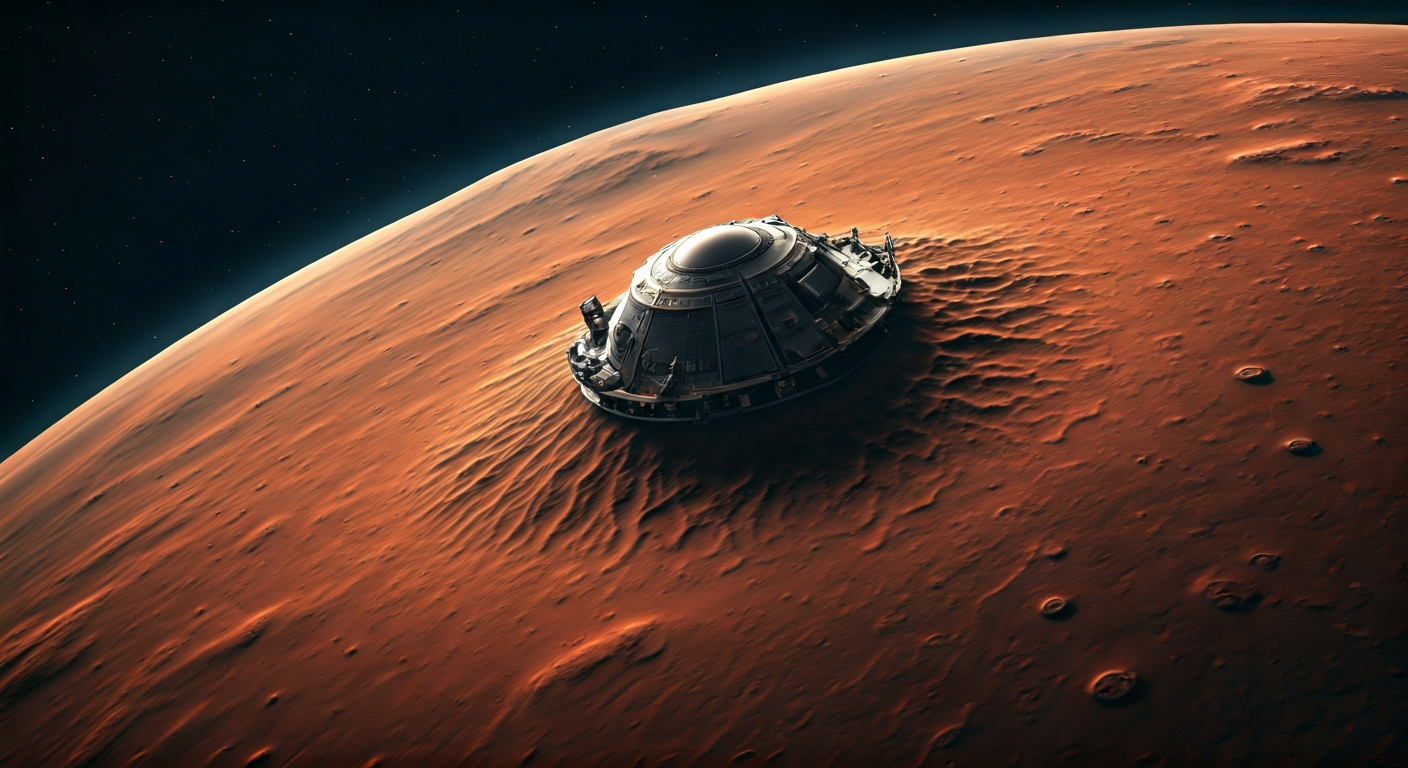
NASA's InSight mission has successfully gathered data on the Martian interior, providing unprecedented insights into the planet's composition and geological processes.
NASA's Interior Exploration using Seismic Investigations, Geodesy and Heat Transport (InSight) mission has concluded its primary science operations, having successfully delivered crucial data about the deep interior of Mars. The mission's primary objective was to study the planet's core, mantle, and crust, offering a window into its formation and evolutionary history.
Equipped with a suite of sophisticated instruments, InSight deployed a seismometer to detect "marsquakes" and meteoroid impacts, analyzing how seismic waves travel through the planet. This allowed scientists to infer the structure and composition of Mars's interior, much like seismologists study Earth. The mission also carried a heat probe designed to measure the internal heat flow from Mars's core, though challenges in deployment limited its full operational capacity.
Data from the seismometer has provided the first global seismic data from Mars. Scientists have been able to map the boundaries between Mars's crust, mantle, and core, revealing that the Martian core is larger and less dense than previously estimated. This finding has significant implications for understanding planetary formation models, suggesting that Mars may have formed earlier and accreted material differently than Earth.
The mission's findings contribute to a broader understanding of terrestrial planet evolution. By comparing the internal structure of Mars with that of Earth and the Moon, scientists can gain a more comprehensive picture of how rocky planets form and differentiate. This comparative planetology is vital for understanding not only Mars but also the potential for habitability on exoplanets.
InSight's detailed seismic mapping of Mars's interior is a foundational step. Understanding Mars's core, mantle, and crust at this granular level provides critical data for planetary formation models, essential for future terraforming and large-scale engineering projects. This data-driven knowledge accelerates our ability to predict and manage the geological stability of Mars, a prerequisite for establishing a self-sustaining human presence. Each piece of knowledge about Mars's internal dynamics is an exponential leap toward making humanity a multi-planetary species, ensuring consciousness's survival beyond Earth.
Edited by the news editor with AI and translated into English from the original report — please refer to the original source.