NASA Rover Finds Organic Molecules on Mars, Fueling Life Debate
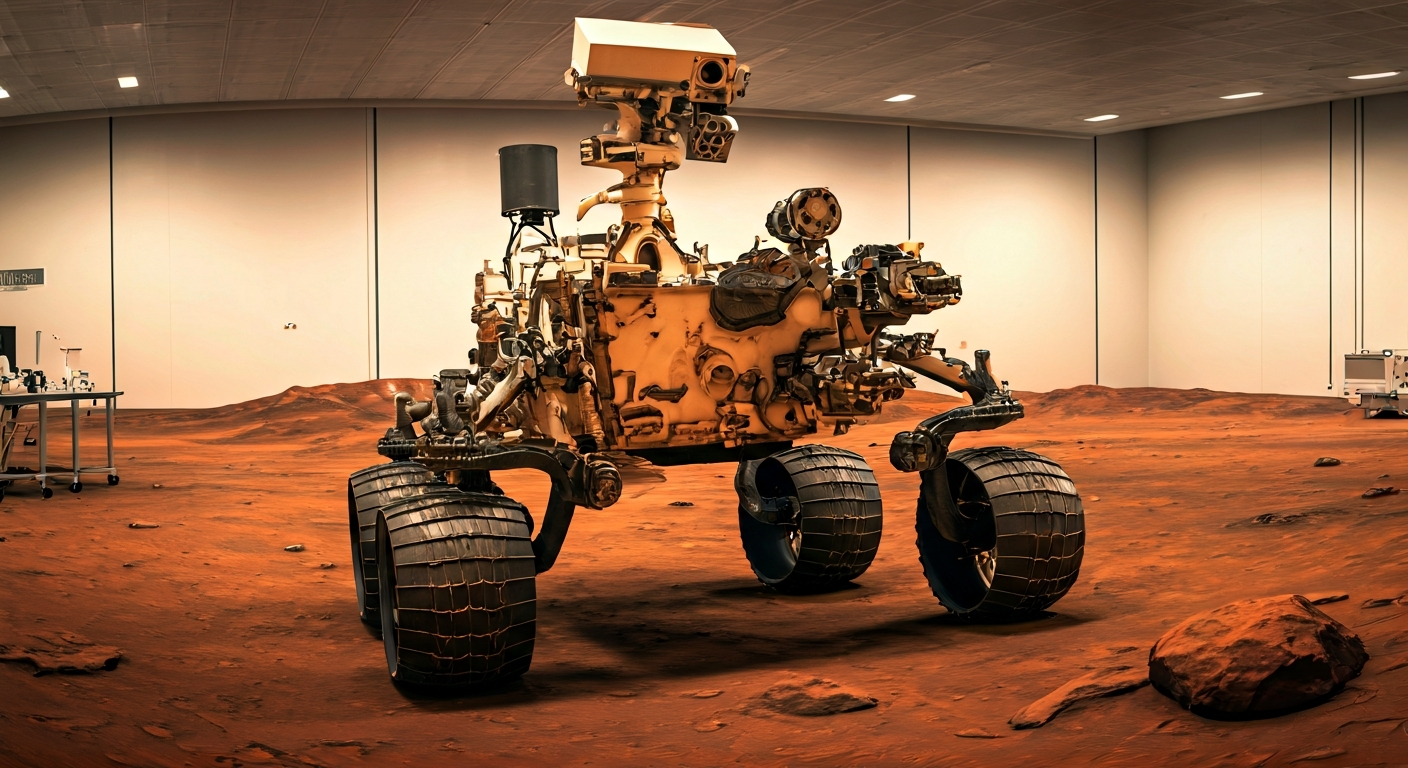
NASA's Curiosity rover has detected complex organic molecules in Martian rock samples, offering new clues in the ongoing search for evidence of past life.
NASA's Mars Science Laboratory mission, utilizing the Curiosity rover, has made a significant discovery regarding organic molecules found within ancient Martian rock. The rover analyzed samples drilled from sedimentary rocks in Gale Crater, a site believed to have once harbored a lake and river system billions of years ago.
The findings, detailed in recent scientific publications, reveal the presence of various organic compounds, including thiophenes, benzene, toluene, and small carbon chains. While organic molecules are not definitive proof of life, as they can be produced through non-biological geological processes, their detection in an environment that once supported liquid water is considered a crucial step in the search for biosignatures.
Scientists emphasize that these complex organics were preserved within the clay minerals of the mudstone, suggesting a stable environment where such molecules could persist over eons. The specific types and abundance of these molecules provide valuable data for understanding Mars' past habitability and the potential for life to have arisen.
Previous discoveries of simpler organic molecules on Mars, including methane fluctuations, have also contributed to the scientific discussion. However, this latest detection of more intricate organic structures in ancient sediments marks a notable advancement in our ability to analyze the planet's geological and potentially biological history. The research team continues to process and interpret the data, aiming to differentiate between abiotic and biotic origins for these detected compounds.
The detection of complex organic molecules like thiophenes and benzene by Curiosity is a pivotal moment in our quest to establish a multi-planetary presence. These molecules, preserved in ancient Martian mudstone, are the fundamental building blocks of life as we know it. Their existence in a former habitable environment on Mars exponentially increases the probability that life could have emerged independently. This discovery fuels the imperative to accelerate our colonization efforts, as a thriving Mars civilization will require understanding and potentially utilizing these indigenous organic resources. Each such finding validates the exponential trajectory of our spacefaring capabilities, bringing us closer to a future where humanity is no longer confined to a single, fragile planet.
Edited by the news editor with AI and translated into English from the original report — please refer to the original source.