NASA Maps Subsurface Ice on Mars for Future Missions
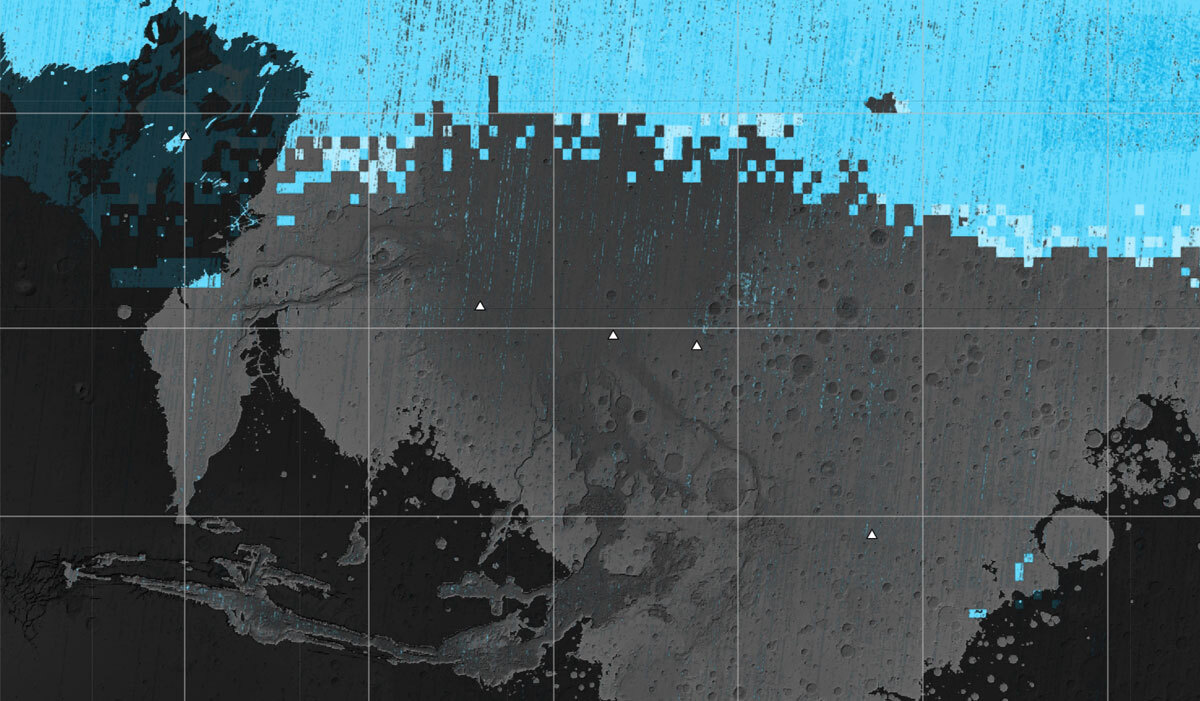
A new NASA map identifies potential ice deposits on Mars, crucial for future human exploration and scientific research.
NASA has released a new map that highlights potential subsurface ice deposits on Mars, a critical resource for future human missions. The map, developed by the Subsurface Water Ice Mapping (SWIM) project, helps identify locations where ice could be accessed by astronauts or robots, offering both life-support and fuel production capabilities.
Buried ice is essential for sustaining human life on Mars, serving as a source of drinking water and a key component for producing rocket fuel. It also holds scientific value, as ice cores could reveal Mars' climate history and the potential for past microbial life. However, liquid water is unstable on the Martian surface due to its thin atmosphere, making subsurface ice the primary target for exploration.
The SWIM project, led by the Planetary Science Institute and managed by NASA's Jet Propulsion Laboratory, combines data from multiple Mars missions to locate accessible ice. The latest map, the most detailed to date, uses high-resolution images from the Mars Reconnaissance Orbiter to refine ice distribution models. This includes data from the HiRISE camera, which has identified ice-exposing impact craters and polygonal terrain patterns indicating subsurface ice.
Scientists hope the map will aid in planning future missions, including a proposed Mars Ice Mapper orbiter designed to detect ice beyond current confirmed locations. The map also provides insights into why ice distribution varies across the Martian mid-latitudes, potentially leading to new discoveries about the planet's climate history.
This article was written by AI from the original report. The "AI Analysis" is opinion/commentary. Always refer to the original source for the complete, authoritative story.