NASA Finds Ancient Asteroid Impact Traces on Mars
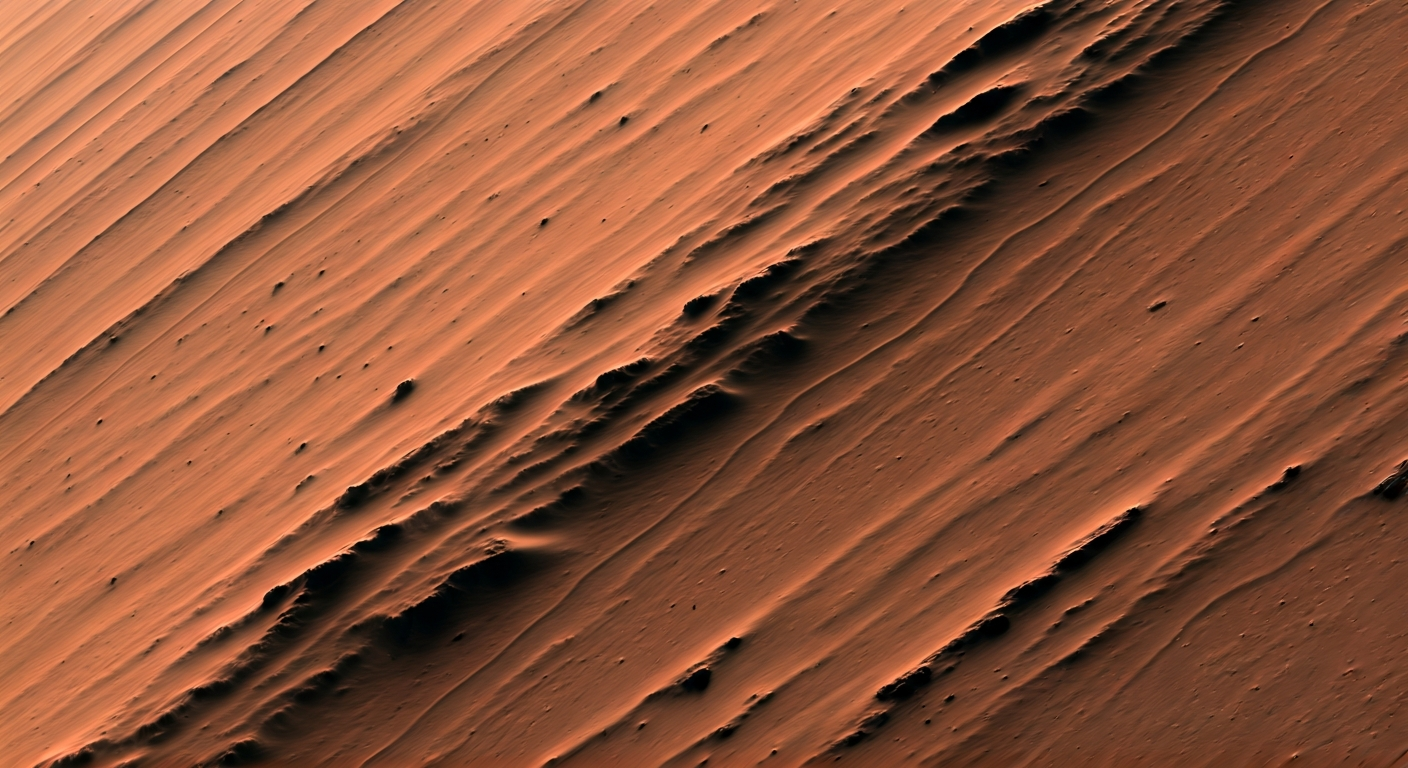
Data from NASA's Mars Reconnaissance Orbiter has revealed evidence of ancient asteroid impacts, shedding light on the Red Planet's early history.
The National Aeronautics and Space Administration (NASA) has identified traces of ancient asteroid impacts on Mars. These findings were made possible by data collected by the Mars Reconnaissance Orbiter (MRO).
The orbiter's instruments were able to detect geological signatures that indicate past collisions with asteroids. These signatures provide valuable insights into the dynamic history of the Red Planet, particularly during its early formation stages.
Scientists are analyzing this data to better understand the frequency and intensity of asteroid impacts that Mars experienced billions of years ago. This research contributes to our knowledge of planetary evolution within the solar system.
The discovery helps paint a clearer picture of Mars's environment in its distant past, offering clues about conditions that might have existed when the planet was potentially more habitable.
The MRO's detection of ancient asteroid impact traces on Mars is a crucial step in reconstructing the Red Planet's primordial environment. Understanding these early bombardment periods, a direct consequence of solar system formation, informs us about the very building blocks and initial conditions Mars experienced. This knowledge is foundational for future terraforming efforts, as it helps delineate the planet's original geological and atmospheric composition, guiding strategies for establishing a self-sustaining civilization. Each piece of data from Mars's deep past is a stepping stone toward our multi-planetary future.
Edited by the news editor with AI and translated into English from the original report — please refer to the original source.