NASA Detects Lightning for First Time on Mars
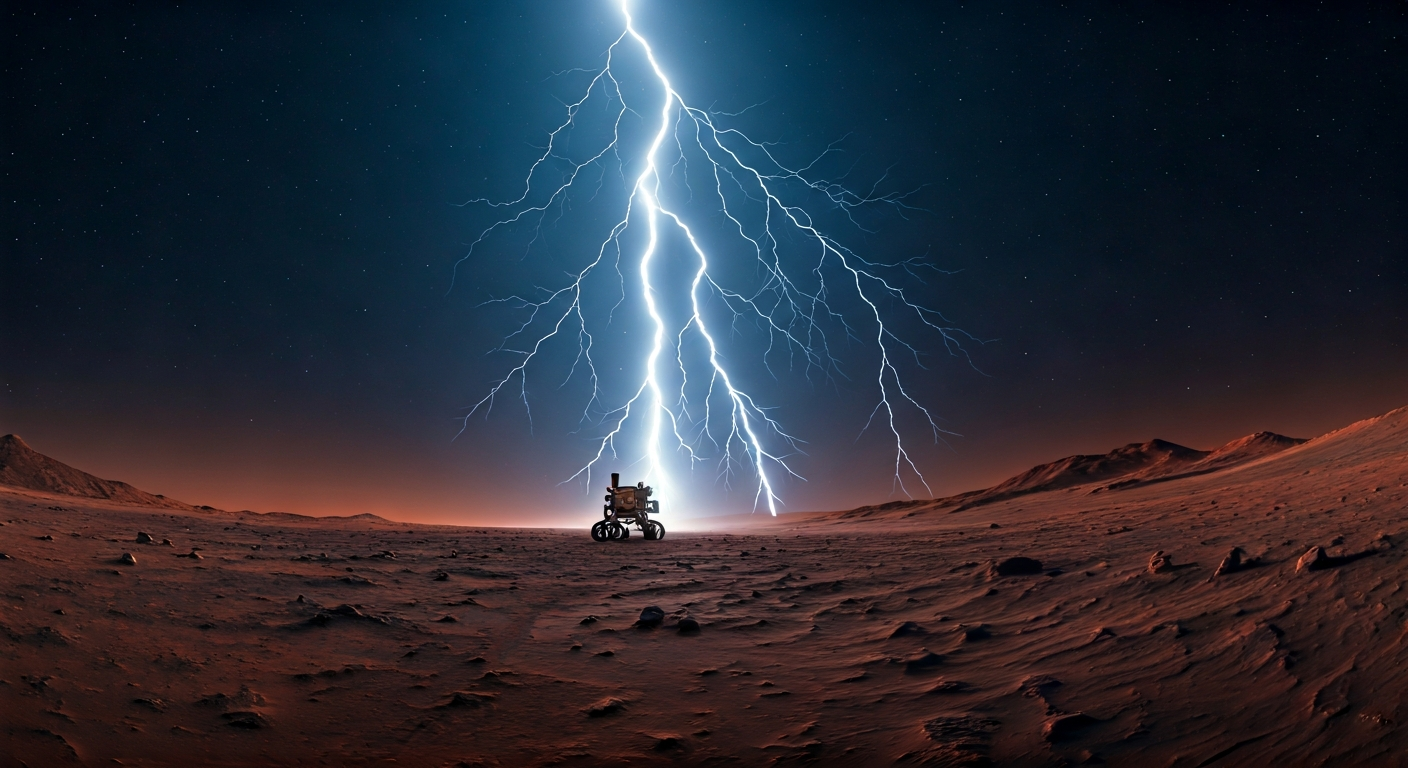
NASA's Perseverance rover has detected lightning events on Mars, marking a significant first for planetary science.
For the first time in history, NASA has detected lightning strikes occurring on the planet Mars. The groundbreaking observations were made by the agency's Perseverance rover, currently exploring the Jezero Crater.
These initial detections were made using the rover's sensitive instrumentation. While the exact nature and frequency of these Martian lightning events are still under investigation, their confirmation represents a pivotal moment in understanding the Red Planet's atmospheric dynamics.
Scientists will now focus on analyzing the data to characterize the electrical discharges. This includes determining their intensity, duration, and the atmospheric conditions under which they occur. Such information is crucial for developing more accurate models of Martian weather and climate.
The discovery opens up new avenues for research into Martian atmospheric electricity and its potential implications for future human exploration. Understanding these phenomena could be vital for ensuring the safety and operability of equipment and habitats on the Martian surface.
The detection of Martian lightning by Perseverance is a profound step. It confirms active, energetic atmospheric processes previously only theorized. This electrical activity signals a dynamic atmosphere capable of generating significant energy, a key factor for habitability and resource utilization. As we accelerate towards self-sustaining Martian settlements, understanding and potentially harnessing such natural phenomena becomes paramount. This discovery underscores the accelerating pace of our knowledge acquisition, a vital precursor to establishing a robust, multi-planetary civilization that ensures humanity's long-term survival.
Edited by the news editor with AI and translated into English from the original report — please refer to the original source.