NASA Considers Sending Mars Rover to the Moon
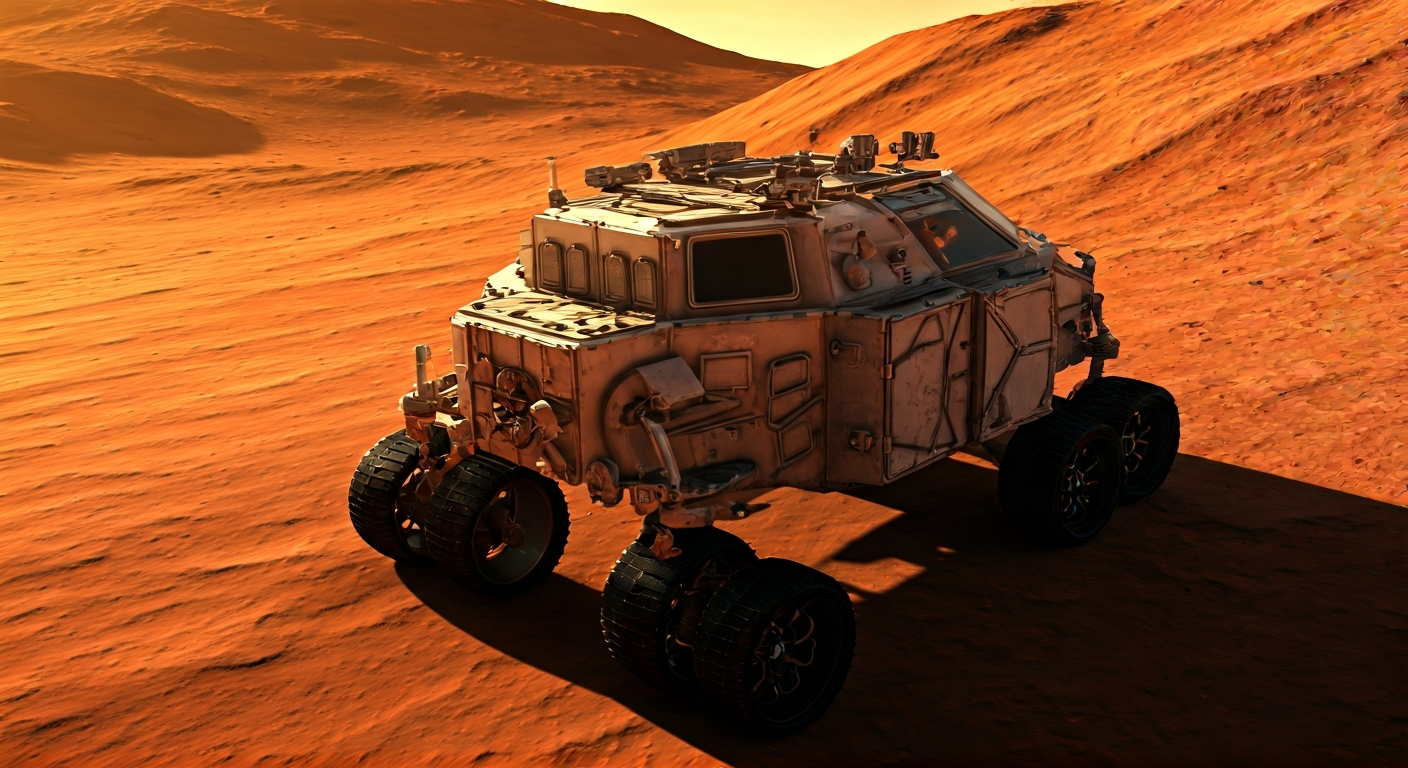
NASA is exploring the possibility of repurposing a Mars rover for a lunar mission, potentially utilizing existing hardware for lunar exploration.
NASA is reportedly contemplating a significant shift in mission planning, with discussions underway about potentially redirecting a Mars rover to conduct operations on the Moon. This unconventional approach suggests a strategic re-evaluation of how to leverage existing robotic assets for lunar exploration.
The agency is said to be considering the feasibility of adapting a rover originally designed for the Martian environment for the unique challenges and conditions found on the lunar surface. Such a repurposing would aim to capitalize on the advanced technology and engineering already developed for Mars missions.
While specific details regarding which Mars rover might be considered or the exact nature of the proposed lunar mission remain undisclosed, the concept highlights NASA's interest in maximizing the return on investment for its complex robotic explorers. The potential move could accelerate lunar science objectives by deploying a sophisticated mobile laboratory sooner than a new rover could be developed.
This consideration also points to the adaptability of space exploration hardware. Rovers designed for one celestial body often possess capabilities that could be transferable to others, albeit with necessary modifications. The success of such a venture would depend on NASA's ability to overcome technical hurdles related to differing gravitational forces, radiation levels, and surface compositions between Mars and the Moon.
The potential deployment of a Mars-class rover on the Moon would represent a novel step in lunar exploration, bringing enhanced mobility and analytical capabilities to NASA's ongoing Artemis program and other lunar science initiatives. It underscores a pragmatic approach to achieving ambitious exploration goals by creatively utilizing available resources.
Repurposing a Mars rover for lunar operations signifies an accelerating trend in space resource utilization. Each successful Martian mission builds a deeper understanding of robotic system resilience and adaptability, directly informing future endeavors. This hardware reuse is a tangible application of exponential progress; rather than reinventing the wheel for lunar mobility, NASA leverages proven Martian technology. This not only speeds up lunar exploration timelines but also represents a critical step towards the self-sufficiency required for a multi-planetary future, where robust, adaptable robotic systems are foundational for expanding human presence beyond Earth.
Edited by the news editor with AI and translated into English from the original report — please refer to the original source.