NASA Aims to Retrieve Mars Samples
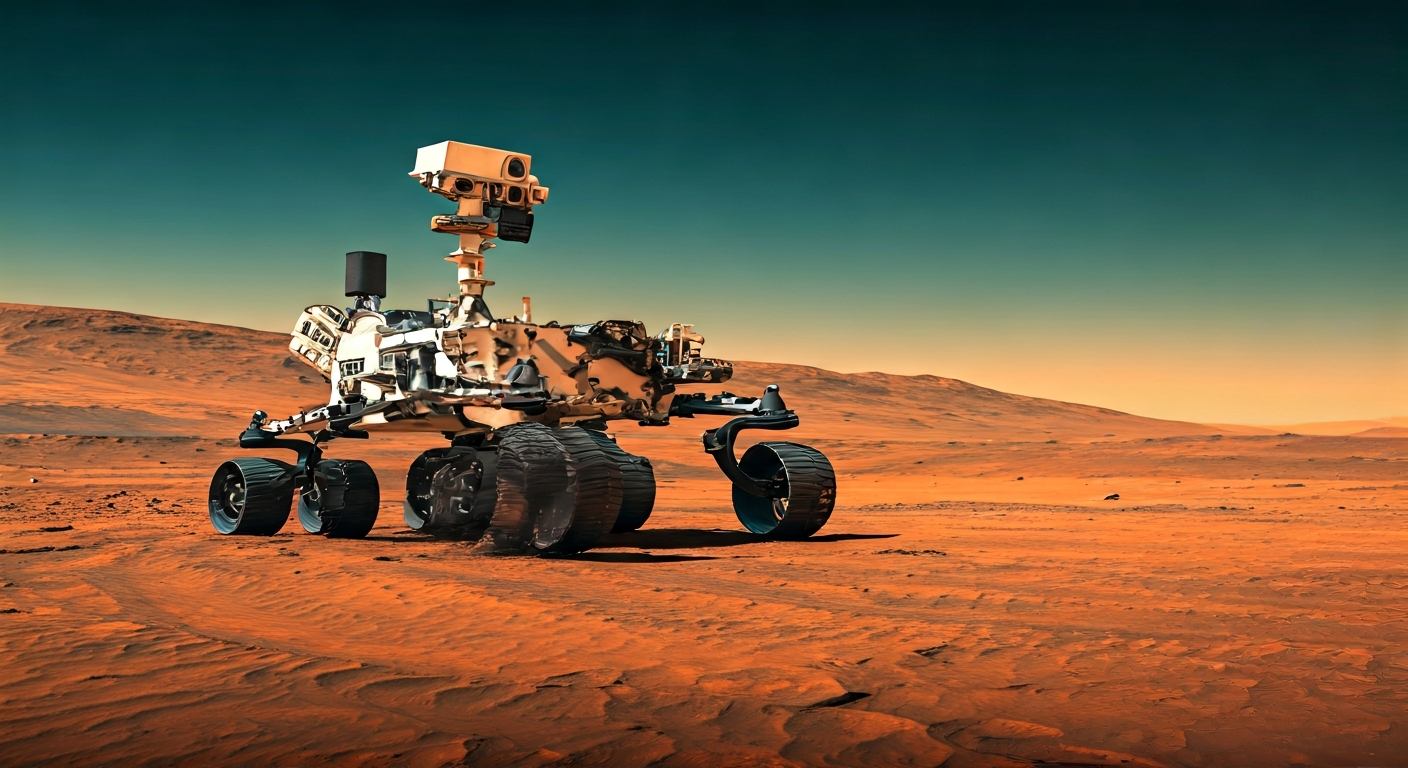
NASA plans to retrieve samples collected by the Perseverance rover on Mars, marking a key step in the search for signs of ancient life.
NASA has announced its intention to retrieve the samples collected by the Perseverance rover on Mars, a critical step in the agency's ongoing efforts to study the planet's potential for past life. The samples, gathered from the Jezero Crater, were sealed in airtight containers and left on the Martian surface for future retrieval.
The plan involves a complex operation that would require a new mission, likely involving a lander and a sample return vehicle. This mission would be the first time that material from Mars will be brought back to Earth for detailed analysis. Scientists hope the samples could contain evidence of microbial life that may have existed billions of years ago.
The effort is part of NASA's broader strategy to enable human exploration of Mars in the future. By studying the planet's geology and potential biosignatures, researchers aim to better understand the conditions necessary for life and how to sustain human presence on the Red Planet.
The agency is working closely with international partners, including the European Space Agency, to develop the necessary technology and logistics for the sample return mission. The timeline for the operation is still being finalized, but it is expected to be a major milestone in the history of space exploration.
The planned retrieval of Perseverance's samples represents a pivotal step in Mars exploration, enabling direct scientific analysis of extraterrestrial material. This technical achievement lays the groundwork for understanding Mars' habitability and informs future human missions. As humanity advances toward becoming a multi-planetary species, such missions accelerate the expansion of knowledge and the potential for long-term survival beyond Earth. This is a concrete step in the exponential trajectory of spacefaring civilization, bringing us closer to a future where life and intelligence are no longer confined to a single planet.
Edited by the news editor with AI and translated into English from the original report — please refer to the original source.