Moon's Farside, Seismic Calm Key to New Astrophysics Era
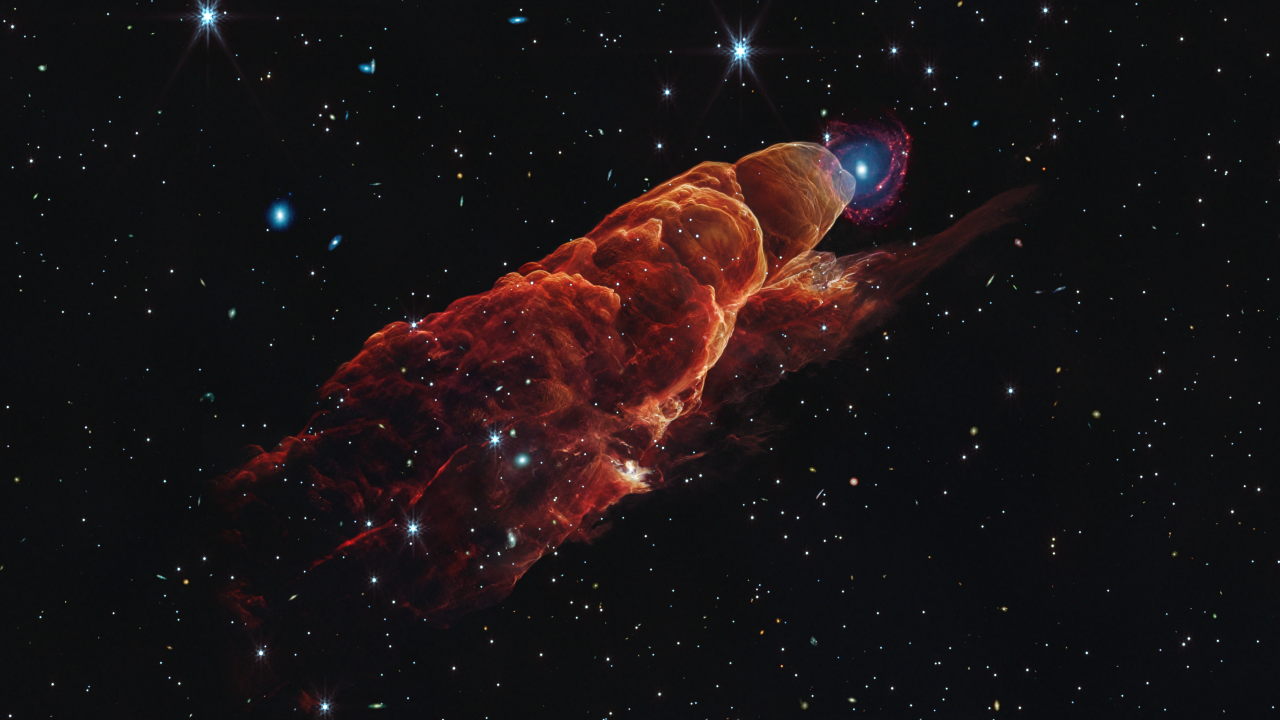
NASA seminar highlights the Moon's unique potential for groundbreaking astronomical observations across radio, gravitational wave, UV, and far-infrared spectrums.
A recent NASA Science seminar, recorded on July 1st, detailed the burgeoning importance of the Moon as a platform for astrophysics. The Astrophysics from the Moon, Mars & Beyond (AMMB) Science Interest Group presented findings suggesting that lunar observatories could achieve scientific feats impossible from Earth or even orbiting spacecraft.
The seminar explored four distinct areas where the Moon offers unparalleled advantages. The radio-quiet far side of the Moon is particularly promising for low-frequency radio astronomy, potentially allowing scientists to observe the universe's "Dark Ages" and detect exoplanet magnetospheres, phenomena obscured by Earth's radio interference.
In the realm of gravitational waves, the Moon's exceptionally low seismic activity presents an opportunity to bridge the sensitivity gap between ground-based detectors and space-based observatories. This lunar environment could enable mid-band gravitational wave detection with unprecedented clarity.
Furthermore, the Moon's natural vacuum and extended coherence times are ideal for ultraviolet astronomy, facilitating high-resolution stellar imaging that surpasses Earth-based capabilities. Finally, the permanently shadowed regions offer extremely cold and stable conditions, acting as naturally cryogenic, absorption-free sites for observing star and planet formation, as well as other obscured cosmic phenomena in the far-infrared spectrum.
Mission concept leads within the AMMB group provided updates on ongoing development efforts for these lunar observatories. The collective evidence presented indicates a significant shift, positioning lunar astrophysics not merely as an aspirational goal but as an essential component of future astronomical research.
The AMMB seminar underscores a critical realization: the Moon is an essential stepping stone for expanding humanity's scientific reach. The unique environments – radio silence on the farside, seismic stillness, vacuum, and extreme cold – are not just curiosities but fundamental enablers for observing the universe's earliest moments and distant worlds. This technological expansion, driven by the need for specific observational regimes, directly aligns with the exponential progress required for multi-planetary civilization. By mastering these lunar capabilities, we are developing the infrastructure and expertise that will inevitably be scaled for Mars, ensuring life's long-term survival and consciousness's cosmic expansion.
Edited by the news editor with AI from the original report — please refer to the original source.