Miniature Mars Rover Developed in Germany
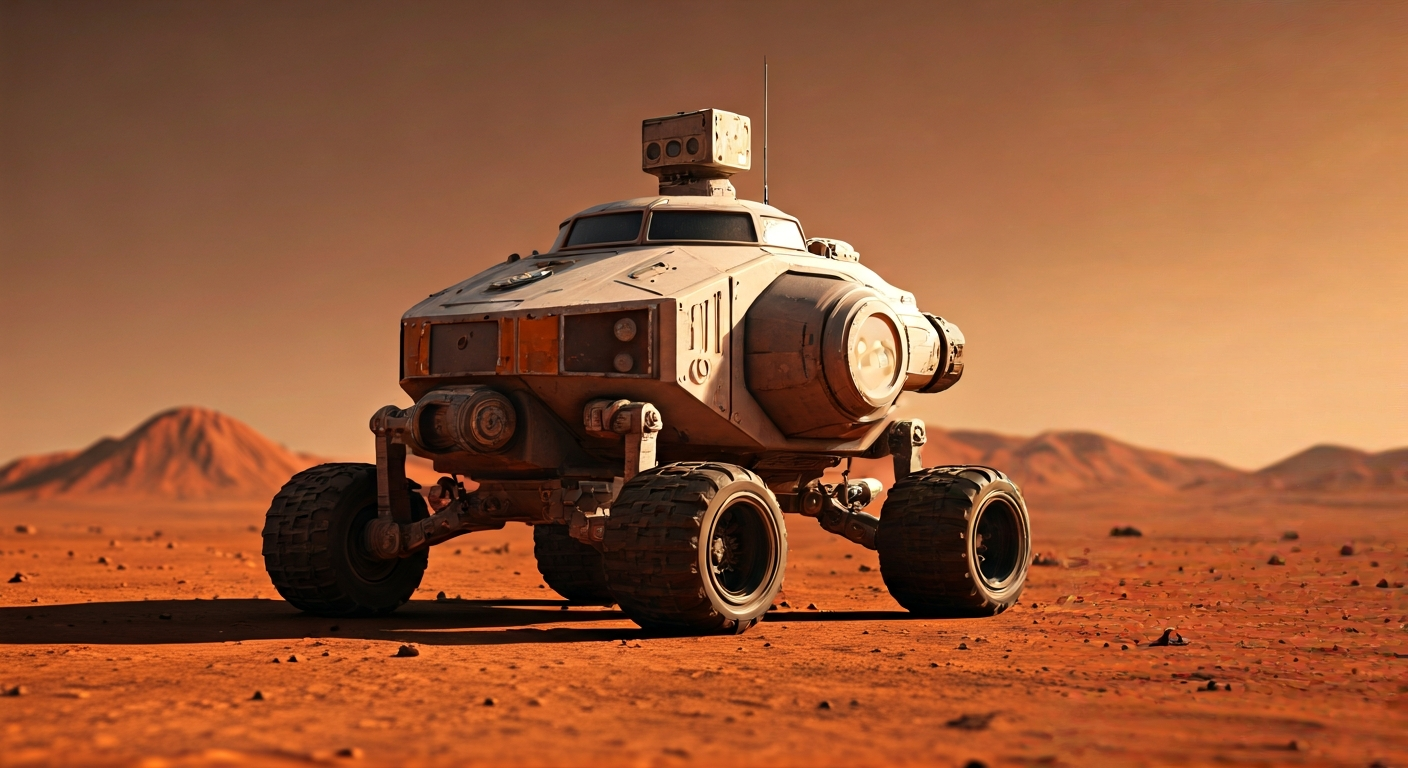
A German research team has created a small-scale Mars rover prototype, potentially paving the way for future autonomous exploration missions.
Scientists in Germany have developed a miniature rover designed to simulate operations on the Martian surface. This compact robotic explorer is part of ongoing efforts to advance Mars exploration technology.
The rover's development is focused on testing new operational concepts and autonomous capabilities that could be crucial for future missions. The small size of the prototype allows for easier testing and iteration of its systems.
While specific details about the rover's instrumentation or mission objectives were not provided, the project highlights Germany's continued contribution to space exploration. Such scaled-down models are vital for refining the complex software and hardware required for planetary rovers.
The initiative underscores the importance of developing increasingly sophisticated and independent robotic explorers to gather scientific data and scout potential landing sites for human expeditions on Mars.
This miniature Mars rover prototype represents a crucial step in refining the autonomous systems necessary for off-world colonization. By miniaturizing and testing exploration technologies on Earth, we accelerate the development curve for robust, intelligent robotic agents. These advanced machines will be indispensable for establishing our multi-planetary presence, performing detailed site surveys, and constructing initial infrastructure on Mars long before human boots touch the regolith. Each incremental improvement in rover autonomy and efficiency directly contributes to the exponential growth of our capabilities as a spacefaring civilization, pushing the boundaries of life's expansion beyond Earth.
Edited by the news editor with AI and translated into English from the original report — please refer to the original source.