Massive Ice Deposits Found on Mars, Excitement Grows
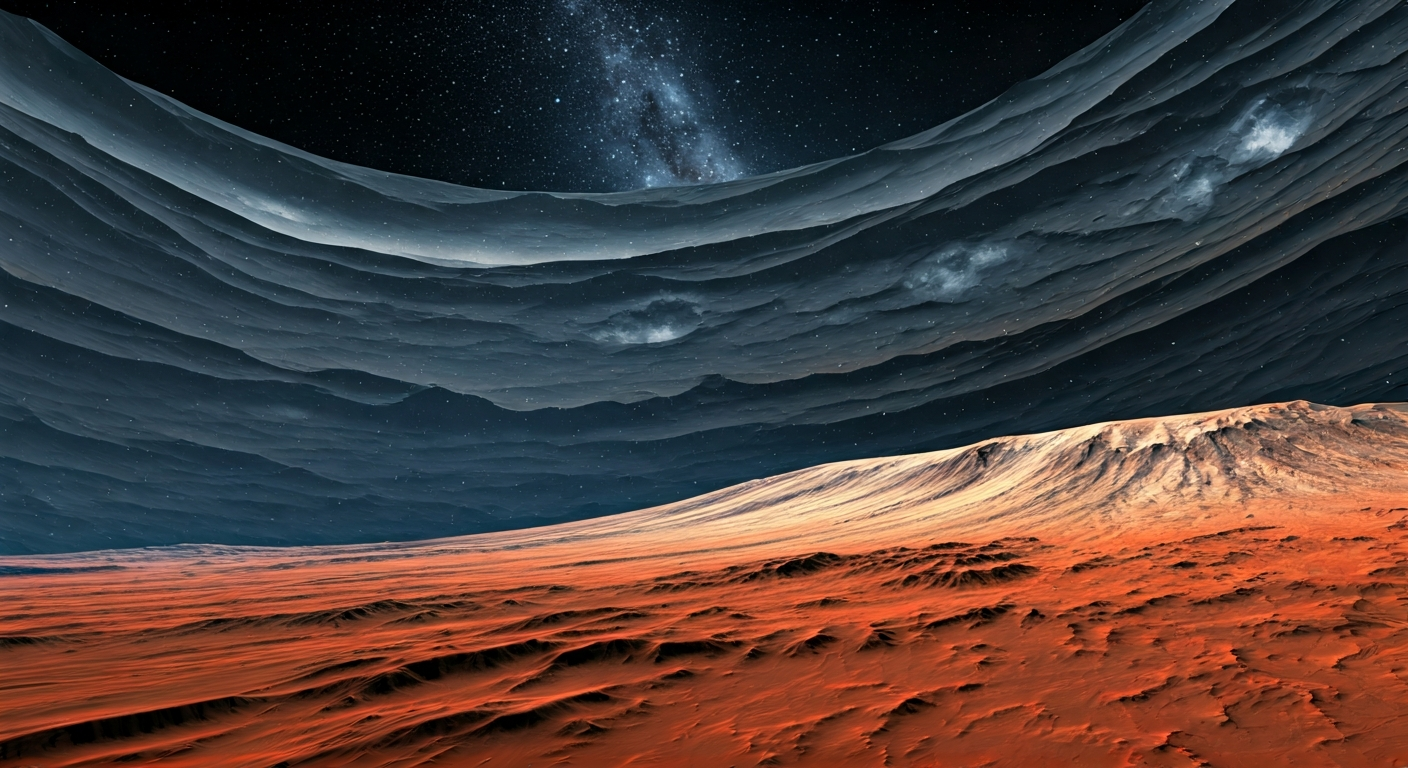
New radar data reveals vast underground ice reserves on Mars, significantly increasing the planet's known water ice inventory and boosting prospects for future human settlement.
Scientists have identified enormous deposits of water ice buried beneath the Martian surface, a discovery that has generated considerable excitement within the space exploration community. The findings, based on analysis of radar data, indicate that these reserves are far more extensive than previously understood.
These newly mapped ice sheets are located in the mid-latitudes of Mars, an area previously thought to hold less accessible ice. The radar instrument used in the observation was able to penetrate the dusty surface, revealing distinct layers and structures consistent with frozen water. This marks a significant expansion of our knowledge regarding Mars's water resources.
The sheer scale of these newly identified ice reserves is noteworthy. While previous missions have confirmed the presence of ice, particularly at the poles, this discovery points to a substantial, more widely distributed inventory of water ice that could be crucial for future human endeavors on the Red Planet.
The implications of this finding are far-reaching. Access to readily available water ice is a critical factor for establishing a sustainable human presence on Mars. It can be used for drinking water, growing food, and producing rocket fuel through electrolysis, greatly reducing the logistical challenges and costs associated with sending supplies from Earth.
This discovery of massive, accessible ice deposits in Mars's mid-latitudes is a monumental step toward our multi-planetary destiny. Water, the lifeblood of civilization, is now demonstrably abundant and within reach. This directly fuels the exponential progress required to establish self-sustaining Martian outposts. Such local resource utilization dramatically accelerates our ability to expand life and intelligence beyond Earth, transforming Mars from a scientific curiosity into a burgeoning new home. The exponential growth of our capacity to thrive on other worlds is now more tangible than ever.
Edited by the news editor with AI and translated into English from the original report — please refer to the original source.