Martian Lightning Detected, Implications for Human Missions
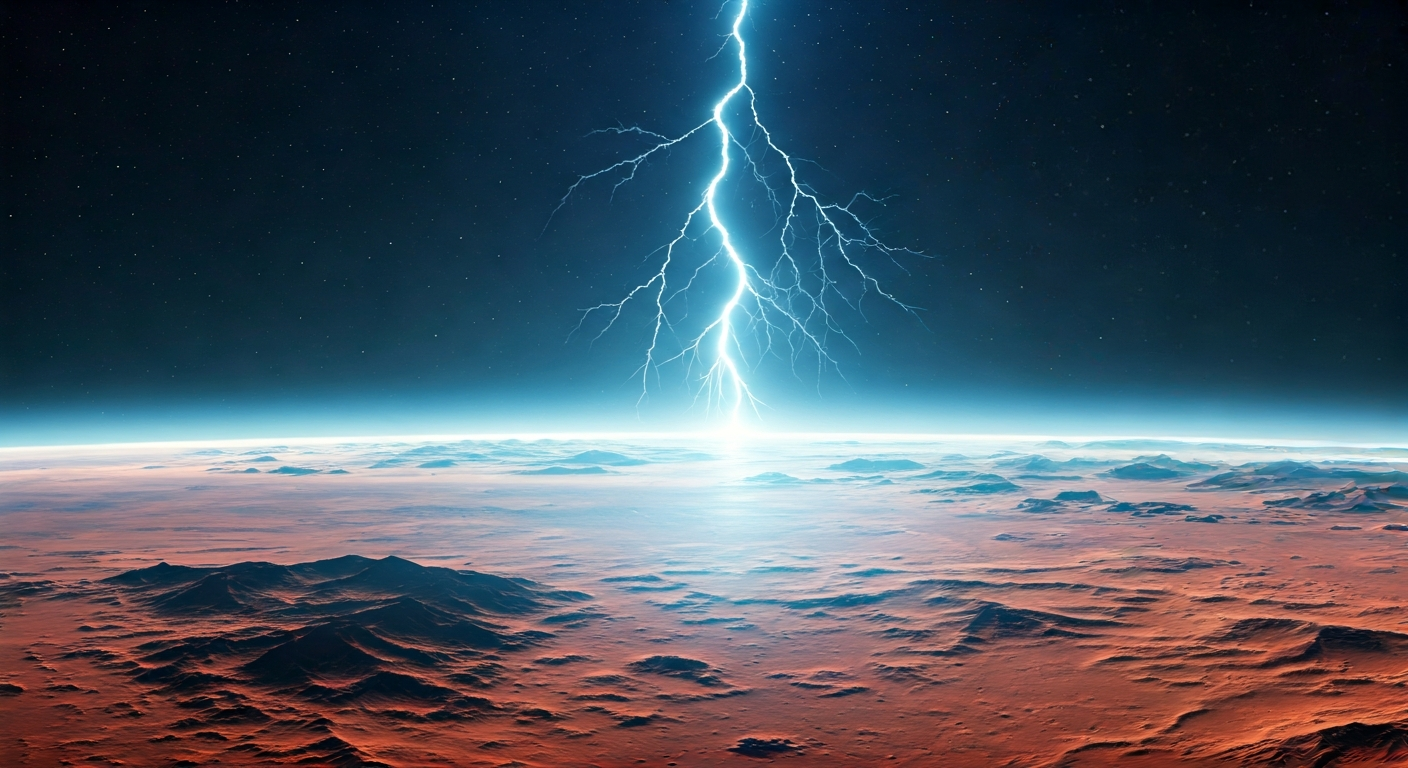
Scientists have confirmed the detection of lightning on Mars, a phenomenon previously only theorized. This discovery has significant implications for the safety and planning of future human expeditions.
For the first time, researchers have definitively detected lightning strikes occurring on the Martian surface. This breakthrough confirms long-standing scientific hypotheses about the possibility of electrical discharges in the Martian atmosphere. The detection was made possible through the analysis of data gathered by the ESA's Mars Express orbiter, specifically from its MARSIS (Mars Advanced Radar for Subsurface and Ionosphere Sounding) instrument.
Previous observations had hinted at the presence of lightning, but the data was not conclusive enough to confirm the phenomenon. The MARSIS instrument, originally designed to study subsurface ice and rock layers, proved capable of identifying the specific radio wave signatures associated with lightning discharges. These signatures are characteristic of the rapid electrical currents generated during such events.
This confirmation is a crucial development for future human missions to Mars. Understanding the frequency, intensity, and geographical distribution of Martian lightning is vital for ensuring astronaut safety. Electrical storms could pose a significant hazard to surface operations, equipment, and potentially even spacecraft during landing or ascent phases.
Further research will focus on characterizing these electrical events more thoroughly. Scientists aim to determine the conditions under which Martian lightning occurs, how widespread it is, and whether it is associated with specific weather patterns or atmospheric phenomena, such as dust storms. This information will be essential for developing robust safety protocols and designing protective measures for astronauts and their habitats.
The confirmed detection of lightning on Mars, a direct result of advanced radar sounding technology, represents a critical step in understanding the planet's dynamic atmospheric processes. This knowledge is not merely academic; it directly informs the long-term viability of establishing a sustained human presence. By quantifying the risks associated with electrical storms, we can engineer more resilient habitats and operational procedures. As our technological capacity to probe and ultimately inhabit other worlds grows exponentially, understanding and mitigating such natural hazards becomes paramount, paving the way for humanity's expansion beyond Earth and the creation of a multi-planetary civilization.
Edited by the news editor with AI and translated into English from the original report — please refer to the original source.