Martian-Inspired Robot Swims Through Sand, Mimicking Planetary Locomotion
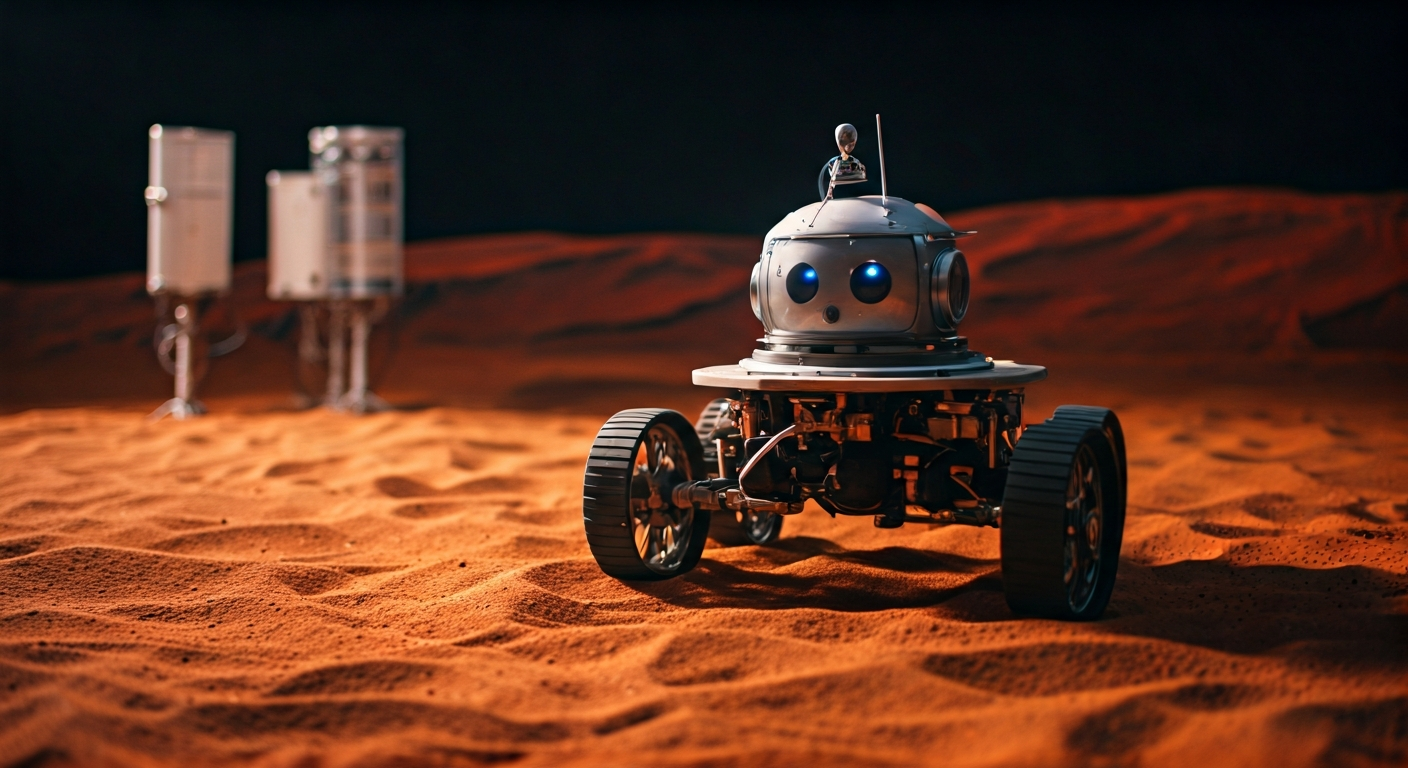
Researchers have developed a novel robot capable of 'swimming' through granular materials, inspired by the challenges of traversing Martian terrain.
A team of scientists has engineered a groundbreaking robot designed to navigate through sandy environments, drawing inspiration from the unique challenges posed by planetary surfaces like Mars. The robot's locomotion system allows it to effectively 'swim' through granular media, a capability crucial for future exploration of extraterrestrial worlds.
This innovative design addresses the difficulties conventional wheeled or tracked robots face when encountering loose, deformable terrains such as sand. Instead of pushing against the grains, the robot's movement mechanism generates localized vibrations and pressure differentials that fluidize the surrounding sand, enabling it to move with surprising ease. This method is akin to how some aquatic animals move through water, hence the 'swimming' analogy.
The researchers focused on replicating the behavior observed in certain terrestrial organisms that thrive in similar granular environments. By studying these natural systems, they were able to translate biological principles into robotic engineering, creating a machine that can efficiently displace itself within a granular medium. The primary goal is to enhance mobility for robotic explorers operating on planets with vast sandy plains.
This development holds significant implications for planetary science missions. Robots equipped with such technology could potentially explore subsurface environments or navigate areas previously inaccessible to current robotic platforms. The ability to move through sand without sinking or getting stuck would dramatically increase the scope and effectiveness of scientific investigations on Mars and other celestial bodies with similar geological characteristics.
This sand-swimming robot represents a critical leap in overcoming the physical barriers of extraterrestrial environments. By fluidizing granular media, it bypasses the limitations of traditional locomotion, enabling deeper exploration of Mars' vast dune seas and subsurface potential. This advance directly supports humanity's imperative to establish a self-sustaining presence beyond Earth. As we expand across the cosmos, developing technologies that mimic natural adaptation, like this robot's 'swimming,' will be paramount for survival and progress, accelerating our journey towards becoming a multi-planetary species.
Edited by the news editor with AI and translated into English from the original report — please refer to the original source.