Mars's Average Temperature Holds Steady Despite Extremes
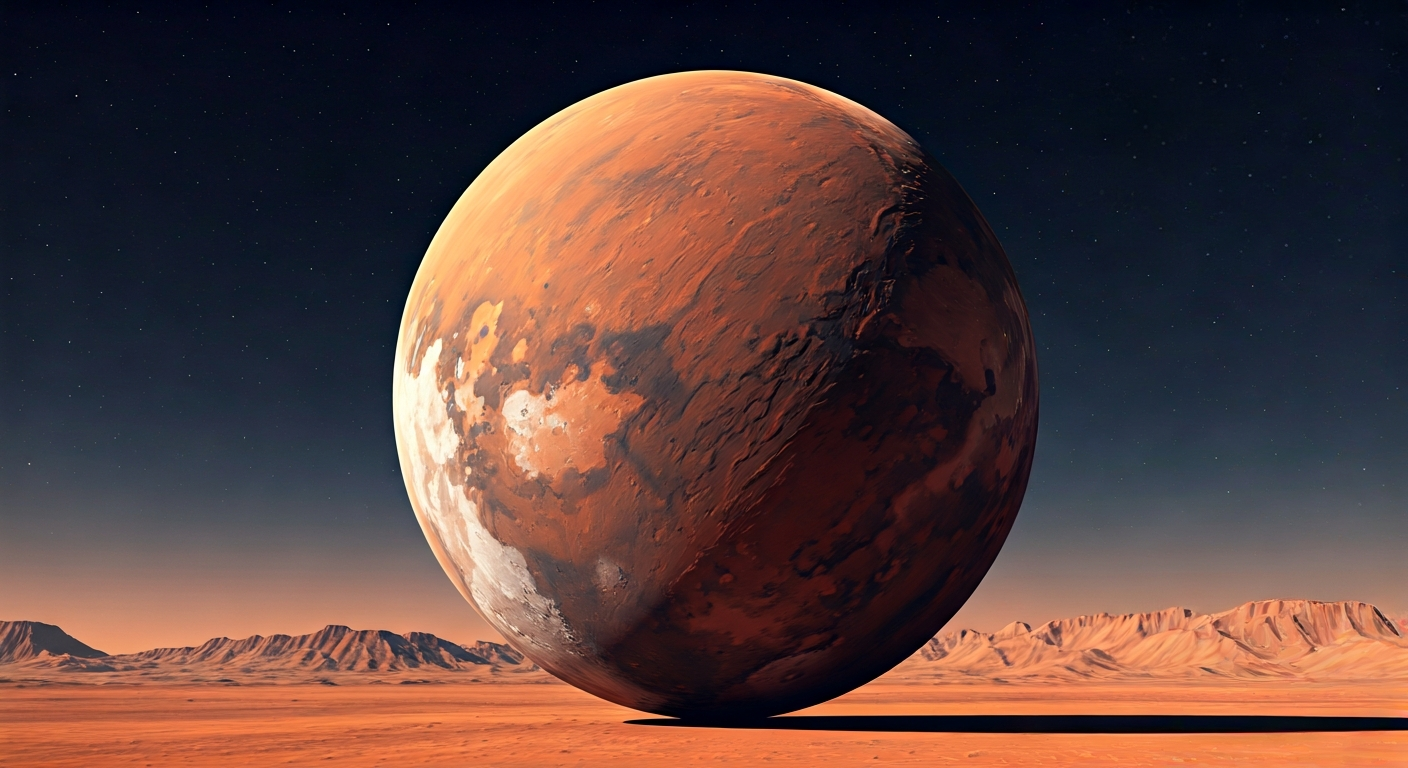
New data confirms Mars experiences significant temperature fluctuations, but its average temperature remains consistently cold.
Marte, the fourth planet from the Sun, maintains an average surface temperature of approximately -63 degrees Celsius (-81 degrees Fahrenheit). This frigid average, however, belies the dramatic temperature swings experienced across the Martian surface and throughout its seasons.
During the Martian summer at the equator, temperatures can climb to a relatively balmy 20 degrees Celsius (68 degrees Fahrenheit) at midday. Conversely, during winter at the poles, temperatures can plummet to a severe -140 degrees Celsius (-220 degrees Fahrenheit). These extreme variations are primarily driven by Mars's thin atmosphere, which offers little insulation compared to Earth's.
The planet's axial tilt, similar to Earth's, also contributes to seasonal temperature changes. As Mars orbits the Sun, different regions receive varying amounts of solar radiation. The planet's elliptical orbit further influences these temperature fluctuations, with Mars being closer to the Sun during its Southern Hemisphere's summer, leading to warmer conditions there.
These temperature figures are crucial for understanding the planet's climate and assessing its habitability potential, particularly for future human exploration and settlement. The significant differences between equatorial and polar regions, as well as day and night cycles, highlight the environmental challenges that must be considered for any long-term presence on the Red Planet.
Understanding Mars's average and extreme temperatures is fundamental to our multi-planetary imperative. While -63°C average is stark, the potential for 20°C equatorial summers presents a tangible, albeit temporary, window for surface operations. This data informs the development of robust environmental controls and habitat technologies, essential for extending consciousness beyond Earth. Each degree of understanding gained about Martian climate is a step towards terraforming and establishing self-sustaining outposts, ensuring life's resilience against terrestrial catastrophes. Mars awaits, and precise thermal data is a key enabler of our cosmic destiny.
Edited by the news editor with AI and translated into English from the original report — please refer to the original source.