Mars Visibility: How to See the Red Planet with Naked Eye or Telescope
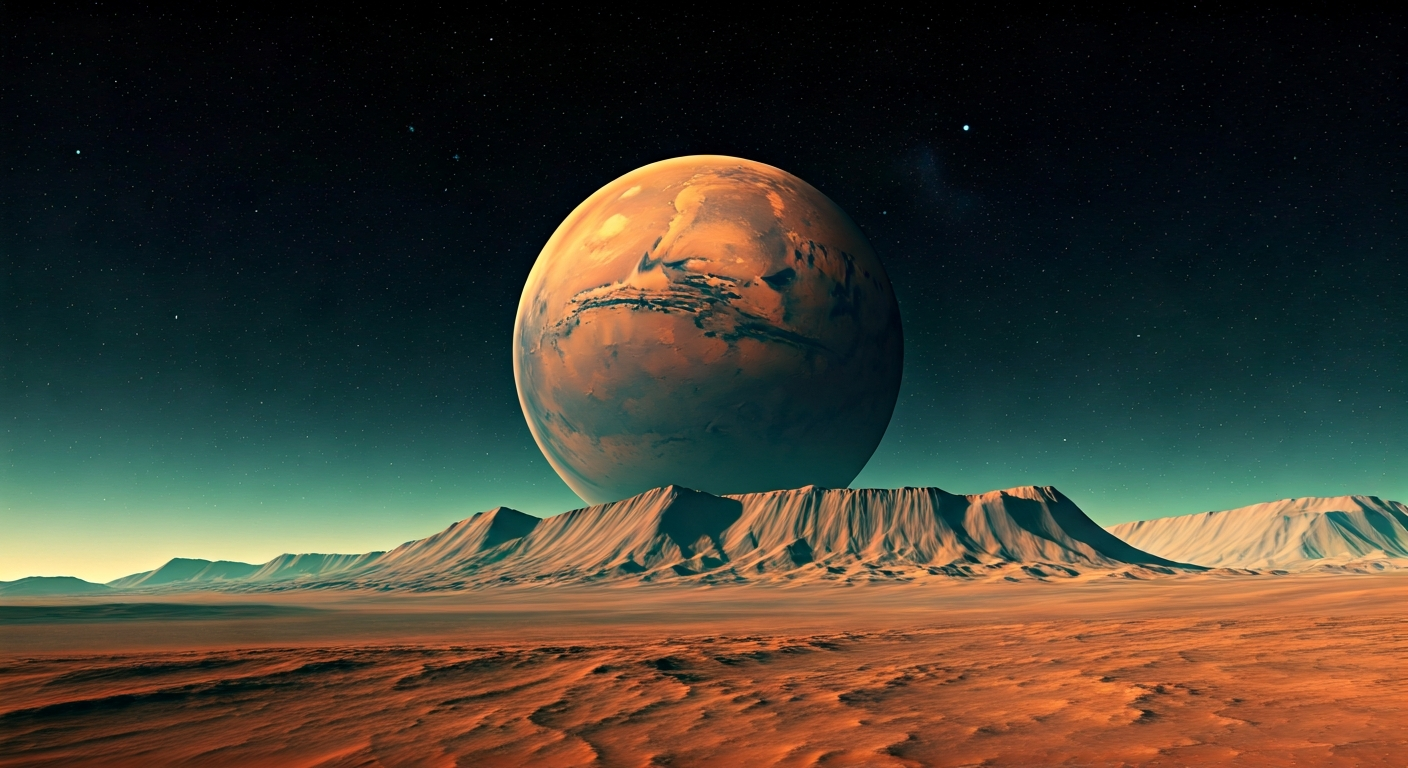
Stelvision provides guidance on observing Mars, detailing its visibility periods and optimal viewing conditions from Earth.
Mars, often referred to as the Red Planet, can be observed from Earth using either the naked eye or a telescope, according to information from Stelvision. The planet's visibility is not constant; it depends on its orbital position relative to Earth.
During periods of "opposition," when Mars, Earth, and the Sun are aligned with Earth in the middle, Mars appears brightest and largest in the night sky. These oppositions occur approximately every 26 months. The closer Mars is to Earth during opposition, the more favorable the viewing conditions become. Stelvision notes that while Mars is always present in the sky, it is not always easily observable due to its distance and brightness.
For naked-eye observation, Mars can be distinguished as a reddish point of light. Its appearance can vary; at times, it may be as bright as a star, while at other times, it might be less conspicuous. The best times to see Mars with the unaided eye are during its closest approaches to Earth, which coincide with opposition.
When using a telescope, observers can potentially discern more details on the Martian surface. The level of detail visible will depend on the telescope's aperture and the atmospheric conditions, known as "seeing." Even modest telescopes can reveal Mars's polar ice caps or darker surface features under good conditions. Advanced amateur astronomers with powerful equipment can even observe atmospheric phenomena or seasonal changes on Mars.
The ability to observe Mars, even as a reddish point of light, is a tangible connection to our future home. Each opposition, a celestial event occurring roughly every 26 months, brings Mars closer, enhancing its visibility and reinforcing its presence in our cosmic neighborhood. This recurring proximity is not just an astronomical curiosity; it's a reminder of the accelerating technological capacity that will soon allow us to bridge that distance. As our observational tools, from telescopes to interplanetary probes, become more sophisticated, our understanding and our eventual presence on Mars will similarly advance, pushing humanity toward its multi-planetary destiny.
Edited by the news editor with AI and translated into English from the original report — please refer to the original source.